Optical networking delivers high speed, security, and scalability for private and hybrid cloud deployments, ensuring reliable and efficient data connectivity.
Learn what MTTR (Mean Time to Repair) means, why it matters for system reliability, and how LINK‑PP’s hot-swappable SFP/SFP+ transceivers reduce repair time.
A clear, professional guide to IIoT (Industrial Internet of Things), covering architecture, protocols, security best practices, and suitable networking components for industrial deployments.
Discover MTBF (Mean Time Between Failures), its importance for system reliability, and how LINK‑PP industrial connectors and SFP/SFP+ modules help maximize uptime.
Explore how an Industrial PC (IPC) reliably communicates with a PLC using LINK-PP integrated RJ45 connectors for robust isolation and EMI resilience in industrial Ethernet networks.
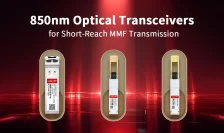
10GBASE-SR, 40GBASE-SR4, 100GBASE-SR4, and 400GBASE-SR8 850nm optical modules are the most reliable and cost-effective choice for short-reach multimode fiber connections.
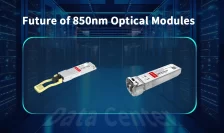
Explore the future of 850nm optical modules in data centers, covering SR8/SR16 advancements, parallel optics, and the impact of single-mode fiber adoption.
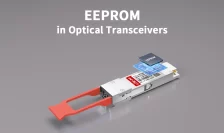
Learn why EEPROM is essential for module identification, monitoring, and compatibility, and how LINK-PP’s SFP/QSFP modules follow SFF-8472 and SFF-8024 Standard.
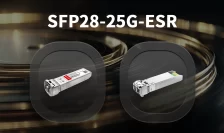
The SFP28-25G-SR transceiver delivers 25Gbps speeds, short-range fiber connectivity, and reliable performance for data centers and enterprise networks.
Learn what SFF-8636 is, why it matters for QSFP/QSFP28 optics, and how its 2-wire management interface, memory map, power classes, and alarms ensure interoperability.
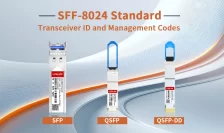
Understand how SFF-8024 ensures accurate module identification, interoperability, and scalability for SFP, SFP+, QSFP, OSFP, and next-generation optical modules.
Power Over Ethernet (PoE) combines power and data delivery via a single cable, simplifying installations for devices like IP cameras, VoIP phones, and IoT systems.
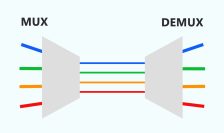
Wavelength Division Multiplexing (WDM) uses optical transceiver modules to send multiple data streams through a single fiber, boosting bandwidth and efficiency.
The Receiver Optical Sub-Assembly (ROSA) is a critical optoelectronic component in Optical Tranceivers, responsible for converting incoming optical signals into
DDM/DOM in optical transceivers provides real-time monitoring of key parameters like temperature and power, ensuring network reliability and early issue detection.
Discover the LQ‑SW40‑SR4C 40GBASE‑SR module: high-speed, low-power, QSFP+ optics for multimode fibre networks. Perfect for data centres and network upgrades.
Learn what hyperconverged infrastructure HCI is, how it compares with virtualization and dHCI, and when Nutanix, Sangfor, or SFP-based designs fit best.
Understand SFP+ 40km (10GBASE-ER) modules, including specs, SMF compatibility, and how to choose the right extended-reach optical transceiver for your network.