Welcome to the LINK-PP Community

More Posts

Explore how FP (Fabry‑Perot) laser diodes work in optical transceiver modules, their technical traits, typical use in low‑rate short‑distance links.

Discover how Small and Medium-sized Businesses SMBs use SFP modules to build scalable, cost-efficient, and future-ready business networks.
Learn what hyperconverged infrastructure HCI is, how it compares with virtualization and dHCI, and when Nutanix, Sangfor, or SFP-based designs fit best.
An SGMII SFP transceiver enables fast Ethernet connections over copper or fiber, supporting flexible speeds and device compatibility in modern networks.
Discover Fiber Channel Transceiver use cases, SAN deployment tips, FC SFP compatibility, speeds, troubleshooting, and enterprise storage applications.
Explain the key differences between FC SFP and Ethernet SFP modules, including compatibility, SAN vs LAN use cases, speeds, and deployment tips.
Learn what FCoE Fibre Channel over Ethernet is, how it works, and how it relates to optical modules, DCB, and high-performance data center networking.
What an FC SFP module is, how it differs from Ethernet SFPs, which speeds and fiber types it supports, and how to choose the right one.
Learn what SFP technology is, how SFP modules work, common compatibility issues, and how to choose the right transceiver for your network.
Learn the real difference between 1000base-lh and 1000base-lx, including wavelength, fiber compatibility, Cisco naming, and when to use each.
Learn what RJ45 connectors are, their pinout, wiring types, and how they support Ethernet, PoE, and Gigabit networks. Discover LINK-PP’s RJ45 solutions for reliable connectivity.
Discover what VoIP Phones are, how they work, and why they matter for modern communication. Learn key benefits and how LINK-PP RJ45 connectors support them.
Avoid costly Fiber Installation Mistakes by spotting kinks, poor cleaning, and bad splicing. Keep your fiber network strong with these expert tips.
RDMA over Converged Ethernet enables fast, low-latency data transfers using standard Ethernet hardware, reducing CPU usage and improving network efficiency.
An IPv6 address enables secure, efficient device connections online, offering a vast address space and improved network management over IPv4.
Learn the key differences between IEEE 802.3af (PoE), 802.3at (PoE+), and 802.3bt (PoE++). Understand power levels, compatibility, and applications with LINK-PP’s PoE magnetics solutions.
Learn the difference between PSE and PD in PoE networks, how detection & classification work, and which LINK-PP PoE RJ45 products suit your WAP, camera or VoIP deployment.
Edge computing processes data near its source, enabling faster decisions, reduced latency, and efficient bandwidth use for real-time applications.
LINK-PP's fiber optic cage assemblies deliver high-density, EMI-shielded, and thermally managed solutions for 400G transceiver form factor needs.
LINK-PP optical transceivers offer full compatibility with Cisco Catalyst 9300 switches, ensuring reliable performance and cost-effective network expansion.
FEC (Forward Error Correction) in optical communication adds redundancy to detect and correct errors, ensuring reliable, high-speed data transmission.
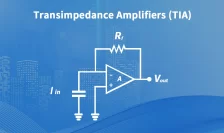
Transimpedance Amplifiers (TIAs) convert sensor current to voltage using an op-amp and feedback resistor, enabling accurate signal measurement.
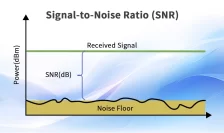
SNR, or signal-to-noise ratio, measures signal strength versus noise. High SNR means clearer audio, images, and data for better overall signal quality.
Learn what an Ethernet PHY is, how it connects MAC to network medium, core functions, signal types, and how it pairs with LINK‑PP Magnetics for Ethernet design.
RFI Radio Frequency Interference is unwanted radio signals that disrupt electronic devices, causing performance issues and communication problems.
Turns ratio in LAN transformers defines the winding relationship, typically 1:1, ensuring signal integrity, voltage stability, and Ethernet compliance.
What RoHS certification means, which substances are restricted, and why compliance matters for electronic manufacturers and importers.
PAM4 is a four-level pulse amplitude modulation method that transmits two bits per symbol, doubling data rates for high-speed networks.
Non-Return-to-Zero (NRZ) is a digital encoding method using two voltage levels for binary data, offering simplicity and efficiency in digital communication.
Open circuit inductance (OCL) in Ethernet transformers affects signal integrity and EMI suppression; Higher OCL prevents data loss.
Discover the LQ‑SW40‑SR4C 40GBASE‑SR module: high-speed, low-power, QSFP+ optics for multimode fibre networks. Perfect for data centres and network upgrades.
Learn what hyperconverged infrastructure HCI is, how it compares with virtualization and dHCI, and when Nutanix, Sangfor, or SFP-based designs fit best.
What an FC SFP module is, how it differs from Ethernet SFPs, which speeds and fiber types it supports, and how to choose the right one.
Learn the real difference between 1000base-lh and 1000base-lx, including wavelength, fiber compatibility, Cisco naming, and when to use each.
Learn what a Gigabit SFP transceiver is, compare 1000BASE-SX, LX, and T options, and solve common compatibility and setup issues with confidence.
Learn what a 10/100/1000BASE-T SFP is, how RJ45 copper SFP modules work, compatibility issues, heat concerns, and best use cases in networks.
Compare CFP4 vs. QSFP28 by size, power, density, and deployment fit. Learn which 100G module is better for data centers, telecom, and upgrades.
Explore the Netgear AGM731F datasheet with specs, LC connector, OM1/OM3/OM4 distances, compatibility, power use, and operating limits.
Learn what 40GBASE-ER4 is, how far it reaches over duplex single-mode fiber, what it supports, and how to choose the right QSFP+ optic.
Understand SFP+ 40km (10GBASE-ER) modules, including specs, SMF compatibility, and how to choose the right extended-reach optical transceiver for your network.

Add Your Heading Text Here