Explore point-to-multipoint (P2MP) network architecture, working principle, advantages, and applications. Learn how LINK-PP optical transceivers support P2MP deployments.
Explore the fundamentals of Point-to-Point (P2P) network architecture, its working principles, and how LINK-PP RJ45 connectors and optical transceivers enable reliable high-speed communication.
Explore how lasers, modulators, and photodiodes form the core of optical transceivers, enabling high-speed, low-latency data transmission across global networks.
Explore how RJ45 connectors evolve to meet 6G’s ultra-low latency and ultra-high-speed communication challenges. Discover LINK-PP’s advanced high-frequency Ethernet solutions.
Discover the differences between silicon photonic modulators and traditional optical modulators, their working principles, advantages, and role in next-generation optical transceivers.
What is CMOS? Learn the fundamentals of Complementary Metal-Oxide-Semiconductor technology, its working principle, key advantages, and its integration with silicon photonics and optical transceivers.
Global Positioning System (GPS) uses satellites to provide accurate real-time location, navigation, and tracking for personal, business, and safety needs.
Internet Control Message Protocol (ICMP) helps diagnose network issues by sending error and status messages between devices for reliable communication.
A clear, authoritative guide to 6G networks: what 6G is, IMT-2030 timeline, core technologies (THz, ISAC, AI-native networks), key use cases, and implications for optical modules.
What are SFP ports on a switch? Learn how SFP ports support fiber and Ethernet connections, how they compare with RJ45 and SFP+, and which module you need.
An SGMII SFP transceiver enables fast Ethernet connections over copper or fiber, supporting flexible speeds and device compatibility in modern networks.
Receiver sensitivity shows the lowest signal a device can detect. Learn how it impacts connection quality and what values mean for your device’s performance.
Discover what Big Data is, its 5V characteristics, real-world applications, technologies, and future trends. Learn how optical transceivers support Big Data networks.
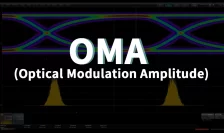
Learn what OMA (Optical Modulation Amplitude) means in optical communications, how to calculate it from P₁/P₀ and extinction ratio, and why it’s critical in transceiver specs like LINK-PP SFP modules.
Extinction ratio measures signal clarity in optical systems, impacting data reliability and error rates. High extinction ratio ensures accurate transmission.
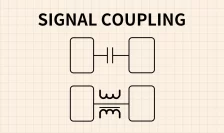
Common-Mode Choke (CMC) explained: learn how CMCs block common-mode noise, preserve differential Ethernet signals, and what specs matter when selecting CMCs for LAN transformers and PoE.
Discover what an inductor is, how it functions in electronic circuits, its types, and real-world applications. Learn about this essential component in modern electronics.
Explore Copper SFP vs. Fiber SFP differences, performance, compatibility, and cost. Learn how to choose the right SFP module for home labs, data centers, and PoE networks.
Explore the features, applications, and selection guide for optical transceiver SFP+ 10G single-mode 1310nm 10km LC modules for data centers and enterprise networks.
Learn how multimode SFP+ (10GBASE-SR) transceivers work, including fiber types, transmission distance, specifications, and common data center use cases.
Learn what a 1000BASE-T Copper SFP is, how RJ45 SFP modules work, when to use copper SFP instead of fiber, compatibility issues, and common troubleshooting tips.
Understand what a third-party SFP is, how compatible optics work with Cisco, Juniper, and Arista switches, and the cost, risks, and buying tips for reliable network deployments.
A technical guide to SFP+ 100km optics, explaining 10GBASE-ZR modules, optical link budgets, DWDM solutions, and real-world deployment tips for long-distance fiber networks.
A complete technical guide to SFP-10GLR-31 transceivers covering 10GBASE-LR specifications, wavelength, fiber compatibility, switch support, and real deployment scenarios.
Explain what a 100km SFP transceiver is, how ER and ZR differ, required wavelength, optical budget calculation, and whether amplification is needed for long-haul fiber links.
Complete guide to long distance transceivers covering 10km to 120km optics, 1310nm vs 1550nm, ER/ZR modules, link budget calculation, and deployment best practices.
Subscribe to LINK-PP
newsletter
Don’t miss anything. Get all the latest posts delivered straight to your inbox.