Optical modules enable high-speed, low-latency links across 5G fronthaul, midhaul, and backhaul. Learn how transceiver types, standards, and deployment needs shape modern telecom networks.
Discover the LINK-PP LS-MM8510-S3C, a 100% MSA-compliant & fully compatible replacement for the Juniper EX-SFP-10GE-SR. Save up to 60% without sacrificing performance. Features DDM/DOM support. Ideal for data center & enterprise networks.
Explore what a telecom network is, how it works, and its role in 5G. Learn opportunities, challenges, and how LINK‑PP solutions support next-gen networks.
Explore how RJ45 Magjack connectivity solutions from LINK-PP enhance telecom infrastructure—improving reliability, PoE support and integration for next-gen networks.
Discover how TSN (Time-Sensitive Networking) brings deterministic, low-latency, and reliable data delivery to Industry 4.0 and automotive Ethernet networks.
Maximize network efficiency with LS-Explore practical tips and best-practice deployments for the LINK-PP LS-BL332710-60C 10G BiDi SFP+ (60 km). Learn when to choose BiDi, how to validate links, and deployment checklists.
Machine Learning (ML) enables computers to learn from data, identify patterns, and make predictions, powering tools like voice assistants and recommendations.
Learn what the SFP28 MSA (Small Form-factor Pluggable 28 Multi-Source Agreement) defines, why it matters for 25G Ethernet, and how it ensures module interoperability.
Virtual Routing and Forwarding (VRF) enables multiple private routing tables on one device, improving network security, segmentation, and traffic management.
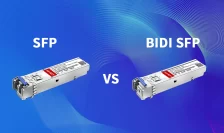
Compare SFP vs BiDi SFP: key differences, fiber requirements, compatibility, and best use cases to help you choose the right SFP module for your network.
Unstanding different types of 40G QSFP+ Transceivers, including 40GBASE-SR4, 40GBASE-LR4, 40GBASE-FR4, 40GBASE-ER4. Choosing the right QSFP+ modules for you.
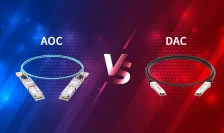
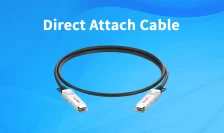
Learn what Direct Attach Cables are, how they work, their advantages over fiber optics & AOCs, common types, and why they dominate short-reach data center links
Learn what the EtherCAT Slave Controller (ESC) is and how it processes real-time frames, manages FMMU mapping, and enables high-speed industrial automation.
Learn what FMMU (Fieldbus Memory Management Unit) is and how it enables real-time EtherCAT communication through efficient memory mapping and on-the-fly data processing.
Learn what the PCS (Physical Coding Sublayer) is, how it enables reliable Ethernet transmission, and why it matters for high-speed optical transceivers and network design.
Physical Medium Dependent (PMD) defines the optical and electrical rules of a PHY—wavelength, power, reach, and test points. Understand PMD specs and how they guide transceiver selection.
Learn what the PMA (Physical Medium Attachment) is, how it handles serialization and clock recovery, and why it is essential for modern high-speed optical transceivers.
Master Mean Time to Acknowledge (MTTA), the key metric for rapid response. Learn its role in system availability, how to calculate it, and proven steps to reduce MTTA for superior network uptime.
Master Mean Time to Detect (MTTD), the most crucial metric for avoiding silent failures. Learn the calculation, its role in modern observability, and how to reduce MTTD for superior system availability.
Discover MTBF (Mean Time Between Failures), its importance for system reliability, and how LINK‑PP industrial connectors and SFP/SFP+ modules help maximize uptime.
A clear, professional guide to IIoT (Industrial Internet of Things), covering architecture, protocols, security best practices, and suitable networking components for industrial deployments.
Learn what MTTR (Mean Time to Repair) means, why it matters for system reliability, and how LINK‑PP’s hot-swappable SFP/SFP+ transceivers reduce repair time.
Discover the LQ‑SW40‑SR4C 40GBASE‑SR module: high-speed, low-power, QSFP+ optics for multimode fibre networks. Perfect for data centres and network upgrades.
Learn what hyperconverged infrastructure HCI is, how it compares with virtualization and dHCI, and when Nutanix, Sangfor, or SFP-based designs fit best.
Understand SFP+ 40km (10GBASE-ER) modules, including specs, SMF compatibility, and how to choose the right extended-reach optical transceiver for your network.