Explore the LINK-PP LS-SM3125-10I industrial-grade SFP28 transceiver, delivering 25 Gb/s over 10 km single-mode fibre at 1310 nm, with DOM and wide-temperature support for backbone and 5G front-haul.
Discover how optical transceivers power Smart Industry 4.0 networks—enabling high-speed, low-latency, reliable connectivity in modern factories with 1G, 10G and 25G modules certified for industrial use.
User Datagram Protocol enables fast, connectionless data transfer for real-time apps like streaming, gaming, and DNS, prioritizing speed over reliability.
SSL encrypts data between your browser and websites, ensuring privacy and security. SSL certificates verify site identity and protect sensitive information.
Technical hurdles of 1.6T optical transceivers include signal integrity, power, and cooling, driving a connector revolution for reliable high-speed networks.
OSI vs TCP/IP: OSI is ideal for learning network concepts, while TCP/IP is used for real-world networking. Compare their layers, uses, and main differences.
What are SFP ports on a switch? Learn how SFP ports support fiber and Ethernet connections, how they compare with RJ45 and SFP+, and which module you need.
An SGMII SFP transceiver enables fast Ethernet connections over copper or fiber, supporting flexible speeds and device compatibility in modern networks.
Power Over Ethernet (PoE) combines power and data delivery via a single cable, simplifying installations for devices like IP cameras, VoIP phones, and IoT systems.
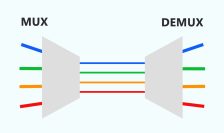
Wavelength Division Multiplexing (WDM) uses optical transceiver modules to send multiple data streams through a single fiber, boosting bandwidth and efficiency.
The Receiver Optical Sub-Assembly (ROSA) is a critical optoelectronic component in Optical Tranceivers, responsible for converting incoming optical signals into
DDM/DOM in optical transceivers provides real-time monitoring of key parameters like temperature and power, ensuring network reliability and early issue detection.
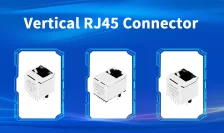
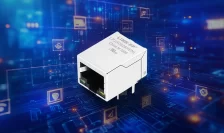
Discover LINK-PP’s vertical RJ45 connectors. Save board space with top-entry designs offer integrated magnetics, shielding, and reliable Ethernet performance.
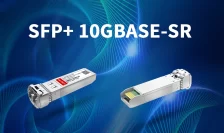
Explore the LINK-PP LS-MM8510-S3C SFP+ 850nm 10GBASE-SR optical transceiver. Up to 300m reach on MMF with low power consumption and full compatibility.
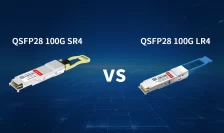
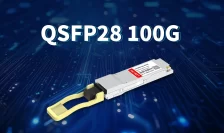
Discover the LINK-PP LQ-M85100-SR4C QSFP28 100G SR4 transceiver—ideal for short-reach 100G Ethernet over MMF. Compatible with Cisco, Arista, FS, Dell, and more.
Discover what data bandwidth means, how it affects devices, and why it matters in digital communication. Learn how LINK-PP supports high-speed data transfer.
The LPJG0926HENL RJ45 connector with integrated magnetics offers PoE+ support, space efficiency, and compliance for high-performance Ethernet applications.
Subscribe to LINK-PP
newsletter
Don’t miss anything. Get all the latest posts delivered straight to your inbox.