Semiconductor material properties determine optical module speed, efficiency, and reliability by affecting bandgap, carrier mobility, and thermal conductivity.
Explore how Smart Industry 4.0 Networks enable intelligent manufacturing through high-speed Ethernet, fibre optics, IIoT, and edge computing integration.
Learn what the SFF-8402 specification is, how it defines the SFP28 interface standard, and why it is essential for 25G / 28G optical module interoperability and system reliability.
Learn how optical modules enhance PLC system performance, enabling high-speed, long-distance communication and reliable industrial automation networks.
Explore how RJ45 Magjack connectors enable robust Ethernet communication between PLCs and SCADA hosts in industrial automation, ensuring signal integrity and system reliability.
Discover how LINK-PP 25G SFP28 optical modules enhance hyperscale data centers with high bandwidth, low latency, and energy efficiency. Learn key benefits and use cases.
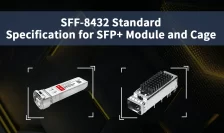
Learn about the SFF-8432 specification, the mechanical standard for SFP+ modules and cages. Discover its role in EMI performance, durability, and interoperability.
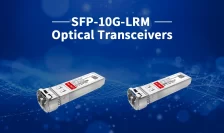
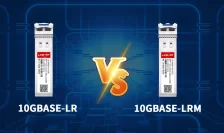
What the SFP-10G-LRM is, how it works, and its benefits. Learn why LINK-PP’s 10GBASE-LRM modules are ideal for upgrading older fiber networks with 220m reach ov
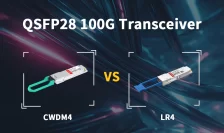
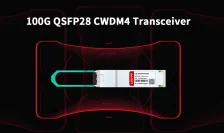
QSFP28 100G CWDM4 transceiver is the industry-standard solution for cost-effective, high-performance 100 Gigabit Ethernet connections over distances up to 2km
exploring cloud migration and its benefits, strategies, best practices, also delve into the essential hardware, like optical modules, that make it all possible.
Learn what the EtherCAT Slave Controller (ESC) is and how it processes real-time frames, manages FMMU mapping, and enables high-speed industrial automation.
Learn what the PCS (Physical Coding Sublayer) is, how it enables reliable Ethernet transmission, and why it matters for high-speed optical transceivers and network design.
Physical Medium Dependent (PMD) defines the optical and electrical rules of a PHY—wavelength, power, reach, and test points. Understand PMD specs and how they guide transceiver selection.
Learn what the PMA (Physical Medium Attachment) is, how it handles serialization and clock recovery, and why it is essential for modern high-speed optical transceivers.
Master Mean Time to Acknowledge (MTTA), the key metric for rapid response. Learn its role in system availability, how to calculate it, and proven steps to reduce MTTA for superior network uptime.
Master Mean Time to Detect (MTTD), the most crucial metric for avoiding silent failures. Learn the calculation, its role in modern observability, and how to reduce MTTD for superior system availability.
Discover MTBF (Mean Time Between Failures), its importance for system reliability, and how LINK‑PP industrial connectors and SFP/SFP+ modules help maximize uptime.
A clear, professional guide to IIoT (Industrial Internet of Things), covering architecture, protocols, security best practices, and suitable networking components for industrial deployments.
Learn what MTTR (Mean Time to Repair) means, why it matters for system reliability, and how LINK‑PP’s hot-swappable SFP/SFP+ transceivers reduce repair time.
Discover the LQ‑SW40‑SR4C 40GBASE‑SR module: high-speed, low-power, QSFP+ optics for multimode fibre networks. Perfect for data centres and network upgrades.
Learn what hyperconverged infrastructure HCI is, how it compares with virtualization and dHCI, and when Nutanix, Sangfor, or SFP-based designs fit best.