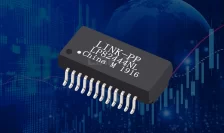
LP82444NL PoE LAN Transformer boosts network reliability, signal integrity, and power delivery for efficient, safe, and high-speed modern Ethernet applications.
Understand the difference between a LAN Transformer and a LAN Filter. Learn how both work together in RJ45 magnetic connectors to ensure Ethernet signal integrity and EMC compliance.
Guide to choose the best RJ45 female connector by comparing cable compatibility, shielding, durability, and installation for optimal network reliability.
Optical Spectrum Analyzer measures light power at each wavelength, helping you assess lasers, LEDs, and fiber optic signals for quality and performance.
A PLC Splitter divides one optical signal into multiple outputs, ensuring reliable, efficient fiber optic network connections for homes and businesses.
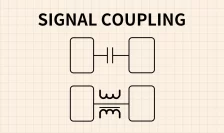
Common-Mode Choke (CMC) explained: learn how CMCs block common-mode noise, preserve differential Ethernet signals, and what specs matter when selecting CMCs for LAN transformers and PoE.
Learn the functions, differences, and applications of resistors, capacitors, and inductors in electronic circuits. Essential knowledge for engineers and PCB designers.
Network Filter explained: what LAN filters and Ethernet common-mode chokes do, why they matter for EMI, isolation, and PoE, and how to choose the right RJ45 magnetics.
Learn what EoR (End-of-Row) switches are, how the architecture works, its pros and cons, EoR vs ToR differences, deployment best practices, and recommended optical modules.
Learn what a ToR (Top-of-Rack) switch is, how ToR architecture works, and why it’s the preferred networking model in modern data centers. Includes benefits, use cases, and compatible optical transceiver solutions from LINK-PP.
Discover what a backplane is, how backplane channels support high-speed 40G/100G Ethernet, key standards, and design challenges. Learn how LINK-PP RJ45 connectors enhance backplane performance.
Learn the IEEE 802.3bj 100G Ethernet standard for backplane and copper cable interconnects. Explore PAM4, FEC, KP4/KR4/CR4 PHYs, and how LINK-PP modules support high-speed networks.
Discover the role of Gearbox in modern optical transceivers. Learn how it enables channel alignment, rate conversion, and breakout for 50G, 100G, and 200G networks.
Learn what IEEE 802.3cd defines for 50G, 100G and 200G Ethernet. Explore PAM4 technology, key PMDs, deployment use cases and suitable LINK-PP optical transceivers.
exploring cloud migration and its benefits, strategies, best practices, also delve into the essential hardware, like optical modules, that make it all possible.
Learn what the EtherCAT Slave Controller (ESC) is and how it processes real-time frames, manages FMMU mapping, and enables high-speed industrial automation.
Learn what the PCS (Physical Coding Sublayer) is, how it enables reliable Ethernet transmission, and why it matters for high-speed optical transceivers and network design.
Physical Medium Dependent (PMD) defines the optical and electrical rules of a PHY—wavelength, power, reach, and test points. Understand PMD specs and how they guide transceiver selection.
Learn what the PMA (Physical Medium Attachment) is, how it handles serialization and clock recovery, and why it is essential for modern high-speed optical transceivers.
Master Mean Time to Acknowledge (MTTA), the key metric for rapid response. Learn its role in system availability, how to calculate it, and proven steps to reduce MTTA for superior network uptime.
Master Mean Time to Detect (MTTD), the most crucial metric for avoiding silent failures. Learn the calculation, its role in modern observability, and how to reduce MTTD for superior system availability.
Discover MTBF (Mean Time Between Failures), its importance for system reliability, and how LINK‑PP industrial connectors and SFP/SFP+ modules help maximize uptime.
A clear, professional guide to IIoT (Industrial Internet of Things), covering architecture, protocols, security best practices, and suitable networking components for industrial deployments.
Learn what MTTR (Mean Time to Repair) means, why it matters for system reliability, and how LINK‑PP’s hot-swappable SFP/SFP+ transceivers reduce repair time.
Discover the LQ‑SW40‑SR4C 40GBASE‑SR module: high-speed, low-power, QSFP+ optics for multimode fibre networks. Perfect for data centres and network upgrades.
Learn what hyperconverged infrastructure HCI is, how it compares with virtualization and dHCI, and when Nutanix, Sangfor, or SFP-based designs fit best.