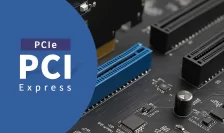
Learn what PCI Express (PCIe) is, how it works, and why it matters. Explore PCIe versions, bandwidth speeds, and its role in GPUs, SSDs, and data centers.
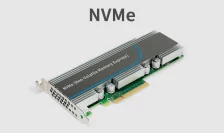
Learn what NVMe (Non-Volatile Memory Express) means, how it compares to SATA SSDs, and why it delivers faster speed, lower latency, and better efficiency.
Discover the differences between HDD and SSD in speed, reliability, and cost. Learn which storage drive suits your needs and explore LINK-PP connectivity solutions.
Discover what a CPU (Central Processing Unit) is, how it works, and why it is vital in computing. Learn about its architecture, functions, and industry applications.
Differential mode delay in multimode fiber optics limits speed and data rates by causing pulse spreading, reducing signal clarity and network performance.
Power consumption optimization for optical transceivers in edge computing reduces energy use, lowers costs, and boosts network scalability and reliability.
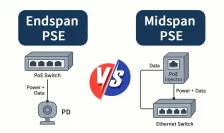
Explore the IEEE 802.3bt (PoE++) standard delivering up to 100W over Ethernet. Learn its key features, power types, and applications with LINK-PP PoE++ Magnetics solutions.
Learn what a network gateway is, how it works, and why it’s essential for connecting different networks. Understand gateway functions, types, and real-world applications in modern communication systems.
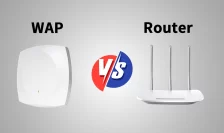
Learn the differences between a Wireless Access Point (WAP) and a router, their use cases in home and enterprise networks, and how LINK‑PP LPJK6072AONL PoE RJ45 connectors support WAP deployments.
Long-range 10G optical modules enable high-speed data over distances up to 80km. Learn about types, specs, compatibility, and choosing the right module.
Learn what IEEE 802.3af (PoE) means, how it delivers up to 15.4W of power through Ethernet cables, and its key applications. Discover LINK-PP PoE RJ45 Magnetics for stable power delivery.
A short-range 10G optical transceiver enables fast, reliable data transfer up to 300m using multimode fiber, ideal for data centers and enterprise networks.
Central Management Server streamlines server management, enabling secure, centralized control, updates, and monitoring for multiple systems in one place.
Dispersion compensation in optical systems corrects chromatic dispersion, ensuring clear, accurate signals in fiber optic communication and imaging applications.
In-band Network Telemetry embeds real-time monitoring data in each packet, enabling instant network insights, troubleshooting, and performance analysis.
Remote network monitoring enables real-time network management, security, and troubleshooting from any location, supporting both remote teams and multiple site.
Learn what Multipoint-to-Point (MP2P) architecture is, how it works, and how LINK-PP optical transceivers enhance data efficiency in modern fiber networks.
Learn how multipoint-to-multipoint (MP2MP) networks work, their advantages, and applications in optical communications. Discover LINK-PP optical modules supporting MP2MP systems.
Explore the fundamentals of Point-to-Point (P2P) network architecture, its working principles, and how LINK-PP RJ45 connectors and optical transceivers enable reliable high-speed communication.
Explore point-to-multipoint (P2MP) network architecture, working principle, advantages, and applications. Learn how LINK-PP optical transceivers support P2MP deployments.
Discover the LQ‑SW40‑SR4C 40GBASE‑SR module: high-speed, low-power, QSFP+ optics for multimode fibre networks. Perfect for data centres and network upgrades.
Learn what hyperconverged infrastructure HCI is, how it compares with virtualization and dHCI, and when Nutanix, Sangfor, or SFP-based designs fit best.
Understand SFP+ 40km (10GBASE-ER) modules, including specs, SMF compatibility, and how to choose the right extended-reach optical transceiver for your network.