Welcome to the LINK-PP Community

More Posts

Explore the WAN Interface Sublayer (WIS) in 10 Gigabit Ethernet. Learn its role in SONET/SDH integration, data encapsulation, and how LINK-PP 10G optical modules support WAN PHY applications.
Explore Packet over SONET/SDH (POS), the technology enabling high-speed IP transport over optical networks, with insights into PPP encapsulation and SONET/SDH performance.
Discover IEEE 802.3ae: the foundation of 10 Gigabit Ethernet. Learn its standards, physical layers, and how LINK-PP 10G SFP+ modules ensure compliance.
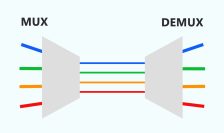
Multiplexing in networking combines multiple signals into one channel, enabling efficient data transmission and better use of network resources.
Discover how Multicore Fiber (MCF) and Space-Division Multiplexing (SDM) are solving the bandwidth crisis. Learn about MCF applications and how LINK-PP's optical transceivers harness its power.
TDM vs FDM: Compare multiplexing for 2025. See which method suits digital or analog signals, efficiency, cost, and future-proofing your network.
SDM vs WDM explained: Compare space and wavelength multiplexing to choose the best optical communication method for your network’s capacity and upgrade needs.
Explore the SFP+ MSA specification—its standards, benefits, and compatibility. Learn how LINK-PP’s 10G SFP+ Modules deliver reliable, interoperable solutions.
Learn the differences between LAN PHY and WAN PHY in 10 Gigabit Ethernet. Explore how LINK-PP 10G optical modules, like 10GBASE-LR SFP+, support both PHY types for reliable networking.
Explore what Thermal Interface Material (TIM) is, its key types, and why it matters in electronics and optical transceivers. Learn how TIM improves heat transfer, boosts device reliability, and supports LINK-PP modules—all explained clearly for better SEO and reader value.

Learn what an SFP link is, why it fails, and how to fix compatibility, cabling, and link-flap issues with practical checks and clear steps.
What are SFP ports on a switch? Learn how SFP ports support fiber and Ethernet connections, how they compare with RJ45 and SFP+, and which module you need.
Optical transceivers in UAVs enable high-speed, secure, and low-latency drone communication for real-time video, telemetry, and mission-critical data.
Explore the technology behind 400 G QSFP‑DD transceivers, including form factor, modulation, optical lanes, and thermal design.
Understand hot‑pluggable optical modules insertion cycle limits, and learn care tips—including ESD-safe handling, dust prevention, and heat management.
Discover how Small and Medium-sized Businesses SMBs use SFP modules to build scalable, cost-efficient, and future-ready business networks.
An SGMII SFP transceiver enables fast Ethernet connections over copper or fiber, supporting flexible speeds and device compatibility in modern networks.
Explain the key differences between FC SFP and Ethernet SFP modules, including compatibility, SAN vs LAN use cases, speeds, and deployment tips.
Discover Fiber Channel Transceiver use cases, SAN deployment tips, FC SFP compatibility, speeds, troubleshooting, and enterprise storage applications.
Learn what SFP technology is, how SFP modules work, common compatibility issues, and how to choose the right transceiver for your network.
Power Over Ethernet (PoE) combines power and data delivery via a single cable, simplifying installations for devices like IP cameras, VoIP phones, and IoT systems.
PCBA stands for Printed Circuit Board Assembly. It's essentially a bare PCB that has had all the necessary electronic components soldered onto it.
Wavelength Division Multiplexing (WDM) uses optical transceiver modules to send multiple data streams through a single fiber, boosting bandwidth and efficiency.
The TOSA is a critical component in optical transceivers, converting electrical signals into optical signals for high-speed fiber optic communication.
The Receiver Optical Sub-Assembly (ROSA) is a critical optoelectronic component in Optical Tranceivers, responsible for converting incoming optical signals into
DDM/DOM in optical transceivers provides real-time monitoring of key parameters like temperature and power, ensuring network reliability and early issue detection.
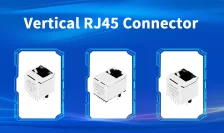
Discover LINK-PP’s vertical RJ45 connectors. Save board space with top-entry designs offer integrated magnetics, shielding, and reliable Ethernet performance.

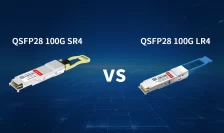
Compare QSFP28 100G SR4 vs LR4 to choose the right 100G transceiver for your network based on distance, fiber type, connectors, and budget.

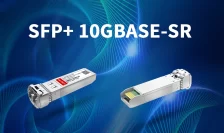
Explore the LINK-PP LS-MM8510-S3C SFP+ 850nm 10GBASE-SR optical transceiver. Up to 300m reach on MMF with low power consumption and full compatibility.
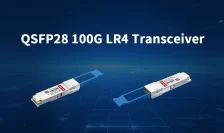
A 100G LR4 transceiver enables 100Gbps data transfer up to 10km using single-mode fiber, ideal for high-speed, long-distance network connections.
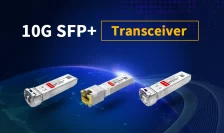
Choose the right 10G SFP+ transceiver by comparing compatibility, speed, media type, distance, and cost for reliable network upgrades.
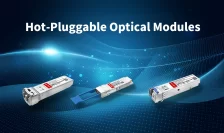
Explore the hot-pluggable optical modules. how hot-swap works, its engineering value, standards involved, and considerations for deployment.
Discover the LINK-PP LQ-M85100-SR4C QSFP28 100G SR4 transceiver—ideal for short-reach 100G Ethernet over MMF. Compatible with Cisco, Arista, FS, Dell, and more.
Optical modulation changes light properties to encode data, enabling high-speed, reliable transmission in fiber optic communication systems.
Discover what data bandwidth means, how it affects devices, and why it matters in digital communication. Learn how LINK-PP supports high-speed data transfer.
The LPJG0926HENL RJ45 connector with integrated magnetics offers PoE+ support, space efficiency, and compliance for high-performance Ethernet applications.

Add Your Heading Text Here