Troubleshoot optical transceivers efficiently with Digital Diagnostic Monitoring. Monitor real-time data to detect faults early and maintain network reliability.
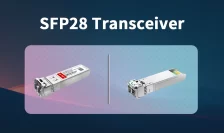
LS-MM8532-S1C SFP28 Transceivers offer 25G/32G speeds, broad compatibility, low power use, and cost savings—ideal for future-proofing your data center.
QSFP28-100G-ZR4 transceiver enables 100G data transmission up to 80km using single-mode fiber, ideal for long-distance, high-speed network connections.
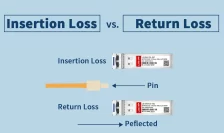
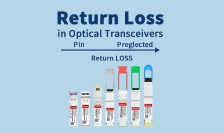
Learn the difference between insertion loss and return loss in optical transceivers, their impact on performance, measurement methods, and LINK-PP product guidance.
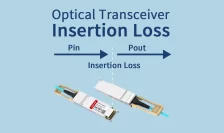
Learn what optical transceiver insertion loss is, how it affects link budgets, BER, and FEC. Includes LC/MPO numbers, control tips, and LINK-PP insights.
Long-haul transmission uses fiber optic cables to send data quickly and securely over long distances, connecting cities and countries for fast communication.
A fiber optic cable uses thin glass or plastic fibers to transmit data as light pulses, enabling fast, clear, and reliable communication over long distances.
What are SFP ports on a switch? Learn how SFP ports support fiber and Ethernet connections, how they compare with RJ45 and SFP+, and which module you need.
An SGMII SFP transceiver enables fast Ethernet connections over copper or fiber, supporting flexible speeds and device compatibility in modern networks.
Central Management Server streamlines server management, enabling secure, centralized control, updates, and monitoring for multiple systems in one place.
Dispersion compensation in optical systems corrects chromatic dispersion, ensuring clear, accurate signals in fiber optic communication and imaging applications.
In-band Network Telemetry embeds real-time monitoring data in each packet, enabling instant network insights, troubleshooting, and performance analysis.
Remote network monitoring enables real-time network management, security, and troubleshooting from any location, supporting both remote teams and multiple site.
Learn what Multipoint-to-Point (MP2P) architecture is, how it works, and how LINK-PP optical transceivers enhance data efficiency in modern fiber networks.
Learn how multipoint-to-multipoint (MP2MP) networks work, their advantages, and applications in optical communications. Discover LINK-PP optical modules supporting MP2MP systems.
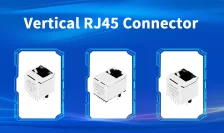
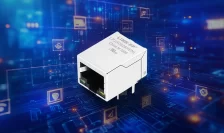
Discover LINK-PP’s vertical RJ45 connectors. Save board space with top-entry designs offer integrated magnetics, shielding, and reliable Ethernet performance.
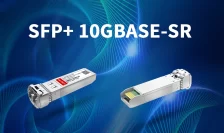
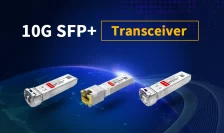
Explore the LINK-PP LS-MM8510-S3C SFP+ 850nm 10GBASE-SR optical transceiver. Up to 300m reach on MMF with low power consumption and full compatibility.
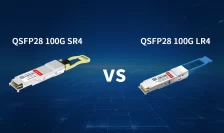
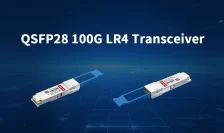
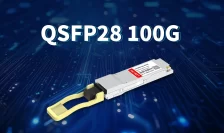
Discover the LINK-PP LQ-M85100-SR4C QSFP28 100G SR4 transceiver—ideal for short-reach 100G Ethernet over MMF. Compatible with Cisco, Arista, FS, Dell, and more.
Discover what data bandwidth means, how it affects devices, and why it matters in digital communication. Learn how LINK-PP supports high-speed data transfer.
The LPJG0926HENL RJ45 connector with integrated magnetics offers PoE+ support, space efficiency, and compliance for high-performance Ethernet applications.
Subscribe to LINK-PP
newsletter
Don’t miss anything. Get all the latest posts delivered straight to your inbox.