Welcome to the LINK-PP Community

More Posts

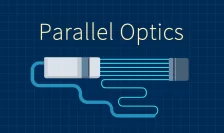
Learn what Parallel Optics is, how it enables high-speed data transmission and how LINK-PP QSFP28 SR4 and 200/400/800G transceiver modules support this technology.

InfiniBand is a high-speed network technology enabling fast, low-latency data transfer in data centers and HPC environments using RDMA.
InfiniBand vs Ethernet: Compare latency, throughput, cost, and scalability to choose the best network solution for your data center needs.
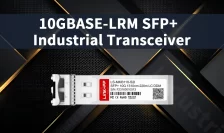
10GBASE-LRM Industrial Transceiver Supports 10.3Gbps, 220m MMF reach, industrial temperature (-40~85°C), and full compatibility with Cisco, Arista, Dell, H3C.
A backbone network connects subnetworks with high-speed fiber optics, ensuring fast, reliable data transmission across cities, regions, and countries.
Compare sfp28-25g-esr and sfp28-25g-sr modules for 25G networks. See key differences in distance, fiber type, and best use cases for data centers.
FAQ Summary of optical modules: answers on types, compatibility, design, troubleshooting, and glossary for 2025 network upgrades and maintenance.
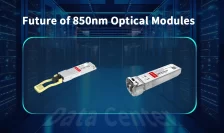
Explore the future of 850nm optical modules in data centers, covering SR8/SR16 advancements, parallel optics, and the impact of single-mode fiber adoption.
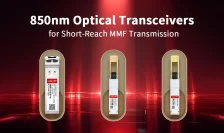
10GBASE-SR, 40GBASE-SR4, 100GBASE-SR4, and 400GBASE-SR8 850nm optical modules are the most reliable and cost-effective choice for short-reach multimode fiber connections.
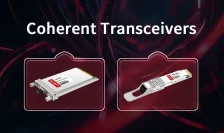
Coherent transceivers use phase, amplitude, and polarization to deliver high-speed, long-distance data transmission with improved signal quality.
FBT Splitter vs PLC Splitter: Compare technology, cost, reliability, and best uses to choose the right fiber optic splitter for your network needs.
Artificial intelligence uses data and algorithms to help computers solve problems, make decisions, and automate tasks in daily life.
Software-Defined Networking offers centralized control, flexibility, and automation for efficient network management and rapid adaptation to changing needs.
An Optical Monitoring System tracks fiber optic signals in real time, helping detect faults and improve network reliability and security.
What is Ethernet? Ethernet is a wired networking technology offering fast, stable, and secure connections for homes, offices, and businesses.
Explore how Data Processing Units (DPUs) optimize data center performance, accelerating networking, storage, and security. Discover LINK-PP optical modules for high-speed interconnects.
Explore the fundamental differences between GPUs and CPUs, their architectural distinctions, and performance benchmarks to understand which processor suits your computing needs.
Long Term Evolution (LTE) is a 4G wireless standard offering high-speed, low-latency data for mobile devices, enabling fast, reliable internet connections.
Compare FDMA, TDMA, and CDMA for wireless networks. See which access method offers better efficiency, capacity, and future-ready performance.
OFDMA vs SC-FDMA: Compare their roles in LTE/5G, impact on download speed, battery life, and why networks use OFDMA for downlink and SC-FDMA for uplink.
Industrial PCs (IPCs) deliver rugged, reliable computing for IIoT and edge control, ensuring continuous operation in harsh industrial environments.
Network congestion slows internet speeds and causes dropped connections. Learn how to identify, fix, and prevent network congestion for smoother online use.
Near-packaged optics places the optical engine near the switching chip, enabling faster data transfer, lower power use, and flexible network upgrades.
Learn PROFIBUS fundamentals, protocol types, architecture, and industrial applications. Includes expert terminology and LINK-PP RJ45 connectors for hybrid systems.
Learn PROFINET fundamentals, architecture, device classes, and real-time communication requirements. Includes hardware insights and LINK-PP integrated RJ45 solutions.
Learn what network latency is, what causes it, and actionable strategies to reduce it. Discover how high-performance optics from brands like LINK-PP can help.
A Content Delivery Network speeds up website load times by delivering web content from servers closest to users, improving reliability and security.
XLAUI (10-Lane Attachment Unit Interface) enables high-speed, reliable connections between host chips and QSFP+ modules in 40/100G Ethernet systems.
SERDES interfaces convert parallel data to serial for high-speed, reliable transmission, reducing wiring and improving signal integrity in electronics.
I/O modules connect control systems to sensors and devices, enabling accurate data exchange, real-time control, and reliable automation performance.
Discover the LQ‑SW40‑SR4C 40GBASE‑SR module: high-speed, low-power, QSFP+ optics for multimode fibre networks. Perfect for data centres and network upgrades.
Learn what hyperconverged infrastructure HCI is, how it compares with virtualization and dHCI, and when Nutanix, Sangfor, or SFP-based designs fit best.
What an FC SFP module is, how it differs from Ethernet SFPs, which speeds and fiber types it supports, and how to choose the right one.
Learn the real difference between 1000base-lh and 1000base-lx, including wavelength, fiber compatibility, Cisco naming, and when to use each.
Learn what a Gigabit SFP transceiver is, compare 1000BASE-SX, LX, and T options, and solve common compatibility and setup issues with confidence.
Learn what a 10/100/1000BASE-T SFP is, how RJ45 copper SFP modules work, compatibility issues, heat concerns, and best use cases in networks.
Compare CFP4 vs. QSFP28 by size, power, density, and deployment fit. Learn which 100G module is better for data centers, telecom, and upgrades.
Explore the Netgear AGM731F datasheet with specs, LC connector, OM1/OM3/OM4 distances, compatibility, power use, and operating limits.
Learn what 40GBASE-ER4 is, how far it reaches over duplex single-mode fiber, what it supports, and how to choose the right QSFP+ optic.
Understand SFP+ 40km (10GBASE-ER) modules, including specs, SMF compatibility, and how to choose the right extended-reach optical transceiver for your network.

Add Your Heading Text Here