Welcome to the LINK-PP Community

More Posts

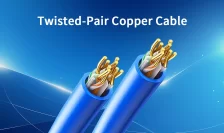
Twisted-pair copper cable uses two insulated wires twisted together to block interference, ensuring reliable data and voice transmission in networks.
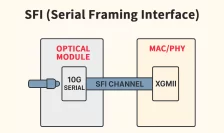
Learn how the Serial Framing Interface (SFI) enables high-speed data transmission in 10G SFP+ and 40G QSFP+ optical modules. Explore SFI channels, XGMII conversion, and module interoperability for reliable networking.
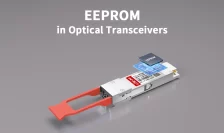
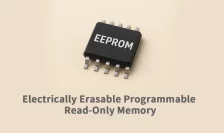
Learn why EEPROM is essential for module identification, monitoring, and compatibility, and how LINK-PP’s SFP/QSFP modules follow SFF-8472 and SFF-8024 Standard.
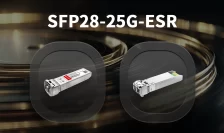
sfp28-25g-esr is a 25G optical transceiver offering fast, reliable data transmission and extended reach for modern network infrastructure.
The SFP28-25G-SR transceiver delivers 25Gbps speeds, short-range fiber connectivity, and reliable performance for data centers and enterprise networks.
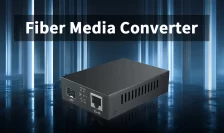
Media converters connect copper and fiber cables, converting signals to extend network reach and support legacy devices.
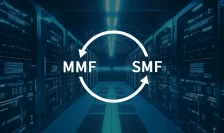
Convert fiber between multimode and single mode using smart methods for better speed, longer distance, and reliable network performance.
Learn what SFF-8636 is, why it matters for QSFP/QSFP28 optics, and how its 2-wire management interface, memory map, power classes, and alarms ensure interoperability.
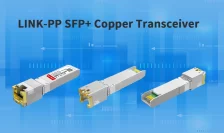
Discover the LINK-PP 10GBase-T Copper SFP+ Transceiver. Supporting 10Gbps over Cat6a/7 cables up to 80m. Compatible with Cisco, Dell, H3C, Juniper, and Arista.
Discover how EEPROM ensures reliable configuration, superior compatibility, and lifetime flexibility in networking hardware: from RJ45 to optical modules.
Learn how to remove an SFP module from a switch safely and correctly. Step-by-step guide covering hot swap, latch types, stuck modules, and ESD protection.
Learn how to choose the right SFP module based on compatibility, speed, fiber type, wavelength, and distance. Practical guide for engineers and IT buyers.
A complete guide to SFP in networking, covering function, working principle, module types, deployment scenarios, compatibility, and technical standards for modern fiber networks.
Discover what SFP stands for in networking, its full meaning, technical standards, uses, and differences from SFP+ and GBIC in this expert guide.
Comprehensive BiDi SFP guide: learn single-fiber bidirectional transceivers, wavelength pairing, link-budget calculation, compatibility, and deployment best practices.
Authoritative SFP wavelength guide: compare 850nm, 1310nm, 1550nm applications, link-budget implications, multimode vs single-mode selection, interoperability, and checklist.
Comprehensive SFP compatibility guide covering data rate matching, wavelength selection, power budget calculation, EEPROM coding, firmware validation, and vendor locking.
SFP+ Types overview: Compare optical, copper, and direct attach modules, their features, distances, and compatibility for optimal network performance.
What Is QSFP-DD? QSFP-DD enables high-speed Ethernet with double density, backward compatibility, and up to 800G bandwidth for modern data centers.
Understanding polarity in MTP/MPO systems ensures correct signal flow, prevents data errors, and maintains reliable network performance.
Intent-based networking automates network management, aligns operations with business goals, and enhances security using AI and analytics.
Simple Network Management Protocol (SNMP) enables efficient monitoring and management of network devices, improving visibility, control, and security.
Internet Control Message Protocol (ICMP) helps diagnose network issues by sending error and status messages between devices for reliable communication.
Global Positioning System (GPS) uses satellites to provide accurate real-time location, navigation, and tracking for personal, business, and safety needs.
A Network Management System monitors, controls, and protects network devices, providing real-time alerts, automation, and improved network security.
What is CMOS? Learn the fundamentals of Complementary Metal-Oxide-Semiconductor technology, its working principle, key advantages, and its integration with silicon photonics and optical transceivers.
Multi-Link Operation (MLO) in Wi-Fi lets devices use multiple bands at once, boosting speed, stability, and performance in Wi-Fi 7 networks.
Network Time Protocol synchronizes device clocks across networks, ensuring accurate time for data integrity, security, and smooth operations.
Fibre Channel over Ethernet (FCoE) enables Fibre Channel storage traffic to run on Ethernet networks, streamlining data center connectivity and reducing costs.
Precision Time Protocol synchronizes network device clocks for microsecond accuracy, reducing errors and improving reliability in critical applications.
Discover the LQ‑SW40‑SR4C 40GBASE‑SR module: high-speed, low-power, QSFP+ optics for multimode fibre networks. Perfect for data centres and network upgrades.
Learn what hyperconverged infrastructure HCI is, how it compares with virtualization and dHCI, and when Nutanix, Sangfor, or SFP-based designs fit best.

What an FC SFP module is, how it differs from Ethernet SFPs, which speeds and fiber types it supports, and how to choose the right one.
Learn the real difference between 1000base-lh and 1000base-lx, including wavelength, fiber compatibility, Cisco naming, and when to use each.
Learn what a Gigabit SFP transceiver is, compare 1000BASE-SX, LX, and T options, and solve common compatibility and setup issues with confidence.
Learn what a 10/100/1000BASE-T SFP is, how RJ45 copper SFP modules work, compatibility issues, heat concerns, and best use cases in networks.
Compare CFP4 vs. QSFP28 by size, power, density, and deployment fit. Learn which 100G module is better for data centers, telecom, and upgrades.


Explore the Netgear AGM731F datasheet with specs, LC connector, OM1/OM3/OM4 distances, compatibility, power use, and operating limits.
Learn QSFP+ 40GBASE-LR4 specs, distance limits, compatibility tips, and buying advice. Avoid common deployment issues with this expert guide.
Learn what 40GBASE-ER4 is, how far it reaches over duplex single-mode fiber, what it supports, and how to choose the right QSFP+ optic.

Add Your Heading Text Here