Learn how compatible transceivers work and how to ensure switch compatibility. Avoid SFP errors, vendor locks, and choose the right module confidently.
Learn what the SFP standard really means, including specifications, compatibility rules, and real-world limitations. Avoid costly mistakes when choosing SFP modules.
Learn the SFP28 standard, including its 25G capabilities, SFP28 vs. SFP+ differences, fiber and copper options, and how to choose the right 25G solution.
Learn how a 1000BASE-T SFP transceiver module works with Category 5 copper wire, including compatibility limits, heat issues, and real-world deployment tips.
Learn how to clean an SFP transceiver properly to prevent signal loss, reduce errors, and extend module lifespan using industry-approved tools and methods.
A fiber optic coupler splits or combines light signals in optical networks, improving data flow, reliability, and network flexibility for various applications.
Dive into the IEEE 802.3bs standard, the foundation for modern 200G and 400G Ethernet. Discover specifications, PAM4 modulation, and how this technology is driving hyperscale data centers with optical transceivers.
Open optics and disaggregation in data center networks cut costs, boost flexibility, and improve performance while reducing vendor lock-in and energy use.
Discover how TX Fault and RX LOS affect optical transceivers. This guide explains their functions, common triggers, and practical troubleshooting steps.
Learn how to match SFP modules with your switch or media converter by checking compatibility, speed, fiber type, wavelength, and distance. A clear and practical guide.
Pluggable optics enable flexible, cost-effective network upgrades and high-speed connections, with linear pluggable optics boosting AI and data center performance.
Power Over Ethernet (PoE) combines power and data delivery via a single cable, simplifying installations for devices like IP cameras, VoIP phones, and IoT systems.
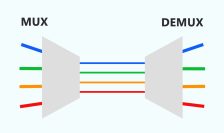
Wavelength Division Multiplexing (WDM) uses optical transceiver modules to send multiple data streams through a single fiber, boosting bandwidth and efficiency.
The Receiver Optical Sub-Assembly (ROSA) is a critical optoelectronic component in Optical Tranceivers, responsible for converting incoming optical signals into
DDM/DOM in optical transceivers provides real-time monitoring of key parameters like temperature and power, ensuring network reliability and early issue detection.
Discover the LQ‑SW40‑SR4C 40GBASE‑SR module: high-speed, low-power, QSFP+ optics for multimode fibre networks. Perfect for data centres and network upgrades.
Learn what hyperconverged infrastructure HCI is, how it compares with virtualization and dHCI, and when Nutanix, Sangfor, or SFP-based designs fit best.
Understand SFP+ 40km (10GBASE-ER) modules, including specs, SMF compatibility, and how to choose the right extended-reach optical transceiver for your network.