Discover how LINK-PP’s LAN transformers deliver high speed and signal integrity, and certified electrical isolation—ideal for industrial, PoE, and IoT network.
Insertion loss in RJ45 connectors weakens signal strength, impacting network reliability. Learn how to minimize insertion loss for optimal performance.
Medical-grade RJ45 connector ensures safe, reliable, and compliant network connections in medical devices, meeting IEC 60601-1 and sterilization standards.
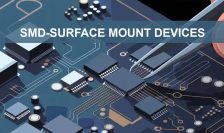
A Surface-Mount Device (SMD) is a compact electronic component mounted directly on a PCB, enabling smaller, faster, and more efficient modern electronics.
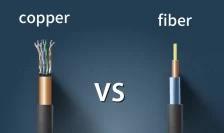
Fiber optic cable offers faster speeds, longer distances, and better reliability than copper cable, making it ideal for high-performance internet and networks.
Explore the essential components and types of servers, including rack, blade, and hyperconverged infrastructures. Learn how servers power modern IT systems and support businesses worldwide.
Explore the IEEE 802.3ba standard—defining both 40GbE & 100GbE—its technical design and applications, plus how LINK-PP’s 40G QSFP+ modules align perfectly with this high-speed Ethernet evolution.
Unlock the power of QSFP+ MSA: a multi-vendor standard for 40G transceivers ensuring seamless interoperability. Discover LINK-PP 40G QSFP+ options like SR4, LR4, and FR4.
Compare CFP and QSFP28 transceivers to decide the best fit for your network. CFP excels in long-distance transmission, while QSFP28 offers high port density.
Demystifying 100G optical transceivers! Explore the differences between CFP, CFP2, and CFP4 form factors, their applications, and why choosing the right one, like LINK-PP's reliable modules, is crucial for your network's performance.
qsfp+ 40g FR4 offers high-speed, long-reach data transmission for modern networks, improving performance, efficiency, and future scalability in data centers.
QSFP+ 40G ER4 is a 40G transceiver for long-distance, high-speed links up to 40km, ideal for data centers and enterprise networks using single-mode fiber.
QSFP+ 40G LR4 enables high-speed, long-range data transfer for data centers, enterprises, and telecoms, supporting reliable 40G network growth in 2025.
Power Over Ethernet (PoE) combines power and data delivery via a single cable, simplifying installations for devices like IP cameras, VoIP phones, and IoT systems.
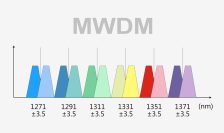
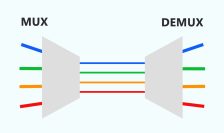
Wavelength Division Multiplexing (WDM) uses optical transceiver modules to send multiple data streams through a single fiber, boosting bandwidth and efficiency.
The Receiver Optical Sub-Assembly (ROSA) is a critical optoelectronic component in Optical Tranceivers, responsible for converting incoming optical signals into
DDM/DOM in optical transceivers provides real-time monitoring of key parameters like temperature and power, ensuring network reliability and early issue detection.
Discover the LQ‑SW40‑SR4C 40GBASE‑SR module: high-speed, low-power, QSFP+ optics for multimode fibre networks. Perfect for data centres and network upgrades.
Learn what hyperconverged infrastructure HCI is, how it compares with virtualization and dHCI, and when Nutanix, Sangfor, or SFP-based designs fit best.
Understand SFP+ 40km (10GBASE-ER) modules, including specs, SMF compatibility, and how to choose the right extended-reach optical transceiver for your network.
Subscribe to LINK-PP
newsletter
Don’t miss anything. Get all the latest posts delivered straight to your inbox.