Welcome to the LINK-PP Community

More Posts

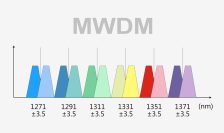
What is MWDM? MWDM enables more data channels on a single fiber, supporting efficient, high-capacity 5G fronthaul with balanced cost and scalability.
Discover how LINK-PP’s LAN transformers deliver high speed and signal integrity, and certified electrical isolation—ideal for industrial, PoE, and IoT network.
What is LWDM? LWDM is a LAN WDM technology using multiple wavelengths to boost bandwidth and efficiency in local area networks and data centers.
explores frequent optical transceiver issues and offers practical solutions, and highlight how LINK-PP optical module can mitigate risks.
Insertion loss in RJ45 connectors weakens signal strength, impacting network reliability. Learn how to minimize insertion loss for optimal performance.
Medical-grade RJ45 connector ensures safe, reliable, and compliant network connections in medical devices, meeting IEC 60601-1 and sterilization standards.
Optical modules boost AI technology by enabling high-speed data transfer, reducing latency, and improving energy efficiency in modern AI systems.
A Surface-Mount Device (SMD) is a compact electronic component mounted directly on a PCB, enabling smaller, faster, and more efficient modern electronics.
Fiber optic cable offers faster speeds, longer distances, and better reliability than copper cable, making it ideal for high-performance internet and networks.
Learn what a DFB laser (Distributed Feedback Laser) is, its working principle, structure, and key differences from FP and VCSEL lasers.
Open source gives control over software code, while open networking lets you mix hardware and software from multiple vendors for flexible networks.
Open networking enables flexible, vendor-neutral networks by separating hardware and software, offering more control, choice, and cost efficiency.
Open optics and disaggregation in data center networks cut costs, boost flexibility, and improve performance while reducing vendor lock-in and energy use.
Aging and burn-in tests ensure optical transceiver reliability by detecting early failures, improving performance, and extending module lifespan.
Pluggable optics offer flexible upgrades, while on-board optics provide higher speed and integration. Compare both for your data center needs.
Discover how TX Fault and RX LOS affect optical transceivers. This guide explains their functions, common triggers, and practical troubleshooting steps.
Learn how to match SFP modules with your switch or media converter by checking compatibility, speed, fiber type, wavelength, and distance. A clear and practical guide.
Selecting industrial SFP modules requires checking compatibility, link budget, temperature rating, DDM (SFF-8472) and vendor support. Practical guide for rugged networks.
On-Board Optics boosts data speed, power efficiency, and channel density for data centers, supercomputers, and advanced network systems.
Pluggable optics enable flexible, cost-effective network upgrades and high-speed connections, with linear pluggable optics boosting AI and data center performance.
Explore point-to-multipoint (P2MP) network architecture, working principle, advantages, and applications. Learn how LINK-PP optical transceivers support P2MP deployments.
Intent-based networking automates network management, aligns operations with business goals, and enhances security using AI and analytics.
Simple Network Management Protocol (SNMP) enables efficient monitoring and management of network devices, improving visibility, control, and security.
Global Positioning System (GPS) uses satellites to provide accurate real-time location, navigation, and tracking for personal, business, and safety needs.
A Network Management System monitors, controls, and protects network devices, providing real-time alerts, automation, and improved network security.
What is CMOS? Learn the fundamentals of Complementary Metal-Oxide-Semiconductor technology, its working principle, key advantages, and its integration with silicon photonics and optical transceivers.
Internet Control Message Protocol (ICMP) helps diagnose network issues by sending error and status messages between devices for reliable communication.
Multi-Link Operation (MLO) in Wi-Fi lets devices use multiple bands at once, boosting speed, stability, and performance in Wi-Fi 7 networks.
Network Time Protocol synchronizes device clocks across networks, ensuring accurate time for data integrity, security, and smooth operations.
Fibre Channel over Ethernet (FCoE) enables Fibre Channel storage traffic to run on Ethernet networks, streamlining data center connectivity and reducing costs.
Discover the LQ‑SW40‑SR4C 40GBASE‑SR module: high-speed, low-power, QSFP+ optics for multimode fibre networks. Perfect for data centres and network upgrades.
Learn what hyperconverged infrastructure HCI is, how it compares with virtualization and dHCI, and when Nutanix, Sangfor, or SFP-based designs fit best.
What an FC SFP module is, how it differs from Ethernet SFPs, which speeds and fiber types it supports, and how to choose the right one.
Learn the real difference between 1000base-lh and 1000base-lx, including wavelength, fiber compatibility, Cisco naming, and when to use each.
Learn what a Gigabit SFP transceiver is, compare 1000BASE-SX, LX, and T options, and solve common compatibility and setup issues with confidence.
Learn what a 10/100/1000BASE-T SFP is, how RJ45 copper SFP modules work, compatibility issues, heat concerns, and best use cases in networks.
Compare CFP4 vs. QSFP28 by size, power, density, and deployment fit. Learn which 100G module is better for data centers, telecom, and upgrades.
Explore the Netgear AGM731F datasheet with specs, LC connector, OM1/OM3/OM4 distances, compatibility, power use, and operating limits.
Understand SFP+ 40km (10GBASE-ER) modules, including specs, SMF compatibility, and how to choose the right extended-reach optical transceiver for your network.

Learn QSFP+ 40GBASE-LR4 specs, distance limits, compatibility tips, and buying advice. Avoid common deployment issues with this expert guide.

Add Your Heading Text Here