Cooperation Between LINK-PP and Vietnam Telecom in 2025 boosts Vietnam’s telecom with advanced optical modules, enhancing speed, reliability, and scalability.
CWDM vs DWDM: Cost-effective 8-channel metro optics vs high-density 96+ channel long-haul systems. Choose LINK-PP optical transceivers for both WDM solutions.
Compare PC vs UPC vs APC fiber connectors to choose the best type for your network. Understand differences in return loss, insertion loss, and applications.
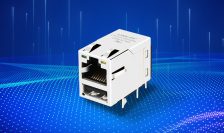
The RJ45 USB connector Combo by LINK-PP, LPJU3102ABNL, merges Ethernet and USB, offering durability, EMI shielding, and LED indicators for 10/100 Base-T networks.
CPRI (Common Public Radio Interface) connects baseband units to remote radio units, enabling high-speed, low-latency communication in wireless networks.
Understand the key parameters of optical modules, including transmission rate, distance, wavelength, and fiber compatibility, for better network performance.
EMC Electromagnetic Compatibility ensures devices work safely and reliably in shared environments by minimizing interference and meeting compliance standards.
Dive into the IEEE 802.3bs standard, the foundation for modern 200G and 400G Ethernet. Discover specifications, PAM4 modulation, and how this technology is driving hyperscale data centers with optical transceivers.
Learn what IEEE 802.3bm is and how it defines the key PHY interfaces for 40G and 100G Ethernet. Explore SR4, LR4, CR4 technologies and why this standard powers modern data centers.
Open optics and disaggregation in data center networks cut costs, boost flexibility, and improve performance while reducing vendor lock-in and energy use.
Discover how TX Fault and RX LOS affect optical transceivers. This guide explains their functions, common triggers, and practical troubleshooting steps.
Learn how to match SFP modules with your switch or media converter by checking compatibility, speed, fiber type, wavelength, and distance. A clear and practical guide.
Pluggable optics enable flexible, cost-effective network upgrades and high-speed connections, with linear pluggable optics boosting AI and data center performance.
Learn how LDP (Label Distribution Protocol) establishes Label Switched Paths in MPLS networks. Understand LDP functions, working principles, and relation to LINK-PP products.
Central Management Server streamlines server management, enabling secure, centralized control, updates, and monitoring for multiple systems in one place.
Dispersion compensation in optical systems corrects chromatic dispersion, ensuring clear, accurate signals in fiber optic communication and imaging applications.
In-band Network Telemetry embeds real-time monitoring data in each packet, enabling instant network insights, troubleshooting, and performance analysis.
Remote network monitoring enables real-time network management, security, and troubleshooting from any location, supporting both remote teams and multiple site.
Learn what Multipoint-to-Point (MP2P) architecture is, how it works, and how LINK-PP optical transceivers enhance data efficiency in modern fiber networks.
Learn how multipoint-to-multipoint (MP2MP) networks work, their advantages, and applications in optical communications. Discover LINK-PP optical modules supporting MP2MP systems.
Explore the fundamentals of Point-to-Point (P2P) network architecture, its working principles, and how LINK-PP RJ45 connectors and optical transceivers enable reliable high-speed communication.
Discover the LQ‑SW40‑SR4C 40GBASE‑SR module: high-speed, low-power, QSFP+ optics for multimode fibre networks. Perfect for data centres and network upgrades.
Learn what hyperconverged infrastructure HCI is, how it compares with virtualization and dHCI, and when Nutanix, Sangfor, or SFP-based designs fit best.
Understand SFP+ 40km (10GBASE-ER) modules, including specs, SMF compatibility, and how to choose the right extended-reach optical transceiver for your network.
Subscribe to LINK-PP
newsletter
Don’t miss anything. Get all the latest posts delivered straight to your inbox.