Welcome to the LINK-PP Community

More Posts

Explores the types of lasers used in optical modules, DFB, FP, VCSEL & EML lasers comparison. Learn applications, and how to choose the right type.
The LINK-PP LQD-CW400-LR4C 400G QSFP-DD LR4 Transceiver offers 10km range, 400Gbps speed, and energy efficiency, ideal for data centers and enterprise networks.
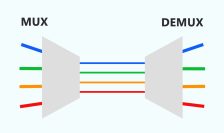
Wavelength Division Multiplexing (WDM) uses optical transceiver modules to send multiple data streams through a single fiber, boosting bandwidth and efficiency.
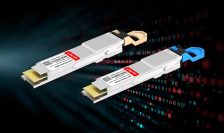
QSFP-DD Optical Transceivers deliver up to 800Gbps speeds, offering high bandwidth, energy efficiency, and compatibility for modern networks and data centers.
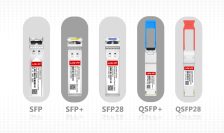
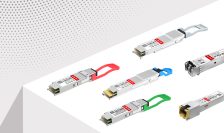
Compare SFP, SFP+, SFP28, QSFP+, and QSFP28 optical transceivers. Learn how form factors affect speed, compatibility, and performance in modern networks.
About LINK-PP: A global leader in magnetic components, offering high-quality RJ45 Connectors, LAN Transformers, and Optical Transceivers for reliable networks.
LINK-PP Fiber Optical Transceiver Modules offer high-speed data transfer, durability, compatibility, and cost-effective solutions for reliable network performance.
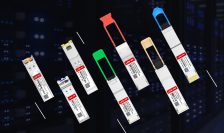
Systematic classification of optical modules by data rate, form factor, transmission distance, and fiber type.
The TOSA is a critical component in optical transceivers, converting electrical signals into optical signals for high-speed fiber optic communication.
The Receiver Optical Sub-Assembly (ROSA) is a critical optoelectronic component in Optical Tranceivers, responsible for converting incoming optical signals into
Access networks connect devices to the internet, enabling fast, reliable communication through wired or wireless technology for homes and businesses.
InfiniBand vs Ethernet: Compare latency, throughput, cost, and scalability to choose the best network solution for your data center needs.
InfiniBand is a high-speed network technology enabling fast, low-latency data transfer in data centers and HPC environments using RDMA.
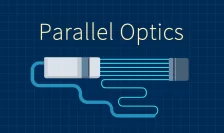
Learn what Parallel Optics is, how it enables high-speed data transmission and how LINK-PP QSFP28 SR4 and 200/400/800G transceiver modules support this technology.
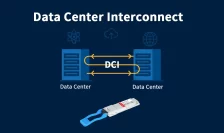
Discover what DCI is and how optical modules deliver high-speed, secure, and reliable connectivity between data centers.
FAQ Summary of optical modules: answers on types, compatibility, design, troubleshooting, and glossary for 2025 network upgrades and maintenance.
Compare sfp28-25g-esr and sfp28-25g-sr modules for 25G networks. See key differences in distance, fiber type, and best use cases for data centers.
A backbone network connects subnetworks with high-speed fiber optics, ensuring fast, reliable data transmission across cities, regions, and countries.
Twisted-pair copper cable uses two insulated wires twisted together to block interference, ensuring reliable data and voice transmission in networks.
Coherent transceivers use phase, amplitude, and polarization to deliver high-speed, long-distance data transmission with improved signal quality.
Central Management Server streamlines server management, enabling secure, centralized control, updates, and monitoring for multiple systems in one place.
Chromatic Dispersion (CD) in fiber optics causes signal spreading, impacting clarity and speed. Learn how CD affects networks and ways to manage it.
Learn how ROADM enables flexible wavelength routing in DWDM networks. Discover LINK-PP’s compatible optical transceivers for seamless integration.
Dispersion compensation in optical systems corrects chromatic dispersion, ensuring clear, accurate signals in fiber optic communication and imaging applications.
In-band Network Telemetry embeds real-time monitoring data in each packet, enabling instant network insights, troubleshooting, and performance analysis.
Remote network monitoring enables real-time network management, security, and troubleshooting from any location, supporting both remote teams and multiple site.
Learn what Multipoint-to-Point (MP2P) architecture is, how it works, and how LINK-PP optical transceivers enhance data efficiency in modern fiber networks.
Learn how multipoint-to-multipoint (MP2MP) networks work, their advantages, and applications in optical communications. Discover LINK-PP optical modules supporting MP2MP systems.
Explore the fundamentals of Point-to-Point (P2P) network architecture, its working principles, and how LINK-PP RJ45 connectors and optical transceivers enable reliable high-speed communication.
Explore point-to-multipoint (P2MP) network architecture, working principle, advantages, and applications. Learn how LINK-PP optical transceivers support P2MP deployments.
Discover the LQ‑SW40‑SR4C 40GBASE‑SR module: high-speed, low-power, QSFP+ optics for multimode fibre networks. Perfect for data centres and network upgrades.
Learn what hyperconverged infrastructure HCI is, how it compares with virtualization and dHCI, and when Nutanix, Sangfor, or SFP-based designs fit best.
What an FC SFP module is, how it differs from Ethernet SFPs, which speeds and fiber types it supports, and how to choose the right one.
Learn the real difference between 1000base-lh and 1000base-lx, including wavelength, fiber compatibility, Cisco naming, and when to use each.
Learn what a Gigabit SFP transceiver is, compare 1000BASE-SX, LX, and T options, and solve common compatibility and setup issues with confidence.
Learn what a 10/100/1000BASE-T SFP is, how RJ45 copper SFP modules work, compatibility issues, heat concerns, and best use cases in networks.
Compare CFP4 vs. QSFP28 by size, power, density, and deployment fit. Learn which 100G module is better for data centers, telecom, and upgrades.
Explore the Netgear AGM731F datasheet with specs, LC connector, OM1/OM3/OM4 distances, compatibility, power use, and operating limits.
Understand SFP+ 40km (10GBASE-ER) modules, including specs, SMF compatibility, and how to choose the right extended-reach optical transceiver for your network.

Learn QSFP+ 40GBASE-LR4 specs, distance limits, compatibility tips, and buying advice. Avoid common deployment issues with this expert guide.

Add Your Heading Text Here