Welcome to the LINK-PP Community

More Posts

Explores the types of lasers used in optical modules, DFB, FP, VCSEL & EML lasers comparison. Learn applications, and how to choose the right type.
The LINK-PP LQD-CW400-LR4C 400G QSFP-DD LR4 Transceiver offers 10km range, 400Gbps speed, and energy efficiency, ideal for data centers and enterprise networks.
Wavelength Division Multiplexing (WDM) uses optical transceiver modules to send multiple data streams through a single fiber, boosting bandwidth and efficiency.
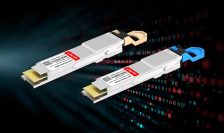
QSFP-DD Optical Transceivers deliver up to 800Gbps speeds, offering high bandwidth, energy efficiency, and compatibility for modern networks and data centers.
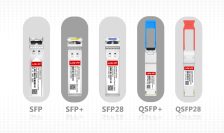
Compare SFP, SFP+, SFP28, QSFP+, and QSFP28 optical transceivers. Learn how form factors affect speed, compatibility, and performance in modern networks.
About LINK-PP: A global leader in magnetic components, offering high-quality RJ45 Connectors, LAN Transformers, and Optical Transceivers for reliable networks.
LINK-PP Fiber Optical Transceiver Modules offer high-speed data transfer, durability, compatibility, and cost-effective solutions for reliable network performance.
Systematic classification of optical modules by data rate, form factor, transmission distance, and fiber type.
The TOSA is a critical component in optical transceivers, converting electrical signals into optical signals for high-speed fiber optic communication.
The Receiver Optical Sub-Assembly (ROSA) is a critical optoelectronic component in Optical Tranceivers, responsible for converting incoming optical signals into
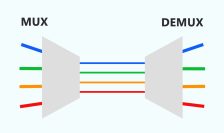
MUX and DEMUX streamline data transmission by combining and splitting signals, reducing cables, and enhancing network efficiency and reliability.
Learn how optical pulses transmit high-speed data in fiber networks. Explore principles, applications, and why LINK-PP optical transceivers deliver cleaner, more reliable pulses.
Unlock high-speed industrial automation with EtherCAT. Learn how EtherCAT achieves sub-microsecond synchronization, its principles, and why it is critical for modern motion control and smart factories.
Learn how PCS, PMA, and PMD work together inside the Ethernet PHY, enabling reliable high-speed data transmission across fiber and copper networks.
Data center virtualization uses software to create virtual servers, storage, and networks, improving efficiency, reducing costs, and boosting flexibility.
Compare Fiber Optic Splitter and coupler functions, signal loss, and best uses to choose the right device for efficient modern network distribution.
A cloud managed network lets you control devices remotely via a web dashboard, offering easy management, automatic updates, and strong security.
Open source gives control over software code, while open networking lets you mix hardware and software from multiple vendors for flexible networks.
Open networking enables flexible, vendor-neutral networks by separating hardware and software, offering more control, choice, and cost efficiency.
A fiber optic coupler splits or combines light signals in optical networks, improving data flow, reliability, and network flexibility for various applications.
Learn what MTTR (Mean Time to Repair) means, why it matters for system reliability, and how LINK‑PP’s hot-swappable SFP/SFP+ transceivers reduce repair time.
Industrial PCs (IPCs) deliver rugged, reliable computing for IIoT and edge control, ensuring continuous operation in harsh industrial environments.
Network congestion slows internet speeds and causes dropped connections. Learn how to identify, fix, and prevent network congestion for smoother online use.
Near-packaged optics places the optical engine near the switching chip, enabling faster data transfer, lower power use, and flexible network upgrades.
Learn PROFIBUS fundamentals, protocol types, architecture, and industrial applications. Includes expert terminology and LINK-PP RJ45 connectors for hybrid systems.
Learn PROFINET fundamentals, architecture, device classes, and real-time communication requirements. Includes hardware insights and LINK-PP integrated RJ45 solutions.
XLAUI (10-Lane Attachment Unit Interface) enables high-speed, reliable connections between host chips and QSFP+ modules in 40/100G Ethernet systems.
SERDES interfaces convert parallel data to serial for high-speed, reliable transmission, reducing wiring and improving signal integrity in electronics.
I/O modules connect control systems to sensors and devices, enabling accurate data exchange, real-time control, and reliable automation performance.
Learn what network latency is, what causes it, and actionable strategies to reduce it. Discover how high-performance optics from brands like LINK-PP can help.
Discover the LQ‑SW40‑SR4C 40GBASE‑SR module: high-speed, low-power, QSFP+ optics for multimode fibre networks. Perfect for data centres and network upgrades.
Learn what hyperconverged infrastructure HCI is, how it compares with virtualization and dHCI, and when Nutanix, Sangfor, or SFP-based designs fit best.

What an FC SFP module is, how it differs from Ethernet SFPs, which speeds and fiber types it supports, and how to choose the right one.
Learn the real difference between 1000base-lh and 1000base-lx, including wavelength, fiber compatibility, Cisco naming, and when to use each.
Learn what a Gigabit SFP transceiver is, compare 1000BASE-SX, LX, and T options, and solve common compatibility and setup issues with confidence.
Learn what a 10/100/1000BASE-T SFP is, how RJ45 copper SFP modules work, compatibility issues, heat concerns, and best use cases in networks.
Compare CFP4 vs. QSFP28 by size, power, density, and deployment fit. Learn which 100G module is better for data centers, telecom, and upgrades.


Explore the Netgear AGM731F datasheet with specs, LC connector, OM1/OM3/OM4 distances, compatibility, power use, and operating limits.
Learn QSFP+ 40GBASE-LR4 specs, distance limits, compatibility tips, and buying advice. Avoid common deployment issues with this expert guide.
Learn what 40GBASE-ER4 is, how far it reaches over duplex single-mode fiber, what it supports, and how to choose the right QSFP+ optic.