Welcome to the LINK-PP Community

More Posts

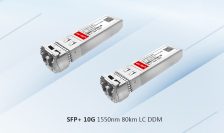
The LINK-PP 10G SFP+ Transceiver LS-SM5510-80C delivers 10.7Gbps speed, 80km range, low power use, and compatibility with top networking devices.
SFP+ transceiver modules enable high-speed data transfer, seamless communication, and flexible connectivity in data centers, supporting efficient networks.
Choose the best LINK-PP SFP Transceiver by considering cable type, distance, speed, and compatibility for reliable and efficient network performance.
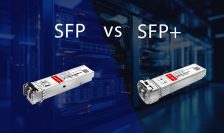
SFP and SFP+ transceivers differ in speed, compatibility, and use. SFP supports up to 1Gbps, while SFP+ handles up to 10Gbps for faster networks.
LINK-PP 100G SFP-DD LR optical module enables high-speed, long-distance connections.
100G SFP-DD transceivers boost high-density networks with fast 100Gbps speeds, compact design, energy efficiency, and long-distance data transmission up to 40km.
SFP+ 10G transceivers deliver high-speed data transfer, low latency, energy efficiency, and compatibility with various devices for modern network setups.
Master transceiver installation with 5 simple steps. Learn how to prepare, place, connect, test, and maintain for reliable network performance.
An optical module converts electrical signals to light for fast, reliable data transfer in networks, essential for cloud computing, telecom, and data centers.
LINK-PP is expanding with new production lines, strategic partnerships, and innovative RJ45 connectors, driving advancements in global connectivity solutions.
Can you use a 1Gb SFP in a 10Gb port? Learn compatibility rules, limitations, configuration tips, and how to choose the right SFP module safely.
Understand CFP optical modules, including types, 100G applications, pros and cons, and CFP vs QSFP28 comparisons to choose the right solution.
Learn optical link budget calculation for SFP modules with formulas, real examples, fiber loss breakdown, and troubleshooting tips for reliable links.
Learn what SFP means in telecom, including types, fiber vs copper, distances, and real-world applications like PON and DWDM. A complete selection guide.
Learn how to fix SFP issues fast: no link light, link flapping, detection errors, compatibility problems, and optical power checks.
Understand QSFP data rate from 40G to 800G, including QSFP+, QSFP28, and QSFP-DD. Compare speeds, lane structure, and choose the right module.
Understand SFP distance, fiber optic range, and real-world limits of SR/LR modules. Learn how wavelength, fiber type, and optics affect performance.
Understand QSFP28 MSA standards, compatibility limits, and real-world risks. Learn how to choose reliable 100G optics and avoid deployment failures.
Learn how to test an SFP transceiver with the right tools, methods, and pass/fail points for optical power, BER, eye diagram, DDM, and compatibility.
Learn what the SFP standard really means, including specifications, compatibility rules, and real-world limitations. Avoid costly mistakes when choosing SFP modules.
SVI in networking lets you assign IP addresses to VLANs, enabling inter-VLAN routing and efficient Layer 3 switch management for your network.
exploring cloud migration and its benefits, strategies, best practices, also delve into the essential hardware, like optical modules, that make it all possible.
Learn what the EtherCAT Slave Controller (ESC) is and how it processes real-time frames, manages FMMU mapping, and enables high-speed industrial automation.
Learn what the PCS (Physical Coding Sublayer) is, how it enables reliable Ethernet transmission, and why it matters for high-speed optical transceivers and network design.
Physical Medium Dependent (PMD) defines the optical and electrical rules of a PHY—wavelength, power, reach, and test points. Understand PMD specs and how they guide transceiver selection.
Learn what the PMA (Physical Medium Attachment) is, how it handles serialization and clock recovery, and why it is essential for modern high-speed optical transceivers.
Master Mean Time to Acknowledge (MTTA), the key metric for rapid response. Learn its role in system availability, how to calculate it, and proven steps to reduce MTTA for superior network uptime.
Master Mean Time to Detect (MTTD), the most crucial metric for avoiding silent failures. Learn the calculation, its role in modern observability, and how to reduce MTTD for superior system availability.
Discover MTBF (Mean Time Between Failures), its importance for system reliability, and how LINK‑PP industrial connectors and SFP/SFP+ modules help maximize uptime.
A clear, professional guide to IIoT (Industrial Internet of Things), covering architecture, protocols, security best practices, and suitable networking components for industrial deployments.
Discover the LQ‑SW40‑SR4C 40GBASE‑SR module: high-speed, low-power, QSFP+ optics for multimode fibre networks. Perfect for data centres and network upgrades.
Learn what hyperconverged infrastructure HCI is, how it compares with virtualization and dHCI, and when Nutanix, Sangfor, or SFP-based designs fit best.

What an FC SFP module is, how it differs from Ethernet SFPs, which speeds and fiber types it supports, and how to choose the right one.
Learn the real difference between 1000base-lh and 1000base-lx, including wavelength, fiber compatibility, Cisco naming, and when to use each.
Learn what a Gigabit SFP transceiver is, compare 1000BASE-SX, LX, and T options, and solve common compatibility and setup issues with confidence.
Learn what a 10/100/1000BASE-T SFP is, how RJ45 copper SFP modules work, compatibility issues, heat concerns, and best use cases in networks.
Compare CFP4 vs. QSFP28 by size, power, density, and deployment fit. Learn which 100G module is better for data centers, telecom, and upgrades.


Explore the Netgear AGM731F datasheet with specs, LC connector, OM1/OM3/OM4 distances, compatibility, power use, and operating limits.
Learn QSFP+ 40GBASE-LR4 specs, distance limits, compatibility tips, and buying advice. Avoid common deployment issues with this expert guide.
Learn what 40GBASE-ER4 is, how far it reaches over duplex single-mode fiber, what it supports, and how to choose the right QSFP+ optic.