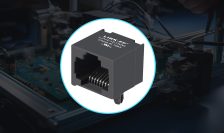
Turns ratio in LAN transformers defines the winding relationship, typically 1:1, ensuring signal integrity, voltage stability, and Ethernet compliance.
SMT, or Surface Mount Technology, is a method for mounting electronic components directly onto PCB surfaces, enabling compact designs and efficient manufacturing.
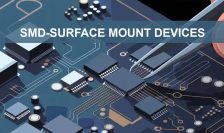
A Surface-Mount Device (SMD) is a compact electronic component mounted directly on a PCB, enabling smaller, faster, and more efficient modern electronics.
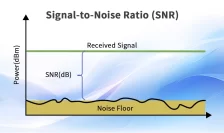
SNR, or signal-to-noise ratio, measures signal strength versus noise. High SNR means clearer audio, images, and data for better overall signal quality.
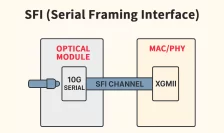
Learn how the Serial Framing Interface (SFI) enables high-speed data transmission in 10G SFP+ and 40G QSFP+ optical modules. Explore SFI channels, XGMII conversion, and module interoperability for reliable networking.
Test transmitted power of optical modules using an optical power meter or DOM to ensure signal strength, network reliability, and compliance with standards.
Explore Single-Port vs. Multi-Port RJ45 Connectors with data-driven comparisons on signal integrity, density, reliability, and LINK-PP support for pro buyers and engineers.
Optical modules enable high-speed, low-latency data transfer in edge computing, supporting 5G, IoT, and real-time applications with reliable connectivity.
Optical modules deliver high bandwidth, low latency, and scalable connectivity for high-performance computing, enabling efficient data center operations.
Learn the roles of Ethernet MAC and PHY in networking. Understand how LINK-PP’s optical modules and magnetic RJ45 connectors support Ethernet interfaces.
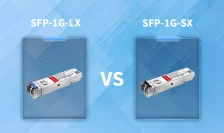
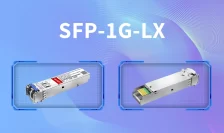
The SFP-1G-LX transceiver enables 1Gbps Ethernet over single-mode fiber up to 10km, offering reliable, hot-swappable connectivity for enterprise networks.
Clock and Data Recovery synchronizes timing and data in high-speed communication, ensuring accurate, error-free data transfer without a separate clock signal.
What is CWDM? CWDM is a cost-effective fiber optic technology that increases bandwidth by multiplexing multiple wavelengths over a single optical fiber.
An application-specific integrated circuit, or ASIC, is a microchip made for a special job. Let's dive into the world of ASIC! Discover what exactly is an ASIC.
In-band Network Telemetry embeds real-time monitoring data in each packet, enabling instant network insights, troubleshooting, and performance analysis.
Remote network monitoring enables real-time network management, security, and troubleshooting from any location, supporting both remote teams and multiple site.
Learn what Multipoint-to-Point (MP2P) architecture is, how it works, and how LINK-PP optical transceivers enhance data efficiency in modern fiber networks.
Learn how multipoint-to-multipoint (MP2MP) networks work, their advantages, and applications in optical communications. Discover LINK-PP optical modules supporting MP2MP systems.
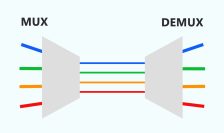
Wavelength Division Multiplexing (WDM) uses optical transceiver modules to send multiple data streams through a single fiber, boosting bandwidth and efficiency.
Explore the fundamentals of Point-to-Point (P2P) network architecture, its working principles, and how LINK-PP RJ45 connectors and optical transceivers enable reliable high-speed communication.
The LINK-PP LS-DW2810-40I DWDM Transceiver offers 10Gbps speed, 40km range, energy efficiency, and compatibility with major brands for seamless networking.
The LPJE101NNL 8P8C RJ45 Jack offers reliable 10/100 Base-T Ethernet connectivity with gold-plated contacts, compact design, and compliance with IEEE 802.3 standards.
Learn how to choose the best LINK-PP 10G optical transceivers for your network by evaluating compatibility, performance, cost, and scalability effectively.
LINK-PP 100G transceivers deliver high-speed connectivity, energy efficiency, and seamless integration, making them ideal for modern networks and data centers.
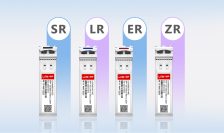
Understand optical transceiver terminology like SR, LR, ER, and ZR to choose the right module for your network's speed, distance, and compatibility needs.
LINK-PP is expanding with new production lines, strategic partnerships, and innovative RJ45 connectors, driving advancements in global connectivity solutions.