Posts

Popular article

What are SFP ports on a switch? Learn how SFP ports support fiber and Ethernet connections, how they compare with RJ45 and SFP+, and which module you need.
Understand what CRC is, how cyclic redundancy check errors happen, how to fix them, and why CRC matters in networking, storage, and SFP modules.
Learn what hyperconverged infrastructure HCI is, how it compares with virtualization and dHCI, and when Nutanix, Sangfor, or SFP-based designs fit best.
Compare 100G LR4, CWDM4, and PSM4 to find the best 100G transceiver for your network based on distance, cost, and cabling requirements.
A wireless LAN (WLAN) connects devices like laptops and phones using radio waves, enabling flexible, cable-free networking in homes, schools, or offices.
An SGMII SFP transceiver enables fast Ethernet connections over copper or fiber, supporting flexible speeds and device compatibility in modern networks.
1000BASE-SX SFP Optical Transceiver specs: 1.25Gbps, 850nm, up to 550m on multimode fiber, LC connector, DOM, and broad device compatibility explained.
Learn what FFE (Feed-Forward Equalizer) is, how transmit equalization works, and why FFE is essential for high-speed optical modules and SerDes signal integrity.
Discover the Decision Feedback Equalizer (DFE), the nonlinear technique essential for minimizing ISI. Learn how DFE improves bit BER in optics transceivers and long-haul data links.
Learn what a ToR (Top-of-Rack) switch is, how ToR architecture works, and why it’s the preferred networking model in modern data centers. Includes benefits, use cases, and compatible optical transceiver solutions from LINK-PP.
Discover the LINK-PP LQ-M85100-SR4C QSFP28 100G SR4 transceiver—ideal for short-reach 100G Ethernet over MMF. Compatible with Cisco, Arista, FS, Dell, and more.
Wi-Fi technology enables wireless internet access for devices like phones, laptops, and tablets, using radio waves for fast, cable-free connectivity.
HTTP vs HTTPS: HTTPS encrypts data for secure transmission, while HTTP leaves information exposed. Choose HTTPS for privacy, trust, and compliance.
A cloud managed network lets you control devices remotely via a web dashboard, offering easy management, automatic updates, and strong security.
Compare Fiber Optic Splitter and coupler functions, signal loss, and best uses to choose the right device for efficient modern network distribution.
Data center virtualization uses software to create virtual servers, storage, and networks, improving efficiency, reducing costs, and boosting flexibility.
Learn how optical pulses transmit high-speed data in fiber networks. Explore principles, applications, and why LINK-PP optical transceivers deliver cleaner, more reliable pulses.
MUX and DEMUX streamline data transmission by combining and splitting signals, reducing cables, and enhancing network efficiency and reliability.
Learn what IEEE 802.3cd defines for 50G, 100G and 200G Ethernet. Explore PAM4 technology, key PMDs, deployment use cases and suitable LINK-PP optical transceivers.
Discover the role of Gearbox in modern optical transceivers. Learn how it enables channel alignment, rate conversion, and breakout for 50G, 100G, and 200G networks.
VLAN vs SVI explained: VLAN segments networks at Layer 2, while SVI enables inter-VLAN routing at Layer 3 for communication between VLANs.
Learn the IEEE 802.3bj 100G Ethernet standard for backplane and copper cable interconnects. Explore PAM4, FEC, KP4/KR4/CR4 PHYs, and how LINK-PP modules support high-speed networks.
Discover what a backplane is, how backplane channels support high-speed 40G/100G Ethernet, key standards, and design challenges. Learn how LINK-PP RJ45 connectors enhance backplane performance.
Understand what CRC is, how cyclic redundancy check errors happen, how to fix them, and why CRC matters in networking, storage, and SFP modules.
What Frame Check Sequence (FCS) means, how CRC-32 detects corrupted Ethernet frames, and why FCS errors are commonly associated with cable faults, fiber issues, or optical transceiver problems.
Learn what FCoE Fibre Channel over Ethernet is, how it works, and how it relates to optical modules, DCB, and high-performance data center networking.
The TOSA is a critical component in optical transceivers, converting electrical signals into optical signals for high-speed fiber optic communication.
Through-Hole Technology (THT) involves inserting component leads into PCB holes and soldering them, ensuring durable connections for high-reliability applications.
Through‑Hole Reflow Soldering enables simultaneous soldering of through-hole and surface-mount components in a single efficient reflow process.
Turns ratio in LAN transformers defines the winding relationship, typically 1:1, ensuring signal integrity, voltage stability, and Ethernet compliance.
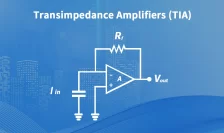
Transimpedance Amplifiers (TIAs) convert sensor current to voltage using an op-amp and feedback resistor, enabling accurate signal measurement.
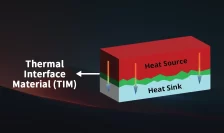
Explore what Thermal Interface Material (TIM) is, its key types, and why it matters in electronics and optical transceivers. Learn how TIM improves heat transfer, boosts device reliability, and supports LINK-PP modules—all explained clearly for better SEO and reader value.

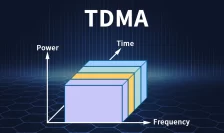
Time Division Multiple Access allows multiple users to share one channel by assigning time slots, ensuring clear calls and efficient data in modern networks.

Authoritative guide to LR SFP modules (10GBASE-LR): technical specs, typical 10 km reach, fiber requirements, vendor compatibility, procurement checklist and deployment best practices.
A technical guide to SFP+ 100km optics, explaining 10GBASE-ZR modules, optical link budgets, DWDM solutions, and real-world deployment tips for long-distance fiber networks.
A complete technical guide to SFP-10GLR-31 transceivers covering 10GBASE-LR specifications, wavelength, fiber compatibility, switch support, and real deployment scenarios.
Understand what a third-party SFP is, how compatible optics work with Cisco, Juniper, and Arista switches, and the cost, risks, and buying tips for reliable network deployments.
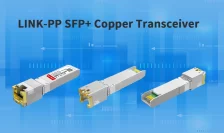
Discover the LINK-PP 10GBase-T Copper SFP+ Transceiver. Supporting 10Gbps over Cat6a/7 cables up to 80m. Compatible with Cisco, Dell, H3C, Juniper, and Arista.
Copper SFP modules enable cost-effective, high-speed data transfer over short distances using existing copper cables, ideal for offices and data centers.
Learn what a 1000BASE-T Copper SFP is, how RJ45 SFP modules work, when to use copper SFP instead of fiber, compatibility issues, and common troubleshooting tips.
Learn how multimode SFP+ (10GBASE-SR) transceivers work, including fiber types, transmission distance, specifications, and common data center use cases.
Explore Copper SFP vs. Fiber SFP differences, performance, compatibility, and cost. Learn how to choose the right SFP module for home labs, data centers, and PoE networks.
Learn what a short range SFP module is, its transmission distance, fiber types, and how to choose the right SR SFP for data center and enterprise network connections.