Discover the LQ‑SW40‑SR4C 40GBASE‑SR module: high-speed, low-power, QSFP+ optics for multimode fibre networks. Perfect for data centres and network upgrades.
Central Management Server streamlines server management, enabling secure, centralized control, updates, and monitoring for multiple systems in one place.
Dispersion compensation in optical systems corrects chromatic dispersion, ensuring clear, accurate signals in fiber optic communication and imaging applications.
Explore how LINK-PP’s LS-DW4010-40I SFP+ DWDM transceiver enhances LTE fronthaul and backhaul with 10G speed, 40 km reach and industrial temperature performance.
Learn how multipoint-to-multipoint (MP2MP) networks work, their advantages, and applications in optical communications. Discover LINK-PP optical modules supporting MP2MP systems.
Learn what Multipoint-to-Point (MP2P) architecture is, how it works, and how LINK-PP optical transceivers enhance data efficiency in modern fiber networks.
Remote network monitoring enables real-time network management, security, and troubleshooting from any location, supporting both remote teams and multiple site.
In-band Network Telemetry embeds real-time monitoring data in each packet, enabling instant network insights, troubleshooting, and performance analysis.
Explore the essential components and types of servers, including rack, blade, and hyperconverged infrastructures. Learn how servers power modern IT systems and support businesses worldwide.
Unlock the power of QSFP+ MSA: a multi-vendor standard for 40G transceivers ensuring seamless interoperability. Discover LINK-PP 40G QSFP+ options like SR4, LR4, and FR4.
Compare CFP and QSFP28 transceivers to decide the best fit for your network. CFP excels in long-distance transmission, while QSFP28 offers high port density.
Demystifying 100G optical transceivers! Explore the differences between CFP, CFP2, and CFP4 form factors, their applications, and why choosing the right one, like LINK-PP's reliable modules, is crucial for your network's performance.
Explore the IEEE 802.3ba standard—defining both 40GbE & 100GbE—its technical design and applications, plus how LINK-PP’s 40G QSFP+ modules align perfectly with this high-speed Ethernet evolution.
qsfp+ 40g FR4 offers high-speed, long-reach data transmission for modern networks, improving performance, efficiency, and future scalability in data centers.
QSFP+ 40G ER4 is a 40G transceiver for long-distance, high-speed links up to 40km, ideal for data centers and enterprise networks using single-mode fiber.
QSFP+ 40G LR4 enables high-speed, long-range data transfer for data centers, enterprises, and telecoms, supporting reliable 40G network growth in 2025.
Learn what an Intrusion Prevention System (IPS) is, how it works, key types, and deployment best practices. Enhance your IPS network with LINK-PP Ethernet components.
FBT splitter offers a cost-effective way to split optical signals in fiber networks, ideal for small setups needing simple, customizable signal distribution.
Learn how LLDP (Link Layer Discovery Protocol) enhances PoE systems through intelligent power negotiation, efficient energy management, and device discovery in modern Ethernet networks.
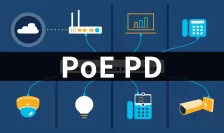
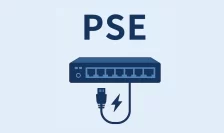
Learn what a Powered Device (PD) is in PoE networks, how it receives power from a PSE, and explore LINK-PP’s PoE-ready components like LPJK6072AONL and LP41223NL.
Discover the LQ‑SW40‑SR4C 40GBASE‑SR module: high-speed, low-power, QSFP+ optics for multimode fibre networks. Perfect for data centres and network upgrades.
Learn what hyperconverged infrastructure HCI is, how it compares with virtualization and dHCI, and when Nutanix, Sangfor, or SFP-based designs fit best.
Understand SFP+ 40km (10GBASE-ER) modules, including specs, SMF compatibility, and how to choose the right extended-reach optical transceiver for your network.
Subscribe to LINK-PP
newsletter
Don’t miss anything. Get all the latest posts delivered straight to your inbox.