Discover the LQ‑SW40‑SR4C 40GBASE‑SR module: high-speed, low-power, QSFP+ optics for multimode fibre networks. Perfect for data centres and network upgrades.
Explore the IEEE 802.3ba standard—defining both 40GbE & 100GbE—its technical design and applications, plus how LINK-PP’s 40G QSFP+ modules align perfectly with this high-speed Ethernet evolution.
Demystifying 100G optical transceivers! Explore the differences between CFP, CFP2, and CFP4 form factors, their applications, and why choosing the right one, like LINK-PP's reliable modules, is crucial for your network's performance.
Compare CFP and QSFP28 transceivers to decide the best fit for your network. CFP excels in long-distance transmission, while QSFP28 offers high port density.
Learn what PPP (Point-to-Point Protocol) is, how it works, and why it is important in networking. Discover its functions, frame structure, and applications in WANs, PPPoE, and VPNs.
A Virtual Private Network (VPN) secures online communication by encrypting data and masking IP addresses. Learn how VPNs work, their benefits, and why businesses rely on them for safe remote access and private browsing.
Discover SONET and SDH, the backbone technologies for high-speed fiber-optic communications. Learn about their standards, applications, and differences to enhance your network infrastructure knowledge.
QSFP+ 40G LR4 enables high-speed, long-range data transfer for data centers, enterprises, and telecoms, supporting reliable 40G network growth in 2025.
QSFP+ 40G ER4 is a 40G transceiver for long-distance, high-speed links up to 40km, ideal for data centers and enterprise networks using single-mode fiber.
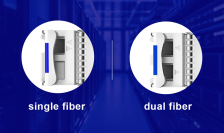
Single fiber transceivers, like the Bidi Transceiver, use one fiber for bidirectional data, while dual fiber transceivers require two fibers for separate TX and RX.
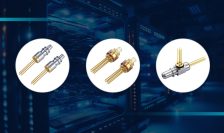
COB, BOX, and TO-CAN packaging impact optical devices by balancing size, cost, and reliability. Learn how COB excels in compact, high-speed applications.
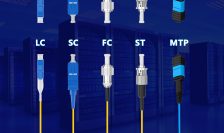
Explore common fiber connector types like SC, LC, ST, FC, and MPO/MTP, their characteristics, and applications in optical transceivers for efficient networks.
Ensure reliable optical transceiver performance with regular tests for metrics like BER, extinction ratio, and receiver sensitivity to avoid network disruptions.
TOSA, ROSA, and BOSA are key components in optical transceivers, enabling high-speed data transmission, reception, and bidirectional communication in modern networks.
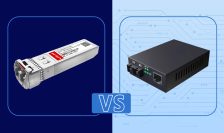
Compare optical transceivers and fiber media converters to understand their roles, advantages, and use cases in modern networking and data transmission.
Understand the operating temperature range of optical transceivers, including commercial (0°C-70°C), extended (-20°C-85°C), and industrial (-40°C-85°C) grades.
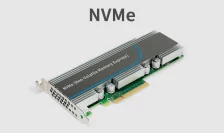
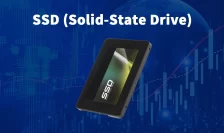
Learn what NVMe (Non-Volatile Memory Express) means, how it compares to SATA SSDs, and why it delivers faster speed, lower latency, and better efficiency.
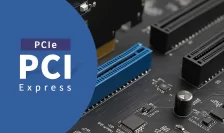
Learn what PCI Express (PCIe) is, how it works, and why it matters. Explore PCIe versions, bandwidth speeds, and its role in GPUs, SSDs, and data centers.
Differential mode delay in multimode fiber optics limits speed and data rates by causing pulse spreading, reducing signal clarity and network performance.
Discover what a CPU (Central Processing Unit) is, how it works, and why it is vital in computing. Learn about its architecture, functions, and industry applications.
ASK Modulation transmits digital data by varying a carrier wave's amplitude, offering a simple, cost-effective solution for basic digital communication systems.
Discover what an HDD (Hard Disk Drive) is, how it works, and its role in computing. Learn its functions, types, advantages, and how it compares with SSD storage.
Discover what RAM (Random Access Memory) is, how it works, and why it matters for system performance. Learn its functions, types, and role in modern computing.
Discover the LQ‑SW40‑SR4C 40GBASE‑SR module: high-speed, low-power, QSFP+ optics for multimode fibre networks. Perfect for data centres and network upgrades.
Learn what hyperconverged infrastructure HCI is, how it compares with virtualization and dHCI, and when Nutanix, Sangfor, or SFP-based designs fit best.