Discover the LQ‑SW40‑SR4C 40GBASE‑SR module: high-speed, low-power, QSFP+ optics for multimode fibre networks. Perfect for data centres and network upgrades.
Explore the IEEE 802.3ba standard—defining both 40GbE & 100GbE—its technical design and applications, plus how LINK-PP’s 40G QSFP+ modules align perfectly with this high-speed Ethernet evolution.
Demystifying 100G optical transceivers! Explore the differences between CFP, CFP2, and CFP4 form factors, their applications, and why choosing the right one, like LINK-PP's reliable modules, is crucial for your network's performance.
Compare CFP and QSFP28 transceivers to decide the best fit for your network. CFP excels in long-distance transmission, while QSFP28 offers high port density.
Learn what PPP (Point-to-Point Protocol) is, how it works, and why it is important in networking. Discover its functions, frame structure, and applications in WANs, PPPoE, and VPNs.
A Virtual Private Network (VPN) secures online communication by encrypting data and masking IP addresses. Learn how VPNs work, their benefits, and why businesses rely on them for safe remote access and private browsing.
Discover SONET and SDH, the backbone technologies for high-speed fiber-optic communications. Learn about their standards, applications, and differences to enhance your network infrastructure knowledge.
QSFP+ 40G LR4 enables high-speed, long-range data transfer for data centers, enterprises, and telecoms, supporting reliable 40G network growth in 2025.
QSFP+ 40G ER4 is a 40G transceiver for long-distance, high-speed links up to 40km, ideal for data centers and enterprise networks using single-mode fiber.
Learn the difference between MTTR and MTBF, how they impact system reliability, and how LINK-PP industrial connectors and SFP/SFP+ modules help improve network uptime.
Optical networking delivers high speed, security, and scalability for private and hybrid cloud deployments, ensuring reliable and efficient data connectivity.
Signal integrity and low latency in data center transceivers ensure reliable, error-free data transmission and optimal performance for real-time applications.
Learn how industrial IPCs use LINK-PP SFP/SFP+ cages to build high-speed, EMI-protected fiber uplinks for PLCs and edge networks. Ideal for Industry 4.0 and smart factories.
Explore how an Industrial PC (IPC) reliably communicates with a PLC using LINK-PP integrated RJ45 connectors for robust isolation and EMI resilience in industrial Ethernet networks.
Frequency-Division Multiplexing enables multiple signals to travel on one channel, ensuring clear, efficient communication for phones, TV, and internet.
TDM (Time-Division Multiplexing) lets multiple signals share one channel by assigning time slots, improving efficiency in telecom, broadcasting, and networks.
Explore what Thermal Interface Material (TIM) is, its key types, and why it matters in electronics and optical transceivers. Learn how TIM improves heat transfer, boosts device reliability, and supports LINK-PP modules—all explained clearly for better SEO and reader value.
An ISP is the company that delivers internet access to individuals and businesses. Discover how ISPs enable connectivity and how LINK-PP's Magnetics support their infrastructure.
OTU4 is a high-speed digital layer in optical transport networks, enabling reliable 100GE data transmission with strong error correction and scalability.
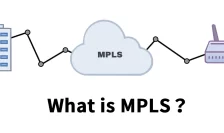
Explore how LINK-PP optical modules enhance MPLS networks, supporting high-speed, reliable data transmission for carrier backbones, DCI, and enterprise VPNs.
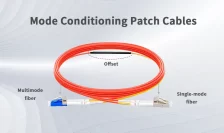
Mode conditioning patch cables enable singlemode devices to work with multimode fiber, reducing signal distortion and differential mode delay in networks.
Discover the LQ‑SW40‑SR4C 40GBASE‑SR module: high-speed, low-power, QSFP+ optics for multimode fibre networks. Perfect for data centres and network upgrades.
Learn what hyperconverged infrastructure HCI is, how it compares with virtualization and dHCI, and when Nutanix, Sangfor, or SFP-based designs fit best.
Understand SFP+ 40km (10GBASE-ER) modules, including specs, SMF compatibility, and how to choose the right extended-reach optical transceiver for your network.