What are SFP ports on a switch? Learn how SFP ports support fiber and Ethernet connections, how they compare with RJ45 and SFP+, and which module you need.
What are SFP ports on a switch? Learn how SFP ports support fiber and Ethernet connections, how they compare with RJ45 and SFP+, and which module you need.
Learn what hyperconverged infrastructure HCI is, how it compares with virtualization and dHCI, and when Nutanix, Sangfor, or SFP-based designs fit best.
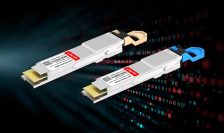
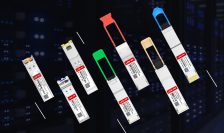
QSFP-DD Optical Transceivers deliver up to 800Gbps speeds, offering high bandwidth, energy efficiency, and compatibility for modern networks and data centers.
The LINK-PP LS-DW2810-40I DWDM Transceiver offers 10Gbps speed, 40km range, energy efficiency, and compatibility with major brands for seamless networking.
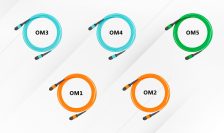
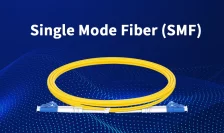
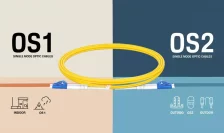
Fiber patch cords are essential for connecting devices in networks, ensuring fast, reliable data transfer in telecom, data centers, and industrial applications.
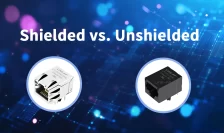
About LINK-PP: A global leader in magnetic components, offering high-quality RJ45 Connectors, LAN Transformers, and Optical Transceivers for reliable networks.
Learn what MTTR (Mean Time to Repair) means, why it matters for system reliability, and how LINK‑PP’s hot-swappable SFP/SFP+ transceivers reduce repair time.
A clear, professional guide to IIoT (Industrial Internet of Things), covering architecture, protocols, security best practices, and suitable networking components for industrial deployments.
Discover MTBF (Mean Time Between Failures), its importance for system reliability, and how LINK‑PP industrial connectors and SFP/SFP+ modules help maximize uptime.
Master Mean Time to Detect (MTTD), the most crucial metric for avoiding silent failures. Learn the calculation, its role in modern observability, and how to reduce MTTD for superior system availability.
Master Mean Time to Acknowledge (MTTA), the key metric for rapid response. Learn its role in system availability, how to calculate it, and proven steps to reduce MTTA for superior network uptime.
Learn what the PMA (Physical Medium Attachment) is, how it handles serialization and clock recovery, and why it is essential for modern high-speed optical transceivers.
Physical Medium Dependent (PMD) defines the optical and electrical rules of a PHY—wavelength, power, reach, and test points. Understand PMD specs and how they guide transceiver selection.
Learn what the PCS (Physical Coding Sublayer) is, how it enables reliable Ethernet transmission, and why it matters for high-speed optical transceivers and network design.
Learn what FMMU (Fieldbus Memory Management Unit) is and how it enables real-time EtherCAT communication through efficient memory mapping and on-the-fly data processing.
Learn what hyperconverged infrastructure HCI is, how it compares with virtualization and dHCI, and when Nutanix, Sangfor, or SFP-based designs fit best.
LINK-PP is expanding with new production lines, strategic partnerships, and innovative RJ45 connectors, driving advancements in global connectivity solutions.
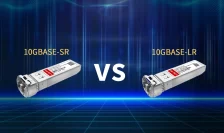
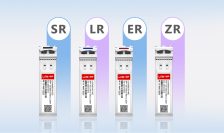
Understand optical transceiver terminology like SR, LR, ER, and ZR to choose the right module for your network's speed, distance, and compatibility needs.
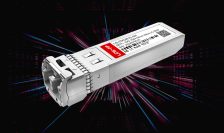
LINK-PP 100G transceivers deliver high-speed connectivity, energy efficiency, and seamless integration, making them ideal for modern networks and data centers.
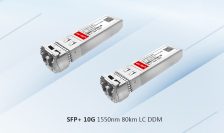
Learn how to choose the best LINK-PP 10G optical transceivers for your network by evaluating compatibility, performance, cost, and scalability effectively.
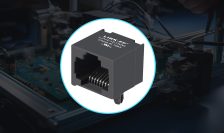
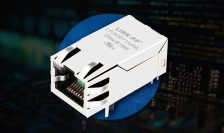
The LPJE101NNL 8P8C RJ45 Jack offers reliable 10/100 Base-T Ethernet connectivity with gold-plated contacts, compact design, and compliance with IEEE 802.3 standards.