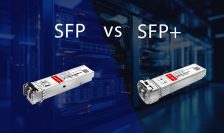
What are SFP ports on a switch? Learn how SFP ports support fiber and Ethernet connections, how they compare with RJ45 and SFP+, and which module you need.
Discover the LQ‑SW40‑SR4C 40GBASE‑SR module: high-speed, low-power, QSFP+ optics for multimode fibre networks. Perfect for data centres and network upgrades.
Virtual Routing and Forwarding (VRF) enables multiple private routing tables on one device, improving network security, segmentation, and traffic management.
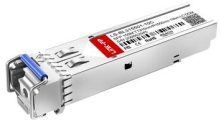
Explore the LINK-PP LS-SM3125-10I industrial-grade SFP28 transceiver, delivering 25 Gb/s over 10 km single-mode fibre at 1310 nm, with DOM and wide-temperature support for backbone and 5G front-haul.
Discover how optical transceivers power Smart Industry 4.0 networks—enabling high-speed, low-latency, reliable connectivity in modern factories with 1G, 10G and 25G modules certified for industrial use.
User Datagram Protocol enables fast, connectionless data transfer for real-time apps like streaming, gaming, and DNS, prioritizing speed over reliability.
SSL encrypts data between your browser and websites, ensuring privacy and security. SSL certificates verify site identity and protect sensitive information.
Technical hurdles of 1.6T optical transceivers include signal integrity, power, and cooling, driving a connector revolution for reliable high-speed networks.
OSI vs TCP/IP: OSI is ideal for learning network concepts, while TCP/IP is used for real-world networking. Compare their layers, uses, and main differences.
SFP+ transceiver modules enable high-speed data transfer, seamless communication, and flexible connectivity in data centers, supporting efficient networks.
SFP+ 10G transceivers deliver high-speed data transfer, low latency, energy efficiency, and compatibility with various devices for modern network setups.
100G SFP-DD transceivers boost high-density networks with fast 100Gbps speeds, compact design, energy efficiency, and long-distance data transmission up to 40km.
An optical module converts electrical signals to light for fast, reliable data transfer in networks, essential for cloud computing, telecom, and data centers.
Compare Wi-Fi 5 ONU vs Wi-Fi 6 ONU for 2025. Discover faster speeds, better security, and improved efficiency with Wi-Fi 6 for modern multi-device networks.
Compare xPON WDM solutions for FTTH and FTTB networks. Discover their bandwidth, cost, and scalability to choose the best fit for your deployment needs.
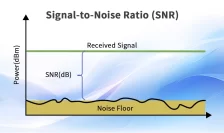
SNR, or signal-to-noise ratio, measures signal strength versus noise. High SNR means clearer audio, images, and data for better overall signal quality.
Learn what an Ethernet PHY is, how it connects MAC to network medium, core functions, signal types, and how it pairs with LINK‑PP Magnetics for Ethernet design.
Turns ratio in LAN transformers defines the winding relationship, typically 1:1, ensuring signal integrity, voltage stability, and Ethernet compliance.
Non-Return-to-Zero (NRZ) is a digital encoding method using two voltage levels for binary data, offering simplicity and efficiency in digital communication.
Discover the LQ‑SW40‑SR4C 40GBASE‑SR module: high-speed, low-power, QSFP+ optics for multimode fibre networks. Perfect for data centres and network upgrades.
Learn what hyperconverged infrastructure HCI is, how it compares with virtualization and dHCI, and when Nutanix, Sangfor, or SFP-based designs fit best.
Understand SFP+ 40km (10GBASE-ER) modules, including specs, SMF compatibility, and how to choose the right extended-reach optical transceiver for your network.