Discover the LQ‑SW40‑SR4C 40GBASE‑SR module: high-speed, low-power, QSFP+ optics for multimode fibre networks. Perfect for data centres and network upgrades.
Explore what Thermal Interface Material (TIM) is, its key types, and why it matters in electronics and optical transceivers. Learn how TIM improves heat transfer, boosts device reliability, and supports LINK-PP modules—all explained clearly for better SEO and reader value.
Discover the role of optical module housings in data centers & 5G. Learn about materials like ceramics & alloys, thermal challenges, and explore Link-PP's optical transceivers.
Explore the critical challenges of optical module housings in the 400G/800G era: heat management, material limits, signal integrity, and how innovation tackles them.
Discover how microcontroller units (MCUs) support optical transceivers by enabling real-time monitoring, diagnostics-enabled modules (DOM), and precise laser control. Explore their essential role in LINK-PP modules for improved reliability.
TDM (Time-Division Multiplexing) lets multiple signals share one channel by assigning time slots, improving efficiency in telecom, broadcasting, and networks.
Frequency-Division Multiplexing enables multiple signals to travel on one channel, ensuring clear, efficient communication for phones, TV, and internet.
Learn the main applications of 1550nm optical modules in backbone, metro, and enterprise networks. Discover LINK-PP transceivers designed for long-distance fiber links.
CAT5e vs CAT6 vs CAT7: Compare Ethernet cables to find the best fit for your network. Learn about speed, shielding, and cost to make an informed choice.
Fiber patch cords are essential for connecting devices in networks, ensuring fast, reliable data transfer in telecom, data centers, and industrial applications.
Understand 100G optical transceiver form factors like QSFP28, CFP, CFP2, CFP4 and CXP. Learn how they optimize network performance and ensure compatibility.
Dual rate transceivers operate at two distinct data rates, offering flexibility, cost-effectiveness, and seamless compatibility for modern network upgrades.
Understand the role of 1x9 transceivers in fiber optic networks, their cost-effectiveness, compatibility with legacy systems, and reliable data transmission.
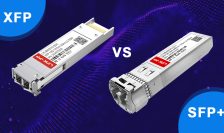
Compare XFP and SFP+ transceivers: XFP offers long-distance, high-speed performance, while SFP+ is compact, energy-efficient, and ideal for short-range tasks.
An RJ45 with magnetics integrates transformers and chokes to enhance signal quality, suppress EMI, and simplify designs. Ideal for Magnetic RJ45 Jack use.
Quality certifications like ISO 9001:2015, RoHS, and FCC ensure optical transceivers meet strict standards for reliability, compliance, and performance.
Learn what a Fiber Optical Light Source is, how it works, its types, and how to choose the right one for accurate fiber testing and network performance.
Understand what a Digital Communication Analyzer (DCA) is, how it works, and why it is essential for optical module testing, eye diagrams, and signal integrity.
Discover the benefits of copper-based interconnects for data centers. Learn how they reduce costs, improve connectivity, and support network efficiency.
Discover the LQ‑SW40‑SR4C 40GBASE‑SR module: high-speed, low-power, QSFP+ optics for multimode fibre networks. Perfect for data centres and network upgrades.
Learn what hyperconverged infrastructure HCI is, how it compares with virtualization and dHCI, and when Nutanix, Sangfor, or SFP-based designs fit best.
Understand SFP+ 40km (10GBASE-ER) modules, including specs, SMF compatibility, and how to choose the right extended-reach optical transceiver for your network.