What are SFP ports on a switch? Learn how SFP ports support fiber and Ethernet connections, how they compare with RJ45 and SFP+, and which module you need.
What are SFP ports on a switch? Learn how SFP ports support fiber and Ethernet connections, how they compare with RJ45 and SFP+, and which module you need.
Learn what hyperconverged infrastructure HCI is, how it compares with virtualization and dHCI, and when Nutanix, Sangfor, or SFP-based designs fit best.
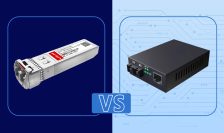
Compare optical transceivers and fiber media converters to understand their roles, advantages, and use cases in modern networking and data transmission.
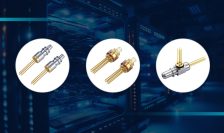
TOSA, ROSA, and BOSA are key components in optical transceivers, enabling high-speed data transmission, reception, and bidirectional communication in modern networks.
Ensure reliable optical transceiver performance with regular tests for metrics like BER, extinction ratio, and receiver sensitivity to avoid network disruptions.
COB, BOX, and TO-CAN packaging impact optical devices by balancing size, cost, and reliability. Learn how COB excels in compact, high-speed applications.
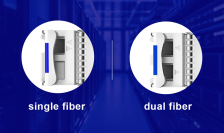
Single fiber transceivers, like the Bidi Transceiver, use one fiber for bidirectional data, while dual fiber transceivers require two fibers for separate TX and RX.
Quality certifications like ISO 9001:2015, RoHS, and FCC ensure optical transceivers meet strict standards for reliability, compliance, and performance.
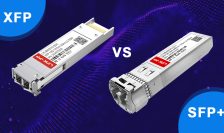
Compare XFP and SFP+ transceivers: XFP offers long-distance, high-speed performance, while SFP+ is compact, energy-efficient, and ideal for short-range tasks.
Understand the role of 1x9 transceivers in fiber optic networks, their cost-effectiveness, compatibility with legacy systems, and reliable data transmission.
LINK-PP 100G transceivers deliver high-speed connectivity, energy efficiency, and seamless integration, making them ideal for modern networks and data centers.
Understand 100G optical transceiver form factors like QSFP28, CFP, CFP2, CFP4 and CXP. Learn how they optimize network performance and ensure compatibility.
Discover how LINK-PP’s LAN transformers deliver high speed and signal integrity, and certified electrical isolation—ideal for industrial, PoE, and IoT network.
ESD Protection for electronics is simplified with LINK-PP’s smart factory, offering robust safeguards in Optical Ms, RJ45s, Transformers, and Fiber Optic Cages.
RJ45 connector with magnetics boosts network switch performance by improving signal integrity, reducing EMI, and enabling reliable Power over Ethernet.
5G backhaul links cell sites to core networks, enabling high-speed, low-latency 5G services. Strong backhaul is vital for 2025’s data and device growth.
Learn what a Fiber Optical Light Source is, how it works, its types, and how to choose the right one for accurate fiber testing and network performance.
Learn what Dispersion Compensation Fiber (DCF) is, how it reduces chromatic dispersion, where it is used, and why it matters in modern optical networks.
Learn what OEO means in optical communication, how optical-electrical-optical regeneration works, and when it is used in DWDM networks and optical links. Keywords:
Learn what hyperconverged infrastructure HCI is, how it compares with virtualization and dHCI, and when Nutanix, Sangfor, or SFP-based designs fit best.
LINK-PP is expanding with new production lines, strategic partnerships, and innovative RJ45 connectors, driving advancements in global connectivity solutions.
Understand optical transceiver terminology like SR, LR, ER, and ZR to choose the right module for your network's speed, distance, and compatibility needs.
LINK-PP 100G transceivers deliver high-speed connectivity, energy efficiency, and seamless integration, making them ideal for modern networks and data centers.
Learn how to choose the best LINK-PP 10G optical transceivers for your network by evaluating compatibility, performance, cost, and scalability effectively.
The LPJE101NNL 8P8C RJ45 Jack offers reliable 10/100 Base-T Ethernet connectivity with gold-plated contacts, compact design, and compliance with IEEE 802.3 standards.