Discover the LQ‑SW40‑SR4C 40GBASE‑SR module: high-speed, low-power, QSFP+ optics for multimode fibre networks. Perfect for data centres and network upgrades.
Time-Sensitive Networking ensures reliable, on-time data delivery, while PTP focuses on clock synchronization. Compare TSN vs PTP for your network needs.
Learn what eCPRI (Enhanced Common Public Radio Interface) is, how it enables efficient 5G fronthaul with lower latency, and how optical modules support eCPRI networks.
Precision Time Protocol synchronizes network device clocks for microsecond accuracy, reducing errors and improving reliability in critical applications.
Learn the difference between CPU, GPU, TPU, and NPU. This in-depth guide explains their architectures, use cases, and performance for AI, cloud, and edge computing.
A disaster recovery solution for optical networks ensures rapid recovery, minimizes downtime, and protects critical data center operations from unexpected failures.
Learn what FPGA (Field-Programmable Gate Array) is, how FPGA architecture works, key applications in 5G, AI, and industrial systems, and why integrated RJ45 MagJack matters.
Learn what an NPU (Neural Processing Unit) is, how it works, and why NPUs are essential for AI workloads and edge devices. Compare NPU vs CPU vs GPU and explore real-world use cases.
Power consumption optimization for optical transceivers in edge computing reduces energy use, lowers costs, and boosts network scalability and reliability.
Explore the IEEE 802.3bt (PoE++) standard delivering up to 100W over Ethernet. Learn its key features, power types, and applications with LINK-PP PoE++ Magnetics solutions.
Learn what a network gateway is, how it works, and why it’s essential for connecting different networks. Understand gateway functions, types, and real-world applications in modern communication systems.
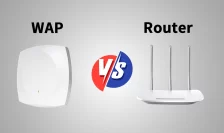
Learn the differences between a Wireless Access Point (WAP) and a router, their use cases in home and enterprise networks, and how LINK‑PP LPJK6072AONL PoE RJ45 connectors support WAP deployments.
Long-range 10G optical modules enable high-speed data over distances up to 80km. Learn about types, specs, compatibility, and choosing the right module.
Learn what IEEE 802.3af (PoE) means, how it delivers up to 15.4W of power through Ethernet cables, and its key applications. Discover LINK-PP PoE RJ45 Magnetics for stable power delivery.
A short-range 10G optical transceiver enables fast, reliable data transfer up to 300m using multimode fiber, ideal for data centers and enterprise networks.
Learn what a Network Operating System (NOS) is, how it runs switches and routers, and why it is essential for routing, automation, telemetry, and modern data center networks.
Throughput in network communication is the actual amount of data transferred per second, showing real network performance for streaming, gaming, and downloads.
Intersymbol interference (ISI) in digital communication occurs when overlapping signals cause bit errors, reducing data reliability and signal clarity.
Discover how VoIP enables voice-data convergence over Ethernet. Learn key protocols, QoS metrics, and hardware considerations for modern network systems.
Learn what QoS (Quality of Service) means, how it works, and why it is essential for real-time IP networks. Includes practical applications and hardware considerations.
Explore Label Switched Paths (LSPs) in MPLS networks—definition, operation, and applications in telecom and data centers. Learn how LINK-PP components enhance network reliability.
Discover the LQ‑SW40‑SR4C 40GBASE‑SR module: high-speed, low-power, QSFP+ optics for multimode fibre networks. Perfect for data centres and network upgrades.
Learn what hyperconverged infrastructure HCI is, how it compares with virtualization and dHCI, and when Nutanix, Sangfor, or SFP-based designs fit best.
Understand SFP+ 40km (10GBASE-ER) modules, including specs, SMF compatibility, and how to choose the right extended-reach optical transceiver for your network.
Subscribe to LINK-PP
newsletter
Don’t miss anything. Get all the latest posts delivered straight to your inbox.