Discover the LQ‑SW40‑SR4C 40GBASE‑SR module: high-speed, low-power, QSFP+ optics for multimode fibre networks. Perfect for data centres and network upgrades.
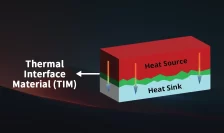
Explore what Thermal Interface Material (TIM) is, its key types, and why it matters in electronics and optical transceivers. Learn how TIM improves heat transfer, boosts device reliability, and supports LINK-PP modules—all explained clearly for better SEO and reader value.
Discover the role of optical module housings in data centers & 5G. Learn about materials like ceramics & alloys, thermal challenges, and explore Link-PP's optical transceivers.
Explore the critical challenges of optical module housings in the 400G/800G era: heat management, material limits, signal integrity, and how innovation tackles them.
Discover how microcontroller units (MCUs) support optical transceivers by enabling real-time monitoring, diagnostics-enabled modules (DOM), and precise laser control. Explore their essential role in LINK-PP modules for improved reliability.
TDM (Time-Division Multiplexing) lets multiple signals share one channel by assigning time slots, improving efficiency in telecom, broadcasting, and networks.
Frequency-Division Multiplexing enables multiple signals to travel on one channel, ensuring clear, efficient communication for phones, TV, and internet.
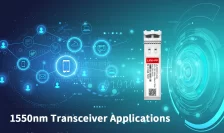
Learn the main applications of 1550nm optical modules in backbone, metro, and enterprise networks. Discover LINK-PP transceivers designed for long-distance fiber links.
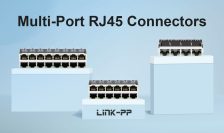
Explore Single-Port vs. Multi-Port RJ45 Connectors with data-driven comparisons on signal integrity, density, reliability, and LINK-PP support for pro buyers and engineers.
Test transmitted power of optical modules using an optical power meter or DOM to ensure signal strength, network reliability, and compliance with standards.
Optical modules enable high-speed, low-latency data transfer in edge computing, supporting 5G, IoT, and real-time applications with reliable connectivity.
Optical modules deliver high bandwidth, low latency, and scalable connectivity for high-performance computing, enabling efficient data center operations.
Learn the roles of Ethernet MAC and PHY in networking. Understand how LINK-PP’s optical modules and magnetic RJ45 connectors support Ethernet interfaces.
Learn what a Network Operating System (NOS) is, how it runs switches and routers, and why it is essential for routing, automation, telemetry, and modern data center networks.
Throughput in network communication is the actual amount of data transferred per second, showing real network performance for streaming, gaming, and downloads.
Intersymbol interference (ISI) in digital communication occurs when overlapping signals cause bit errors, reducing data reliability and signal clarity.
Discover how VoIP enables voice-data convergence over Ethernet. Learn key protocols, QoS metrics, and hardware considerations for modern network systems.
Learn what QoS (Quality of Service) means, how it works, and why it is essential for real-time IP networks. Includes practical applications and hardware considerations.
Explore Label Switched Paths (LSPs) in MPLS networks—definition, operation, and applications in telecom and data centers. Learn how LINK-PP components enhance network reliability.
Discover the LQ‑SW40‑SR4C 40GBASE‑SR module: high-speed, low-power, QSFP+ optics for multimode fibre networks. Perfect for data centres and network upgrades.
Learn what hyperconverged infrastructure HCI is, how it compares with virtualization and dHCI, and when Nutanix, Sangfor, or SFP-based designs fit best.
Understand SFP+ 40km (10GBASE-ER) modules, including specs, SMF compatibility, and how to choose the right extended-reach optical transceiver for your network.
Subscribe to LINK-PP
newsletter
Don’t miss anything. Get all the latest posts delivered straight to your inbox.