Discover the LQ‑SW40‑SR4C 40GBASE‑SR module: high-speed, low-power, QSFP+ optics for multimode fibre networks. Perfect for data centres and network upgrades.
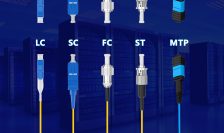
Explore common fiber connector types like SC, LC, ST, FC, and MPO/MTP, their characteristics, and applications in optical transceivers for efficient networks.
Ensure reliable optical transceiver performance with regular tests for metrics like BER, extinction ratio, and receiver sensitivity to avoid network disruptions.
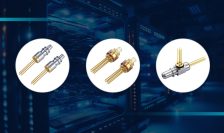
TOSA, ROSA, and BOSA are key components in optical transceivers, enabling high-speed data transmission, reception, and bidirectional communication in modern networks.
Copper SFP modules enable cost-effective, high-speed data transfer over short distances using existing copper cables, ideal for offices and data centers.
Understand the operating temperature range of optical transceivers, including commercial (0°C-70°C), extended (-20°C-85°C), and industrial (-40°C-85°C) grades.
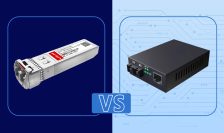
Compare optical transceivers and fiber media converters to understand their roles, advantages, and use cases in modern networking and data transmission.
Understand optical transceiver terminology like SR, LR, ER, and ZR to choose the right module for your network's speed, distance, and compatibility needs.
A PLC Splitter divides one optical signal into multiple outputs, ensuring reliable, efficient fiber optic network connections for homes and businesses.
Optical Spectrum Analyzer measures light power at each wavelength, helping you assess lasers, LEDs, and fiber optic signals for quality and performance.
Guide to choose the best RJ45 female connector by comparing cable compatibility, shielding, durability, and installation for optimal network reliability.
Understand the difference between a LAN Transformer and a LAN Filter. Learn how both work together in RJ45 magnetic connectors to ensure Ethernet signal integrity and EMC compliance.
A router ONU combines signal conversion and network routing for fiber-optic internet, letting you connect multiple devices to fast, reliable service at home.
Network Filter explained: what LAN filters and Ethernet common-mode chokes do, why they matter for EMI, isolation, and PoE, and how to choose the right RJ45 magnetics.
Learn the functions, differences, and applications of resistors, capacitors, and inductors in electronic circuits. Essential knowledge for engineers and PCB designers.
Explore the world of resistors with our in-depth guide. Learn about different types, their applications, and specifications to make informed decisions for your electronic projects.
Learn how LDP (Label Distribution Protocol) establishes Label Switched Paths in MPLS networks. Understand LDP functions, working principles, and relation to LINK-PP products.
Central Management Server streamlines server management, enabling secure, centralized control, updates, and monitoring for multiple systems in one place.
Dispersion compensation in optical systems corrects chromatic dispersion, ensuring clear, accurate signals in fiber optic communication and imaging applications.
In-band Network Telemetry embeds real-time monitoring data in each packet, enabling instant network insights, troubleshooting, and performance analysis.
Remote network monitoring enables real-time network management, security, and troubleshooting from any location, supporting both remote teams and multiple site.
Learn what Multipoint-to-Point (MP2P) architecture is, how it works, and how LINK-PP optical transceivers enhance data efficiency in modern fiber networks.
Learn how multipoint-to-multipoint (MP2MP) networks work, their advantages, and applications in optical communications. Discover LINK-PP optical modules supporting MP2MP systems.
Discover the LQ‑SW40‑SR4C 40GBASE‑SR module: high-speed, low-power, QSFP+ optics for multimode fibre networks. Perfect for data centres and network upgrades.
Learn what hyperconverged infrastructure HCI is, how it compares with virtualization and dHCI, and when Nutanix, Sangfor, or SFP-based designs fit best.
Understand SFP+ 40km (10GBASE-ER) modules, including specs, SMF compatibility, and how to choose the right extended-reach optical transceiver for your network.