Discover the LQ‑SW40‑SR4C 40GBASE‑SR module: high-speed, low-power, QSFP+ optics for multimode fibre networks. Perfect for data centres and network upgrades.
Understand the differences between FTTH and FTTB. Learn how LINK-PP’s optical transceivers support both fiber access architectures for reliable connectivity.
Discover what data bandwidth means, how it affects devices, and why it matters in digital communication. Learn how LINK-PP supports high-speed data transfer.
Wave Soldering vs. Reflow Soldering: Compare processes, applications, costs, and best uses for PCB assembly to choose the right method for your project.
Explore detailed insights into FTTx deployments including FTTH, FTTB, FTTC, and more. Learn how LINK-PP’s optical modules support reliable fiber networks.
5G backhaul links cell sites to core networks, enabling high-speed, low-latency 5G services. Strong backhaul is vital for 2025’s data and device growth.
QSFP+ 40G LR4 enables high-speed, long-range data transfer for data centers, enterprises, and telecoms, supporting reliable 40G network growth in 2025.
Discover how Multicore Fiber (MCF) and Space-Division Multiplexing (SDM) are solving the bandwidth crisis. Learn about MCF applications and how LINK-PP's optical transceivers harness its power.
Discover IEEE 802.3ae: the foundation of 10 Gigabit Ethernet. Learn its standards, physical layers, and how LINK-PP 10G SFP+ modules ensure compliance.
Learn the differences between LAN PHY and WAN PHY in 10 Gigabit Ethernet. Explore how LINK-PP 10G optical modules, like 10GBASE-LR SFP+, support both PHY types for reliable networking.
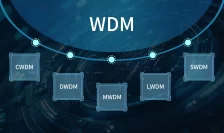
SDM vs WDM explained: Compare space and wavelength multiplexing to choose the best optical communication method for your network’s capacity and upgrade needs.
Discover how microcontroller units (MCUs) support optical transceivers by enabling real-time monitoring, diagnostics-enabled modules (DOM), and precise laser control. Explore their essential role in LINK-PP modules for improved reliability.
Learn how LDP (Label Distribution Protocol) establishes Label Switched Paths in MPLS networks. Understand LDP functions, working principles, and relation to LINK-PP products.
Central Management Server streamlines server management, enabling secure, centralized control, updates, and monitoring for multiple systems in one place.
Dispersion compensation in optical systems corrects chromatic dispersion, ensuring clear, accurate signals in fiber optic communication and imaging applications.
In-band Network Telemetry embeds real-time monitoring data in each packet, enabling instant network insights, troubleshooting, and performance analysis.
Remote network monitoring enables real-time network management, security, and troubleshooting from any location, supporting both remote teams and multiple site.
Learn what Multipoint-to-Point (MP2P) architecture is, how it works, and how LINK-PP optical transceivers enhance data efficiency in modern fiber networks.
Learn how multipoint-to-multipoint (MP2MP) networks work, their advantages, and applications in optical communications. Discover LINK-PP optical modules supporting MP2MP systems.
Explore the fundamentals of Point-to-Point (P2P) network architecture, its working principles, and how LINK-PP RJ45 connectors and optical transceivers enable reliable high-speed communication.
Discover the LQ‑SW40‑SR4C 40GBASE‑SR module: high-speed, low-power, QSFP+ optics for multimode fibre networks. Perfect for data centres and network upgrades.
Learn what hyperconverged infrastructure HCI is, how it compares with virtualization and dHCI, and when Nutanix, Sangfor, or SFP-based designs fit best.
Understand SFP+ 40km (10GBASE-ER) modules, including specs, SMF compatibility, and how to choose the right extended-reach optical transceiver for your network.