Discover the LQ‑SW40‑SR4C 40GBASE‑SR module: high-speed, low-power, QSFP+ optics for multimode fibre networks. Perfect for data centres and network upgrades.
Network congestion slows internet speeds and causes dropped connections. Learn how to identify, fix, and prevent network congestion for smoother online use.
SERDES interfaces convert parallel data to serial for high-speed, reliable transmission, reducing wiring and improving signal integrity in electronics.
Bandwidth vs Throughput explains the difference between maximum data capacity and actual data speed, helping you diagnose and improve network performance.
Learn what network latency is, what causes it, and actionable strategies to reduce it. Discover how high-performance optics from brands like LINK-PP can help.
A complete professional guide covering all key installation, cleaning, ESD, compatibility, environmental, and safety precautions for 10G SFP+ optical modules.
A fiber optic cable uses thin glass or plastic fibers to transmit data as light pulses, enabling fast, clear, and reliable communication over long distances.
Long-haul transmission uses fiber optic cables to send data quickly and securely over long distances, connecting cities and countries for fast communication.
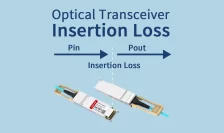
Learn what optical transceiver insertion loss is, how it affects link budgets, BER, and FEC. Includes LC/MPO numbers, control tips, and LINK-PP insights.
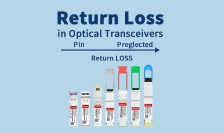
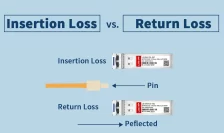
Learn the difference between insertion loss and return loss in optical transceivers, their impact on performance, measurement methods, and LINK-PP product guidance.
Discover what CMIS is and why it’s vital for managing modern optical modules (QSFP-DD, OSFP, etc.). Learn how LINK-PP’s future-ready modules comply with CMIS .
Learn how LDP (Label Distribution Protocol) establishes Label Switched Paths in MPLS networks. Understand LDP functions, working principles, and relation to LINK-PP products.
Central Management Server streamlines server management, enabling secure, centralized control, updates, and monitoring for multiple systems in one place.
Dispersion compensation in optical systems corrects chromatic dispersion, ensuring clear, accurate signals in fiber optic communication and imaging applications.
Learn how multipoint-to-multipoint (MP2MP) networks work, their advantages, and applications in optical communications. Discover LINK-PP optical modules supporting MP2MP systems.
In-band Network Telemetry embeds real-time monitoring data in each packet, enabling instant network insights, troubleshooting, and performance analysis.
Remote network monitoring enables real-time network management, security, and troubleshooting from any location, supporting both remote teams and multiple site.
Learn what Multipoint-to-Point (MP2P) architecture is, how it works, and how LINK-PP optical transceivers enhance data efficiency in modern fiber networks.
Explore the fundamentals of Point-to-Point (P2P) network architecture, its working principles, and how LINK-PP RJ45 connectors and optical transceivers enable reliable high-speed communication.
Discover the LQ‑SW40‑SR4C 40GBASE‑SR module: high-speed, low-power, QSFP+ optics for multimode fibre networks. Perfect for data centres and network upgrades.
Learn what hyperconverged infrastructure HCI is, how it compares with virtualization and dHCI, and when Nutanix, Sangfor, or SFP-based designs fit best.
Understand SFP+ 40km (10GBASE-ER) modules, including specs, SMF compatibility, and how to choose the right extended-reach optical transceiver for your network.