What are SFP ports on a switch? Learn how SFP ports support fiber and Ethernet connections, how they compare with RJ45 and SFP+, and which module you need.
What Frame Check Sequence (FCS) means, how CRC-32 detects corrupted Ethernet frames, and why FCS errors are commonly associated with cable faults, fiber issues, or optical transceiver problems.
Discover the LQ‑SW40‑SR4C 40GBASE‑SR module: high-speed, low-power, QSFP+ optics for multimode fibre networks. Perfect for data centres and network upgrades.
Explore the WAN Interface Sublayer (WIS) in 10 Gigabit Ethernet. Learn its role in SONET/SDH integration, data encapsulation, and how LINK-PP 10G optical modules support WAN PHY applications.
Explore Packet over SONET/SDH (POS), the technology enabling high-speed IP transport over optical networks, with insights into PPP encapsulation and SONET/SDH performance.
Discover IEEE 802.3ae: the foundation of 10 Gigabit Ethernet. Learn its standards, physical layers, and how LINK-PP 10G SFP+ modules ensure compliance.
Discover how Multicore Fiber (MCF) and Space-Division Multiplexing (SDM) are solving the bandwidth crisis. Learn about MCF applications and how LINK-PP's optical transceivers harness its power.
SDM vs WDM explained: Compare space and wavelength multiplexing to choose the best optical communication method for your network’s capacity and upgrade needs.
Learn the differences between LAN PHY and WAN PHY in 10 Gigabit Ethernet. Explore how LINK-PP 10G optical modules, like 10GBASE-LR SFP+, support both PHY types for reliable networking.
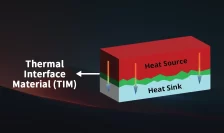
Explore what Thermal Interface Material (TIM) is, its key types, and why it matters in electronics and optical transceivers. Learn how TIM improves heat transfer, boosts device reliability, and supports LINK-PP modules—all explained clearly for better SEO and reader value.
LINK-PP Optical Modules deliver high bandwidth, low latency, and reliability for AI, IoT, and Big Data workloads in scalable, energy-efficient networks.
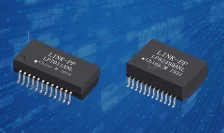
Learn how LINK-PP RJ45 connectors, PoE solutions, and LAN transformers enhance PTZ camera performance, providing stable power, high-speed data, and EMI protection for smart surveillance networks.
Discover the essential functions of PoE LAN transformers and how LINK-PP magnetic components ensure stable power and high-speed Ethernet data transmission.
IPv4 Address uses a 32-bit numeric format, while IPv6 offers 128-bit alphanumeric addresses, more capacity, and improved security for growing networks.
Learn how RJ45 magnetic jacks enable stable power, clean signals, and reliable network connections in VoIP phones — featuring LINK-PP PoE-ready RJ45 solutions.
Internet Control Message Protocol (ICMP) helps diagnose network issues by sending error and status messages between devices for reliable communication.
Global Positioning System (GPS) uses satellites to provide accurate real-time location, navigation, and tracking for personal, business, and safety needs.
What is CMOS? Learn the fundamentals of Complementary Metal-Oxide-Semiconductor technology, its working principle, key advantages, and its integration with silicon photonics and optical transceivers.
Fibre Channel over Ethernet (FCoE) enables Fibre Channel storage traffic to run on Ethernet networks, streamlining data center connectivity and reducing costs.
Precision Time Protocol synchronizes network device clocks for microsecond accuracy, reducing errors and improving reliability in critical applications.
Discover the LQ‑SW40‑SR4C 40GBASE‑SR module: high-speed, low-power, QSFP+ optics for multimode fibre networks. Perfect for data centres and network upgrades.
Learn what hyperconverged infrastructure HCI is, how it compares with virtualization and dHCI, and when Nutanix, Sangfor, or SFP-based designs fit best.