Pluggable optics enable flexible, cost-effective network upgrades and high-speed connections, with linear pluggable optics boosting AI and data center performance.
Learn how industrial IPCs use LINK-PP SFP/SFP+ cages to build high-speed, EMI-protected fiber uplinks for PLCs and edge networks. Ideal for Industry 4.0 and smart factories.
Signal integrity and low latency in data center transceivers ensure reliable, error-free data transmission and optimal performance for real-time applications.
Optical networking delivers high speed, security, and scalability for private and hybrid cloud deployments, ensuring reliable and efficient data connectivity.
Learn what MTTR (Mean Time to Repair) means, why it matters for system reliability, and how LINK‑PP’s hot-swappable SFP/SFP+ transceivers reduce repair time.
A clear, professional guide to IIoT (Industrial Internet of Things), covering architecture, protocols, security best practices, and suitable networking components for industrial deployments.
What are SFP ports on a switch? Learn how SFP ports support fiber and Ethernet connections, how they compare with RJ45 and SFP+, and which module you need.
Medical-grade RJ45 connector ensures safe, reliable, and compliant network connections in medical devices, meeting IEC 60601-1 and sterilization standards.
Turns ratio in LAN transformers defines the winding relationship, typically 1:1, ensuring signal integrity, voltage stability, and Ethernet compliance.
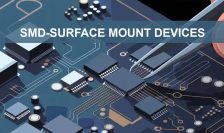
SMT, or Surface Mount Technology, is a method for mounting electronic components directly onto PCB surfaces, enabling compact designs and efficient manufacturing.
A Surface-Mount Device (SMD) is a compact electronic component mounted directly on a PCB, enabling smaller, faster, and more efficient modern electronics.
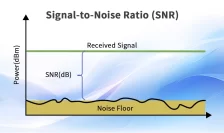
SNR, or signal-to-noise ratio, measures signal strength versus noise. High SNR means clearer audio, images, and data for better overall signal quality.
What Frame Check Sequence (FCS) means, how CRC-32 detects corrupted Ethernet frames, and why FCS errors are commonly associated with cable faults, fiber issues, or optical transceiver problems.
Explain what a 100km SFP transceiver is, how ER and ZR differ, required wavelength, optical budget calculation, and whether amplification is needed for long-haul fiber links.
Complete guide to long distance transceivers covering 10km to 120km optics, 1310nm vs 1550nm, ER/ZR modules, link budget calculation, and deployment best practices.
This guide explains SR SFP modules, including wavelength, fiber requirements, typical reach, compatibility issues, and selection tips for short-range optical networking.
Authoritative guide to LR SFP modules (10GBASE-LR): technical specs, typical 10 km reach, fiber requirements, vendor compatibility, procurement checklist and deployment best practices.
Professional guide to 10GbE SFP+ modules covering types, pricing, compatibility, power, and supplier selection for reliable enterprise and data center deployments.
QSFP28 vs. QSFP-DD explained for engineers. Compare electrical lanes, speed, power, compatibility, and deployment scenarios to select the right 100G or 400G optical module.
Compare Cisco SFP-10G-T-X with compatible 10GBASE-T SFP+ modules. Learn differences in power, distance, compatibility, and when a third-party option makes sense.
Discover the LINK-PP LQ-M85100-SR4C QSFP28 100G SR4 transceiver—ideal for short-reach 100G Ethernet over MMF. Compatible with Cisco, Arista, FS, Dell, and more.