Welcome to the LINK-PP Community

More Posts

What are SFP ports on a switch? Learn how SFP ports support fiber and Ethernet connections, how they compare with RJ45 and SFP+, and which module you need.
Learn what an SFP link is, why it fails, and how to fix compatibility, cabling, and link-flap issues with practical checks and clear steps.
Optical transceivers in UAVs enable high-speed, secure, and low-latency drone communication for real-time video, telemetry, and mission-critical data.
Explore the technology behind 400 G QSFP‑DD transceivers, including form factor, modulation, optical lanes, and thermal design.
Understand hot‑pluggable optical modules insertion cycle limits, and learn care tips—including ESD-safe handling, dust prevention, and heat management.
Understand what CRC is, how cyclic redundancy check errors happen, how to fix them, and why CRC matters in networking, storage, and SFP modules.
What Frame Check Sequence (FCS) means, how CRC-32 detects corrupted Ethernet frames, and why FCS errors are commonly associated with cable faults, fiber issues, or optical transceiver problems.
Discover the LQ‑SW40‑SR4C 40GBASE‑SR module: high-speed, low-power, QSFP+ optics for multimode fibre networks. Perfect for data centres and network upgrades.
Discover how optical cross‑connect (OXC) enables all‑optical switching in DWDM/OTN networks, with LINK‑PP SFP modules ensuring seamless integration and superior performance.
Discover how EML works in optical modules, why it’s vital for high‑speed, long‑distance links, and how LINK‑PP brings EML‑based optical transceivers.
Technical hurdles of 1.6T optical transceivers include signal integrity, power, and cooling, driving a connector revolution for reliable high-speed networks.
Learn what the SFF-8402 specification is, how it defines the SFP28 interface standard, and why it is essential for 25G / 28G optical module interoperability and system reliability.
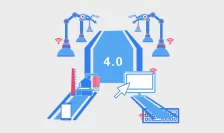
Explore how Smart Industry 4.0 Networks enable intelligent manufacturing through high-speed Ethernet, fibre optics, IIoT, and edge computing integration.
The TCP/IP model organizes network communication into four layers, enabling secure data exchange between devices across the internet.
Semiconductor material properties determine optical module speed, efficiency, and reliability by affecting bandgap, carrier mobility, and thermal conductivity.
Explore how RJ45 Magjack connectors enable robust Ethernet communication between PLCs and SCADA hosts in industrial automation, ensuring signal integrity and system reliability.
Learn how optical modules enhance PLC system performance, enabling high-speed, long-distance communication and reliable industrial automation networks.
VLAN vs VXLAN: Compare scalability, flexibility, and cost to choose the best network segmentation for small setups or large, cloud-based environments.
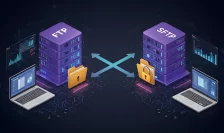
FTP vs SFTP: Compare security, encryption, and use cases to choose the best protocol for safe and efficient file transfers.
Discover how LINK-PP 25G SFP28 optical modules enhance hyperscale data centers with high bandwidth, low latency, and energy efficiency. Learn key benefits and use cases.
Uplink Failure Detection quickly identifies network link failures, enabling fast response to prevent downtime and maintain business continuity.
Open System Interconnect explains the seven OSI layers, showing how devices communicate and ensuring interoperability in modern network environments.
A VXLAN Network Identifier (VNI) is a unique 24-bit segment ID enabling scalable network segmentation and isolation in large VXLAN-based environments.
A PLC-Programmable Logic Controller automates machines and processes, offering reliable, flexible control for efficient industrial automation systems.
Explore what Supervisory Control and Data Acquisition (SCADA) systems are, how they work, and their vital role in industrial automation and smart infrastructure.
A VLAN segments a network at the data link layer, improving security, performance, and management by isolating devices within virtual groups.
File Transfer Protocol (FTP) enables fast file transfers between computers on a network, supporting various file types but lacking built-in security.
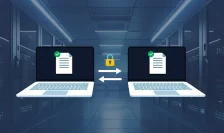
SSH File Transfer Protocol (SFTP) offers secure file transfer protocol features, using encryption and authentication to protect data during file transfers.
Secure Shell (SSH) enables encrypted remote access and secure file transfer, protecting data with strong authentication and robust encryption methods.
Virtual Extensible LAN enables scalable, secure, and flexible network virtualization, supporting millions of segments for modern data center needs.
Learn what 40GBASE-ER4 is, how far it reaches over duplex single-mode fiber, what it supports, and how to choose the right QSFP+ optic.
Understand SFP 850nm vs 1310nm differences in fiber type, distance, cost, and use cases. Learn which SFP module is right for your network.
Learn what a 2.5 Gbps SFP module is, how it works, and compatibility with SFP+ ports. Explore performance insights, standards, and buying tips.
Learn 2.5G Copper SFP (2.5GBASE-T), compatibility, Cat5e/Cat6 support, 100m reach, and why it bridges 1G and 10G Ethernet upgrades.
Complete guide to GLC-SX-MMD 1000BASE-SX SFP module: specs, MMF vs SMF, DOM features, compatibility, and best alternatives for cost-effective deployment.
Learn how compatible transceivers work and how to ensure switch compatibility. Avoid SFP errors, vendor locks, and choose the right module confidently.
Learn what an MMF SFP Module is, how it differs from SMF, how to identify it, and how to avoid compatibility mistakes in real deployments.
Learn the SFP28 standard, including its 25G capabilities, SFP28 vs. SFP+ differences, fiber and copper options, and how to choose the right 25G solution.
Learn what Small Form-factor Pluggable Plus SFP+ is, how it works, compatibility rules, common use cases, and how to choose the right module.
Learn how a 1000BASE-T SFP transceiver module works with Category 5 copper wire, including compatibility limits, heat issues, and real-world deployment tips.

Add Your Heading Text Here