Welcome to the LINK-PP Community

More Posts

The TOSA is a critical component in optical transceivers, converting electrical signals into optical signals for high-speed fiber optic communication.
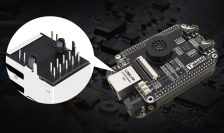
Through-Hole Technology (THT) involves inserting component leads into PCB holes and soldering them, ensuring durable connections for high-reliability applications.
Through‑Hole Reflow Soldering enables simultaneous soldering of through-hole and surface-mount components in a single efficient reflow process.
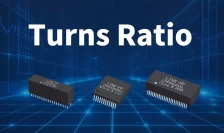
Turns ratio in LAN transformers defines the winding relationship, typically 1:1, ensuring signal integrity, voltage stability, and Ethernet compliance.
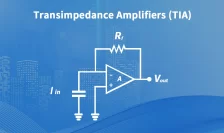
Transimpedance Amplifiers (TIAs) convert sensor current to voltage using an op-amp and feedback resistor, enabling accurate signal measurement.
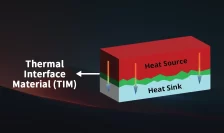
Explore what Thermal Interface Material (TIM) is, its key types, and why it matters in electronics and optical transceivers. Learn how TIM improves heat transfer, boosts device reliability, and supports LINK-PP modules—all explained clearly for better SEO and reader value.

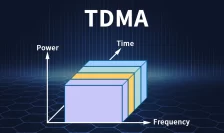
Time Division Multiple Access allows multiple users to share one channel by assigning time slots, ensuring clear calls and efficient data in modern networks.
The TCP/IP model organizes network communication into four layers, enabling secure data exchange between devices across the internet.
Discover how TSN (Time-Sensitive Networking) brings deterministic, low-latency, and reliable data delivery to Industry 4.0 and automotive Ethernet networks.
Learn what a TPU-Tensor Processing Unit is, how Google’s AI accelerator works, key TPU generations, TPU vs GPU, and its role in efficient large-scale machine learning.
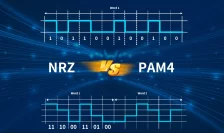
PAM4 vs NRZ: Compare data rates, noise tolerance, and efficiency to choose the best modulation for your network and data center upgrades.
Optical Modules differ by fiber count and mode: single/dual fiber affects cabling, while single-mode/multi-mode impacts distance and speed in networks.
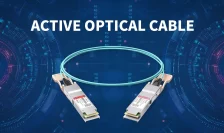
An active optical cable uses built-in transceivers to convert electrical signals to light, enabling high-speed, long-distance data transmission with minimal loss.
CPO vs LPO: Compare key differences, benefits, power savings, and best use cases for data centers to choose the right optical technology for your needs.
A CPO optical module integrates optical and electronic components to boost data center speed, efficiency, and bandwidth while reducing power use.

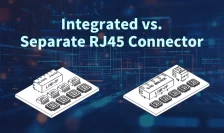
Learn the differences between integrated and separate RJ45 connectors from LINK-PP. Discover how to choose the right solution for your Ethernet applications.

LPO transceivers cut power use, lower latency, and boost reliability in data centers, making them ideal for high-speed, energy-efficient optical links.
Optical transceivers enable high-speed, reliable data transfer in submarine cables, powering global connectivity and meeting growing bandwidth demands underwater.
Understand the differences between FTTH and FTTB. Learn how LINK-PP’s optical transceivers support both fiber access architectures for reliable connectivity.
Optical modules enable high-speed, low-latency 5G networks by converting signals for fast, reliable data transfer, supporting seamless connectivity and future growth.
A Virtual Private Network (VPN) secures online communication by encrypting data and masking IP addresses. Learn how VPNs work, their benefits, and why businesses rely on them for safe remote access and private browsing.
Virtual Extensible LAN enables scalable, secure, and flexible network virtualization, supporting millions of segments for modern data center needs.
A VLAN segments a network at the data link layer, improving security, performance, and management by isolating devices within virtual groups.
A VXLAN Network Identifier (VNI) is a unique 24-bit segment ID enabling scalable network segmentation and isolation in large VXLAN-based environments.
The Domain Name System (DNS) converts domain names into IP addresses, enabling devices to connect to websites and services quickly and reliably online.
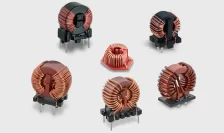
Common-Mode Choke (CMC) explained: learn how CMCs block common-mode noise, preserve differential Ethernet signals, and what specs matter when selecting CMCs for LAN transformers and PoE.
Differential mode delay in multimode fiber optics limits speed and data rates by causing pulse spreading, reducing signal clarity and network performance.
Direct-Attached Storage connects directly to your device, offering fast data access, privacy, and control without relying on a network.
A Digital Signal Processor in optical transceivers enables fast data rates, advanced modulation, and real-time signal correction for reliable high-speed links.
What is DWDM? Dense Wavelength Division Multiplexing lets multiple data channels travel on one fiber, boosting bandwidth and efficiency in optical networks.
Learn what a short range SFP module is, its transmission distance, fiber types, and how to choose the right SR SFP for data center and enterprise network connections.
Learn how electrical SFP compares with fiber SFP in speed, distance, power consumption, and cost. A practical guide for data centers, network engineers, and enterprise deployments.
Learn everything about Electrical SFP transceivers, including definitions, comparisons with fiber SFP, usage, troubleshooting, and compatibility.
Explore Copper SFP vs. Fiber SFP differences, performance, compatibility, and cost. Learn how to choose the right SFP module for home labs, data centers, and PoE networks.
Copper SFP modules enable cost-effective, high-speed data transfer over short distances using existing copper cables, ideal for offices and data centers.
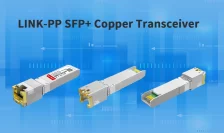
Discover the LINK-PP 10GBase-T Copper SFP+ Transceiver. Supporting 10Gbps over Cat6a/7 cables up to 80m. Compatible with Cisco, Dell, H3C, Juniper, and Arista.
Learn how multimode SFP+ (10GBASE-SR) transceivers work, including fiber types, transmission distance, specifications, and common data center use cases.
Learn what a 1000BASE-T Copper SFP is, how RJ45 SFP modules work, when to use copper SFP instead of fiber, compatibility issues, and common troubleshooting tips.
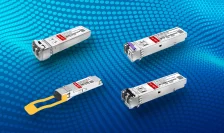
Explore the features, applications, and selection guide for optical transceiver SFP+ 10G single-mode 1310nm 10km LC modules for data centers and enterprise networks.
Understand what a third-party SFP is, how compatible optics work with Cisco, Juniper, and Arista switches, and the cost, risks, and buying tips for reliable network deployments.