Showing results for: "Guide"

Topics
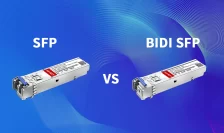
Compare SFP vs BiDi SFP: key differences, fiber requirements, compatibility, and best use cases to help you choose the right SFP module for your network.
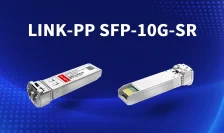
SFP-10G-SR enables fast, reliable short-range connections in data centers, enterprise networks, and campus environments using multimode fiber.
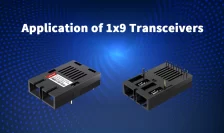
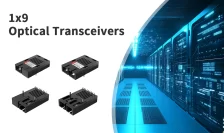
1x9 optical module applications include industrial automation, telecom backhaul, and legacy network upgrades for reliable, cost-effective data links.
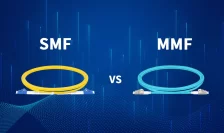
Understand the difference between fibers: single mode offers long-distance, high bandwidth, while multimode suits short runs and lower costs.
Understanding what is SFP-10G-LR, and its core specification, application and comparison with other 10G SFP+ optical transceivers
Unstanding different types of 40G QSFP+ Transceivers, including 40GBASE-SR4, 40GBASE-LR4, 40GBASE-FR4, 40GBASE-ER4. Choosing the right QSFP+ modules for you.
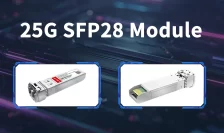
SFP28 is a 25G transceiver module for fast, efficient data transfer in modern networks, offering high speed, compatibility, and energy savings.
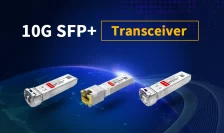
Choose the right 10G SFP+ transceiver by comparing compatibility, speed, media type, distance, and cost for reliable network upgrades.
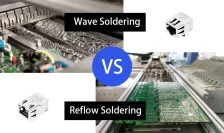
Explain reflow vs. wave soldering for RJ45 connectors. Discover when to use SMT or THT Mount and how soldering Methods affects performance and reliability.
SFP-10G-ZR is a 10Gbps transceiver for single-mode fiber, supporting up to 80 km reach at 1550nm, ideal for long-distance 10G Ethernet connections.
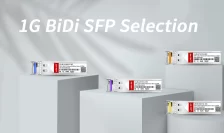
Choose the right 1G BIDI sfp module by checking compatibility, wavelength pairing, fiber type, and distance to ensure reliable network performance.
Select the best 1x9 optical transceiver by matching fiber type, distance, speed, and connector for reliable network performance.
Choose the best 100g qsfp28 optical transceiver for your network by comparing compatibility, distance, fiber type, and future-proofing options.
QSFP28 100G PSM4 transceivers offer high-speed, cost-effective 100G Ethernet over single-mode fiber, ideal for data centers and enterprise networks.
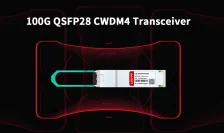
QSFP28 100G CWDM4 transceiver is the industry-standard solution for cost-effective, high-performance 100 Gigabit Ethernet connections over distances up to 2km
Explore features, benefits, and use cases of SFP+ RJ45 10G modules. Learn how LINK-PP’s SFP+ RJ45 module delivers 10G up to 80 m over Cat6a/7 cables.
Compare 100G SWDM4 and 100G SR4 to find the best fit for your data center—upgrade with duplex fiber or build new with ribbon fiber and MPO connectors.
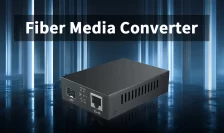
Media converters connect copper and fiber cables, converting signals to extend network reach and support legacy devices.
Compare sfp28-25g-esr and sfp28-25g-sr modules for 25G networks. See key differences in distance, fiber type, and best use cases for data centers.
Choose the right 100M optical transceiver by checking compatibility, fiber type, wavelength, distance, data rate, connector, and reliability.
Learn what FCoE Fibre Channel over Ethernet is, how it works, and how it relates to optical modules, DCB, and high-performance data center networking.
Discover how DDMI—the Digital Diagnostic Monitoring Interface—gives real-time insights into optical transceivers. Learn its key metrics, benefits, and how LINK-PP modules support it.
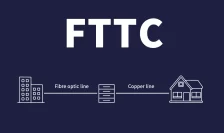
Learn what FTTC (Fiber to the Curb) is, how it works, its pros and cons, and how it compares with FTTH and DSL. Discover applications, equipment needs, and future trends in broadband access.
A Network Management System monitors, controls, and protects network devices, providing real-time alerts, automation, and improved network security.
An application-specific integrated circuit, or ASIC, is a microchip made for a special job. Let's dive into the world of ASIC! Discover what exactly is an ASIC.
An application programming interface is a set of rules that lets software connect, share data, and work together efficiently across platforms.
A converged network adapter combines network and storage connectivity in one device, reducing hardware and simplifying data center management.
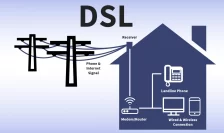
Learn what DSL (Digital Subscriber Line) is, how it works, and the difference between ADSL, VDSL, and other types. Discover advantages, limitations, and the future of DSL technology in broadband access.
A VXLAN Network Identifier (VNI) is a unique 24-bit segment ID enabling scalable network segmentation and isolation in large VXLAN-based environments.
A VLAN segments a network at the data link layer, improving security, performance, and management by isolating devices within virtual groups.
Understand SFP+ 40km (10GBASE-ER) modules, including specs, SMF compatibility, and how to choose the right extended-reach optical transceiver for your network.
Explain what a 100km SFP transceiver is, how ER and ZR differ, required wavelength, optical budget calculation, and whether amplification is needed for long-haul fiber links.

Learn what a 10/100/1000BASE-T SFP is, how RJ45 copper SFP modules work, compatibility issues, heat concerns, and best use cases in networks.

Warning: Undefined array key 0 in /www/wwwroot/lp.szlogic.cn/wp-content/plugins/elementor-pro/modules/dynamic-tags/acf/tags/acf-image.php on line 40

Warning: Undefined array key 1 in /www/wwwroot/lp.szlogic.cn/wp-content/plugins/elementor-pro/modules/dynamic-tags/acf/tags/acf-image.php on line 40