Showing results for: "What is"

Topics
Understand what CRC is, how cyclic redundancy check errors happen, how to fix them, and why CRC matters in networking, storage, and SFP modules.
Learn what hyperconverged infrastructure HCI is, how it compares with virtualization and dHCI, and when Nutanix, Sangfor, or SFP-based designs fit best.
Learn what FCoE Fibre Channel over Ethernet is, how it works, and how it relates to optical modules, DCB, and high-performance data center networking.
The TOSA is a critical component in optical transceivers, converting electrical signals into optical signals for high-speed fiber optic communication.
Through-Hole Technology (THT) involves inserting component leads into PCB holes and soldering them, ensuring durable connections for high-reliability applications.
Through‑Hole Reflow Soldering enables simultaneous soldering of through-hole and surface-mount components in a single efficient reflow process.
Turns ratio in LAN transformers defines the winding relationship, typically 1:1, ensuring signal integrity, voltage stability, and Ethernet compliance.
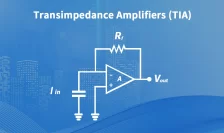
Transimpedance Amplifiers (TIAs) convert sensor current to voltage using an op-amp and feedback resistor, enabling accurate signal measurement.
Discover how TSN (Time-Sensitive Networking) brings deterministic, low-latency, and reliable data delivery to Industry 4.0 and automotive Ethernet networks.
What is SWDM? SWDM is a fiber technology using four short wavelengths to boost data rates and efficiency in multimode fiber networks.
100G Coherent DWDM Solution Overview: High data rates, spectral efficiency, and scalability for telecom, data centers, and enterprise networks.
An optical module converts electrical signals to light for fast, reliable data transfer in networks, essential for cloud computing, telecom, and data centers.
Learn about router functions, types, components, how it works, and compatible modules like LINK-PP’s SFP, RJ45 connectors, and LAN transformers.
Discover what a Metropolitan Area Network (MAN) is, how it bridges LAN and WAN, and its core technologies and applications. | LINK‑PP Comprehensive Guide.
Cloud computing provides online access to servers, storage, and apps, letting users save files, run software, and work from anywhere securely.
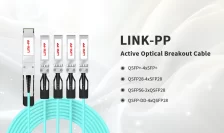
A breakout AOC cable splits one high-speed port into several, offering fast, flexible, and energy-efficient network connections for 2025 data centers.
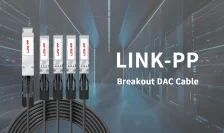
A breakout DAC connects one high-speed port to several lower-speed ports, enabling fast, cost-effective, and reliable short-distance network connections.
SFP+ transceiver modules enable high-speed data transfer, seamless communication, and flexible connectivity in data centers, supporting efficient networks.
IoT (Internet of Things) connects devices to share data, enabling smart actions in homes, healthcare, industry, and cities with real-world examples.
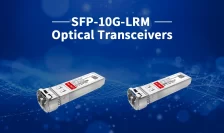
What the SFP-10G-LRM is, how it works, and its benefits. Learn why LINK-PP’s 10GBASE-LRM modules are ideal for upgrading older fiber networks with 220m reach ov
Understand what CRC is, how cyclic redundancy check errors happen, how to fix them, and why CRC matters in networking, storage, and SFP modules.
Learn what FCoE Fibre Channel over Ethernet is, how it works, and how it relates to optical modules, DCB, and high-performance data center networking.
The TOSA is a critical component in optical transceivers, converting electrical signals into optical signals for high-speed fiber optic communication.
Through-Hole Technology (THT) involves inserting component leads into PCB holes and soldering them, ensuring durable connections for high-reliability applications.
Through‑Hole Reflow Soldering enables simultaneous soldering of through-hole and surface-mount components in a single efficient reflow process.
Turns ratio in LAN transformers defines the winding relationship, typically 1:1, ensuring signal integrity, voltage stability, and Ethernet compliance.
Transimpedance Amplifiers (TIAs) convert sensor current to voltage using an op-amp and feedback resistor, enabling accurate signal measurement.
Discover how TSN (Time-Sensitive Networking) brings deterministic, low-latency, and reliable data delivery to Industry 4.0 and automotive Ethernet networks.
What is SWDM? SWDM is a fiber technology using four short wavelengths to boost data rates and efficiency in multimode fiber networks.
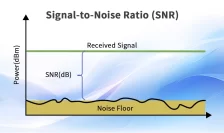
SNR, or signal-to-noise ratio, measures signal strength versus noise. High SNR means clearer audio, images, and data for better overall signal quality.
Learn what a Gigabit SFP transceiver is, compare 1000BASE-SX, LX, and T options, and solve common compatibility and setup issues with confidence.
Learn what a short range SFP module is, its transmission distance, fiber types, and how to choose the right SR SFP for data center and enterprise network connections.