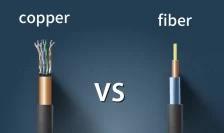
Fiber optic cable offers faster speeds, longer distances, and better reliability than copper cable, making it ideal for high-performance internet and networks.
CWDM vs DWDM: Cost-effective 8-channel metro optics vs high-density 96+ channel long-haul systems. Choose LINK-PP optical transceivers for both WDM solutions.
Cooperation Between LINK-PP and Vietnam Telecom in 2025 boosts Vietnam’s telecom with advanced optical modules, enhancing speed, reliability, and scalability.
Compare PC vs UPC vs APC fiber connectors to choose the best type for your network. Understand differences in return loss, insertion loss, and applications.
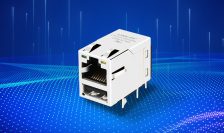
The RJ45 USB connector Combo by LINK-PP, LPJU3102ABNL, merges Ethernet and USB, offering durability, EMI shielding, and LED indicators for 10/100 Base-T networks.
CPRI (Common Public Radio Interface) connects baseband units to remote radio units, enabling high-speed, low-latency communication in wireless networks.
Power consumption optimization for optical transceivers in edge computing reduces energy use, lowers costs, and boosts network scalability and reliability.
Explore the IEEE 802.3bt (PoE++) standard delivering up to 100W over Ethernet. Learn its key features, power types, and applications with LINK-PP PoE++ Magnetics solutions.
Learn what a network gateway is, how it works, and why it’s essential for connecting different networks. Understand gateway functions, types, and real-world applications in modern communication systems.
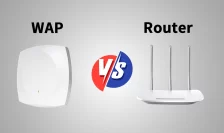
Learn the differences between a Wireless Access Point (WAP) and a router, their use cases in home and enterprise networks, and how LINK‑PP LPJK6072AONL PoE RJ45 connectors support WAP deployments.
Long-range 10G optical modules enable high-speed data over distances up to 80km. Learn about types, specs, compatibility, and choosing the right module.
Learn what IEEE 802.3af (PoE) means, how it delivers up to 15.4W of power through Ethernet cables, and its key applications. Discover LINK-PP PoE RJ45 Magnetics for stable power delivery.
A short-range 10G optical transceiver enables fast, reliable data transfer up to 300m using multimode fiber, ideal for data centers and enterprise networks.
NG-PON2 delivers faster, more reliable fiber optic internet with higher capacity, supporting up to 256 users and 40 Gbit/s speeds for homes and businesses.
What Frame Check Sequence (FCS) means, how CRC-32 detects corrupted Ethernet frames, and why FCS errors are commonly associated with cable faults, fiber issues, or optical transceiver problems.
Discover how optical cross‑connect (OXC) enables all‑optical switching in DWDM/OTN networks, with LINK‑PP SFP modules ensuring seamless integration and superior performance.
Learn what Dispersion Compensation Fiber (DCF) is, how it reduces chromatic dispersion, where it is used, and why it matters in modern optical networks.
Learn what OEO means in optical communication, how optical-electrical-optical regeneration works, and when it is used in DWDM networks and optical links. Keywords:
Discover the LQ‑SW40‑SR4C 40GBASE‑SR module: high-speed, low-power, QSFP+ optics for multimode fibre networks. Perfect for data centres and network upgrades.
Learn what hyperconverged infrastructure HCI is, how it compares with virtualization and dHCI, and when Nutanix, Sangfor, or SFP-based designs fit best.
Understand SFP+ 40km (10GBASE-ER) modules, including specs, SMF compatibility, and how to choose the right extended-reach optical transceiver for your network.