Learn how LAN transformers and integrated magnetics suppress EMI in Ethernet systems. Practical design tips, common-mode choke roles, and LINK-PP product notes.
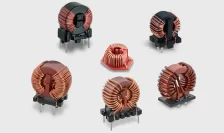
Common-Mode Choke (CMC) explained: learn how CMCs block common-mode noise, preserve differential Ethernet signals, and what specs matter when selecting CMCs for LAN transformers and PoE.
A PLC Splitter divides one optical signal into multiple outputs, ensuring reliable, efficient fiber optic network connections for homes and businesses.
Optical Spectrum Analyzer measures light power at each wavelength, helping you assess lasers, LEDs, and fiber optic signals for quality and performance.
Guide to choose the best RJ45 female connector by comparing cable compatibility, shielding, durability, and installation for optimal network reliability.
Understand the difference between a LAN Transformer and a LAN Filter. Learn how both work together in RJ45 magnetic connectors to ensure Ethernet signal integrity and EMC compliance.
LP82444NL PoE LAN Transformer boosts network reliability, signal integrity, and power delivery for efficient, safe, and high-speed modern Ethernet applications.
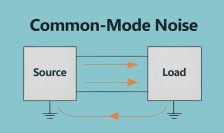
Understand common-mode noise: what it is, how it affects Ethernet/EMI, and how to suppress it using magnetics and filters. A practical guide for engineers.
Network Filter explained: what LAN filters and Ethernet common-mode chokes do, why they matter for EMI, isolation, and PoE, and how to choose the right RJ45 magnetics.
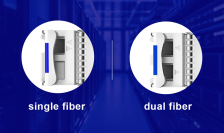
Single fiber transceivers, like the Bidi Transceiver, use one fiber for bidirectional data, while dual fiber transceivers require two fibers for separate TX and RX.
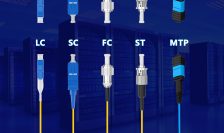
Explore common fiber connector types like SC, LC, ST, FC, and MPO/MTP, their characteristics, and applications in optical transceivers for efficient networks.
COB, BOX, and TO-CAN packaging impact optical devices by balancing size, cost, and reliability. Learn how COB excels in compact, high-speed applications.
Ensure reliable optical transceiver performance with regular tests for metrics like BER, extinction ratio, and receiver sensitivity to avoid network disruptions.
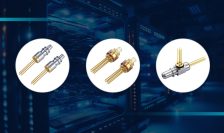
TOSA, ROSA, and BOSA are key components in optical transceivers, enabling high-speed data transmission, reception, and bidirectional communication in modern networks.
Understand the operating temperature range of optical transceivers, including commercial (0°C-70°C), extended (-20°C-85°C), and industrial (-40°C-85°C) grades.
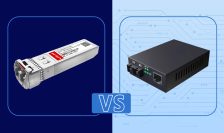
Compare optical transceivers and fiber media converters to understand their roles, advantages, and use cases in modern networking and data transmission.
What Frame Check Sequence (FCS) means, how CRC-32 detects corrupted Ethernet frames, and why FCS errors are commonly associated with cable faults, fiber issues, or optical transceiver problems.
Discover how optical cross‑connect (OXC) enables all‑optical switching in DWDM/OTN networks, with LINK‑PP SFP modules ensuring seamless integration and superior performance.
Learn what Dispersion Compensation Fiber (DCF) is, how it reduces chromatic dispersion, where it is used, and why it matters in modern optical networks.
Learn what OEO means in optical communication, how optical-electrical-optical regeneration works, and when it is used in DWDM networks and optical links. Keywords:
Discover the LQ‑SW40‑SR4C 40GBASE‑SR module: high-speed, low-power, QSFP+ optics for multimode fibre networks. Perfect for data centres and network upgrades.
Learn what hyperconverged infrastructure HCI is, how it compares with virtualization and dHCI, and when Nutanix, Sangfor, or SFP-based designs fit best.
Understand SFP+ 40km (10GBASE-ER) modules, including specs, SMF compatibility, and how to choose the right extended-reach optical transceiver for your network.