Learn what MTTR (Mean Time to Repair) means, why it matters for system reliability, and how LINK‑PP’s hot-swappable SFP/SFP+ transceivers reduce repair time.
Optical networking delivers high speed, security, and scalability for private and hybrid cloud deployments, ensuring reliable and efficient data connectivity.
Signal integrity and low latency in data center transceivers ensure reliable, error-free data transmission and optimal performance for real-time applications.
Explore how an Industrial PC (IPC) reliably communicates with a PLC using LINK-PP integrated RJ45 connectors for robust isolation and EMI resilience in industrial Ethernet networks.
Learn how industrial IPCs use LINK-PP SFP/SFP+ cages to build high-speed, EMI-protected fiber uplinks for PLCs and edge networks. Ideal for Industry 4.0 and smart factories.
Discover SONET and SDH, the backbone technologies for high-speed fiber-optic communications. Learn about their standards, applications, and differences to enhance your network infrastructure knowledge.
What are SFP ports on a switch? Learn how SFP ports support fiber and Ethernet connections, how they compare with RJ45 and SFP+, and which module you need.
Medical-grade RJ45 connector ensures safe, reliable, and compliant network connections in medical devices, meeting IEC 60601-1 and sterilization standards.
Turns ratio in LAN transformers defines the winding relationship, typically 1:1, ensuring signal integrity, voltage stability, and Ethernet compliance.
Explore what Thermal Interface Material (TIM) is, its key types, and why it matters in electronics and optical transceivers. Learn how TIM improves heat transfer, boosts device reliability, and supports LINK-PP modules—all explained clearly for better SEO and reader value.
Time Division Multiple Access allows multiple users to share one channel by assigning time slots, ensuring clear calls and efficient data in modern networks.
Discover how TSN (Time-Sensitive Networking) brings deterministic, low-latency, and reliable data delivery to Industry 4.0 and automotive Ethernet networks.
Learn what a TPU-Tensor Processing Unit is, how Google’s AI accelerator works, key TPU generations, TPU vs GPU, and its role in efficient large-scale machine learning.
SMT, or Surface Mount Technology, is a method for mounting electronic components directly onto PCB surfaces, enabling compact designs and efficient manufacturing.
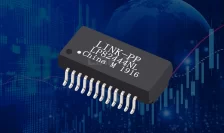
LP82444NL PoE LAN Transformer boosts network reliability, signal integrity, and power delivery for efficient, safe, and high-speed modern Ethernet applications.
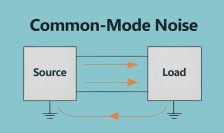
Understand common-mode noise: what it is, how it affects Ethernet/EMI, and how to suppress it using magnetics and filters. A practical guide for engineers.
Learn how Integrated Circuits (ICs) work with LINK-PP products such as RJ45 connectors, LAN transformers, and optical transceivers. Explore applications in Ethernet, PoE, and data centers.
Compare 10G SFP+ LR and 25G SFP28 LR 1310nm transceivers for 10 km SMF links. Learn differences in throughput, power, laser type, cost and when to upgrade. Explore LINK-PP models.
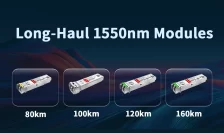
Learn the main applications of 1550nm optical modules in backbone, metro, and enterprise networks. Discover LINK-PP transceivers designed for long-distance fiber links.
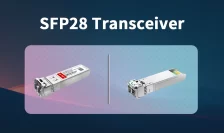
LS-MM8532-S1C SFP28 Transceivers offer 25G/32G speeds, broad compatibility, low power use, and cost savings—ideal for future-proofing your data center.
Subscribe to LINK-PP
newsletter
Don’t miss anything. Get all the latest posts delivered straight to your inbox.