Turns ratio in LAN transformers defines the winding relationship, typically 1:1, ensuring signal integrity, voltage stability, and Ethernet compliance.
Explore what Thermal Interface Material (TIM) is, its key types, and why it matters in electronics and optical transceivers. Learn how TIM improves heat transfer, boosts device reliability, and supports LINK-PP modules—all explained clearly for better SEO and reader value.
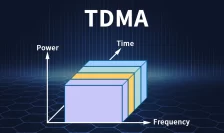
Time Division Multiple Access allows multiple users to share one channel by assigning time slots, ensuring clear calls and efficient data in modern networks.
Discover how TSN (Time-Sensitive Networking) brings deterministic, low-latency, and reliable data delivery to Industry 4.0 and automotive Ethernet networks.
Learn what a TPU-Tensor Processing Unit is, how Google’s AI accelerator works, key TPU generations, TPU vs GPU, and its role in efficient large-scale machine learning.
Discover the types, features, and benefits of PON modules, including OLT, ONU, and ONT devices, transmission protocols, and scalability for fiber networks.
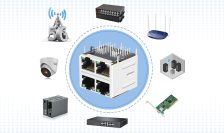
RJ45 connectors are essential for Ethernet networking, enabling stable data transfer in LANs, connecting devices like routers, switches, and supporting high-speed communication.
Fiber patch cords are essential for connecting devices in networks, ensuring fast, reliable data transfer in telecom, data centers, and industrial applications.
SFP+ 10G transceivers deliver high-speed data transfer, low latency, energy efficiency, and compatibility with various devices for modern network setups.
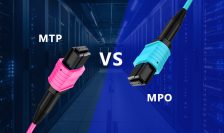
Compare MTP and MPO connectors to find the best fit for your network. Learn how MTP connectors offer superior performance, scalability, and reliability.
100G SFP-DD transceivers boost high-density networks with fast 100Gbps speeds, compact design, energy efficiency, and long-distance data transmission up to 40km.
Optical transceivers convert electrical signals into light, transmitting data through fiber optic cables with high speed, reliability, and minimal loss.
A Virtual Private Network (VPN) secures online communication by encrypting data and masking IP addresses. Learn how VPNs work, their benefits, and why businesses rely on them for safe remote access and private browsing.
The Domain Name System (DNS) converts domain names into IP addresses, enabling devices to connect to websites and services quickly and reliably online.
Common-Mode Choke (CMC) explained: learn how CMCs block common-mode noise, preserve differential Ethernet signals, and what specs matter when selecting CMCs for LAN transformers and PoE.
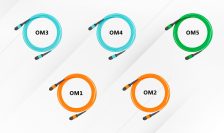
Differential mode delay in multimode fiber optics limits speed and data rates by causing pulse spreading, reducing signal clarity and network performance.
A Digital Signal Processor in optical transceivers enables fast data rates, advanced modulation, and real-time signal correction for reliable high-speed links.
What is DWDM? Dense Wavelength Division Multiplexing lets multiple data channels travel on one fiber, boosting bandwidth and efficiency in optical networks.
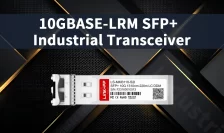
10GBASE-LRM Industrial Transceiver Supports 10.3Gbps, 220m MMF reach, industrial temperature (-40~85°C), and full compatibility with Cisco, Arista, Dell, H3C.
Discover the LQ‑SW40‑SR4C 40GBASE‑SR module: high-speed, low-power, QSFP+ optics for multimode fibre networks. Perfect for data centres and network upgrades.
Learn what hyperconverged infrastructure HCI is, how it compares with virtualization and dHCI, and when Nutanix, Sangfor, or SFP-based designs fit best.