Turns ratio in LAN transformers defines the winding relationship, typically 1:1, ensuring signal integrity, voltage stability, and Ethernet compliance.
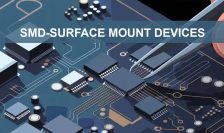
SMT, or Surface Mount Technology, is a method for mounting electronic components directly onto PCB surfaces, enabling compact designs and efficient manufacturing.
A Surface-Mount Device (SMD) is a compact electronic component mounted directly on a PCB, enabling smaller, faster, and more efficient modern electronics.
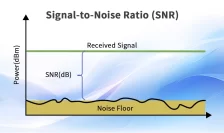
SNR, or signal-to-noise ratio, measures signal strength versus noise. High SNR means clearer audio, images, and data for better overall signal quality.
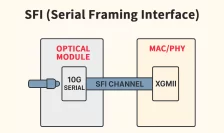
Learn how the Serial Framing Interface (SFI) enables high-speed data transmission in 10G SFP+ and 40G QSFP+ optical modules. Explore SFI channels, XGMII conversion, and module interoperability for reliable networking.
Learn how optical pulses transmit high-speed data in fiber networks. Explore principles, applications, and why LINK-PP optical transceivers deliver cleaner, more reliable pulses.
Unlock high-speed industrial automation with EtherCAT. Learn how EtherCAT achieves sub-microsecond synchronization, its principles, and why it is critical for modern motion control and smart factories.
Data center virtualization uses software to create virtual servers, storage, and networks, improving efficiency, reducing costs, and boosting flexibility.
A fiber optic coupler splits or combines light signals in optical networks, improving data flow, reliability, and network flexibility for various applications.
Dive into the IEEE 802.3bs standard, the foundation for modern 200G and 400G Ethernet. Discover specifications, PAM4 modulation, and how this technology is driving hyperscale data centers with optical transceivers.
Learn what a Network Operating System (NOS) is, how it runs switches and routers, and why it is essential for routing, automation, telemetry, and modern data center networks.
Throughput in network communication is the actual amount of data transferred per second, showing real network performance for streaming, gaming, and downloads.
Discover what IEEE means for network hardware, key standards like IEEE 802.3, and how LINK-PP delivers certified, reliable Ethernet solutions for B2B procurement.
Insertion loss in RJ45 connectors weakens signal strength, impacting network reliability. Learn how to minimize insertion loss for optimal performance.
OTN is a digital transport standard defined by ITU-T for high-capacity optical transmission. Learn how LINK-PP optical transceivers enable OTN-based connectivity.
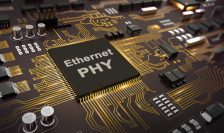
Learn what an Ethernet PHY is, how it connects MAC to network medium, core functions, signal types, and how it pairs with LINK‑PP Magnetics for Ethernet design.
Power Over Ethernet (PoE) combines power and data delivery via a single cable, simplifying installations for devices like IP cameras, VoIP phones, and IoT systems.
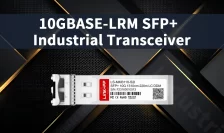
10GBASE-LRM Industrial Transceiver Supports 10.3Gbps, 220m MMF reach, industrial temperature (-40~85°C), and full compatibility with Cisco, Arista, Dell, H3C.
Discover the LQ‑SW40‑SR4C 40GBASE‑SR module: high-speed, low-power, QSFP+ optics for multimode fibre networks. Perfect for data centres and network upgrades.
Learn what hyperconverged infrastructure HCI is, how it compares with virtualization and dHCI, and when Nutanix, Sangfor, or SFP-based designs fit best.
Understand SFP+ 40km (10GBASE-ER) modules, including specs, SMF compatibility, and how to choose the right extended-reach optical transceiver for your network.
Subscribe to LINK-PP
newsletter
Don’t miss anything. Get all the latest posts delivered straight to your inbox.