What are SFP ports on a switch? Learn how SFP ports support fiber and Ethernet connections, how they compare with RJ45 and SFP+, and which module you need.
What Frame Check Sequence (FCS) means, how CRC-32 detects corrupted Ethernet frames, and why FCS errors are commonly associated with cable faults, fiber issues, or optical transceiver problems.
Learn what hyperconverged infrastructure HCI is, how it compares with virtualization and dHCI, and when Nutanix, Sangfor, or SFP-based designs fit best.
Ensure reliable optical transceiver performance with regular tests for metrics like BER, extinction ratio, and receiver sensitivity to avoid network disruptions.
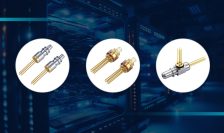
TOSA, ROSA, and BOSA are key components in optical transceivers, enabling high-speed data transmission, reception, and bidirectional communication in modern networks.
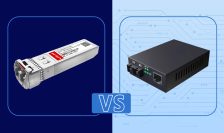
Compare optical transceivers and fiber media converters to understand their roles, advantages, and use cases in modern networking and data transmission.
Understand the operating temperature range of optical transceivers, including commercial (0°C-70°C), extended (-20°C-85°C), and industrial (-40°C-85°C) grades.
Compare SFP, SFP+, SFP28, QSFP+, and QSFP28 optical transceivers. Learn how form factors affect speed, compatibility, and performance in modern networks.
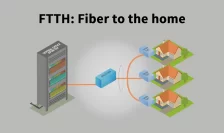
Compare xPON WDM solutions for FTTH and FTTB networks. Discover their bandwidth, cost, and scalability to choose the best fit for your deployment needs.
Fibre Channel over Ethernet (FCoE) enables Fibre Channel storage traffic to run on Ethernet networks, streamlining data center connectivity and reducing costs.
Learn what FPGA (Field-Programmable Gate Array) is, how FPGA architecture works, key applications in 5G, AI, and industrial systems, and why integrated RJ45 MagJack matters.
FBT splitter offers a cost-effective way to split optical signals in fiber networks, ideal for small setups needing simple, customizable signal distribution.
Frequency-Division Multiplexing enables multiple signals to travel on one channel, ensuring clear, efficient communication for phones, TV, and internet.
Extinction ratio measures signal clarity in optical systems, impacting data reliability and error rates. High extinction ratio ensures accurate transmission.
EMC Electromagnetic Compatibility ensures devices work safely and reliably in shared environments by minimizing interference and meeting compliance standards.
Learn what hyperconverged infrastructure HCI is, how it compares with virtualization and dHCI, and when Nutanix, Sangfor, or SFP-based designs fit best.
10GBASE-LRM Industrial Transceiver Supports 10.3Gbps, 220m MMF reach, industrial temperature (-40~85°C), and full compatibility with Cisco, Arista, Dell, H3C.
Discover the LQ‑SW40‑SR4C 40GBASE‑SR module: high-speed, low-power, QSFP+ optics for multimode fibre networks. Perfect for data centres and network upgrades.
A complete technical guide to SFP-10GLR-31 transceivers covering 10GBASE-LR specifications, wavelength, fiber compatibility, switch support, and real deployment scenarios.