Welcome to the LINK-PP Community

More Posts

Open optics and disaggregation in data center networks cut costs, boost flexibility, and improve performance while reducing vendor lock-in and energy use.
Learn the difference between MTTR and MTBF, how they impact system reliability, and how LINK-PP industrial connectors and SFP/SFP+ modules help improve network uptime.
Master Mean Time to Detect (MTTD), the most crucial metric for avoiding silent failures. Learn the calculation, its role in modern observability, and how to reduce MTTD for superior system availability.
Master Mean Time to Acknowledge (MTTA), the key metric for rapid response. Learn its role in system availability, how to calculate it, and proven steps to reduce MTTA for superior network uptime.
A wavelength converter in 2025 rapidly transforms light’s wavelength, enabling precise frequency, energy, and wavenumber calculations for devices.
Pluggable optics enable flexible, cost-effective network upgrades and high-speed connections, with linear pluggable optics boosting AI and data center performance.
Spine-Leaf Architecture in optical networks enables scalable, non-blocking connectivity and high performance for modern data centers.
On-Board Optics boosts data speed, power efficiency, and channel density for data centers, supercomputers, and advanced network systems.
Learn how industrial IPCs use LINK-PP SFP/SFP+ cages to build high-speed, EMI-protected fiber uplinks for PLCs and edge networks. Ideal for Industry 4.0 and smart factories.
Signal integrity and low latency in data center transceivers ensure reliable, error-free data transmission and optimal performance for real-time applications.
Learn what an SFP link is, why it fails, and how to fix compatibility, cabling, and link-flap issues with practical checks and clear steps.
What are SFP ports on a switch? Learn how SFP ports support fiber and Ethernet connections, how they compare with RJ45 and SFP+, and which module you need.
Optical transceivers in UAVs enable high-speed, secure, and low-latency drone communication for real-time video, telemetry, and mission-critical data.
Explore the technology behind 400 G QSFP‑DD transceivers, including form factor, modulation, optical lanes, and thermal design.
Understand hot‑pluggable optical modules insertion cycle limits, and learn care tips—including ESD-safe handling, dust prevention, and heat management.
Discover how Small and Medium-sized Businesses SMBs use SFP modules to build scalable, cost-efficient, and future-ready business networks.
An SGMII SFP transceiver enables fast Ethernet connections over copper or fiber, supporting flexible speeds and device compatibility in modern networks.
Explain the key differences between FC SFP and Ethernet SFP modules, including compatibility, SAN vs LAN use cases, speeds, and deployment tips.
Discover Fiber Channel Transceiver use cases, SAN deployment tips, FC SFP compatibility, speeds, troubleshooting, and enterprise storage applications.
Learn what SFP technology is, how SFP modules work, common compatibility issues, and how to choose the right transceiver for your network.
Learn what an OPM optical power meter is, how it measures optical power and loss, and why it matters for optical modules, SFP, and QSFP testing.
Learn what a VOA variable optical attenuator is, how it works, and why it is critical for optical modules like SFP and QSFP in fiber networks.
Learn what a fixed optical attenuator is, how it works, and why it is used to control optical power, protect receivers, and support optical modules.
Understand what a Digital Communication Analyzer (DCA) is, how it works, and why it is essential for optical module testing, eye diagrams, and signal integrity.
Direct Memory Access (DMA) lets hardware devices transfer data to or from memory without CPU involvement, boosting speed and system efficiency.
Discover the benefits of copper-based interconnects for data centers. Learn how they reduce costs, improve connectivity, and support network efficiency.
Access control lists define who can access or modify files and networks, improving security by setting clear permissions for users and devices.
Border Gateway Protocol (BGP) manages how data travels between networks, ensuring efficient, reliable routing across the global Internet.
A power distribution unit ensures safe, efficient power delivery to data center equipment, preventing overloads and supporting reliable IT operations.
Wi-Fi technology enables wireless internet access for devices like phones, laptops, and tablets, using radio waves for fast, cable-free connectivity.
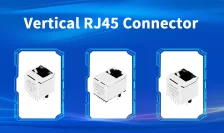
Discover LINK-PP’s vertical RJ45 connectors. Save board space with top-entry designs offer integrated magnetics, shielding, and reliable Ethernet performance.
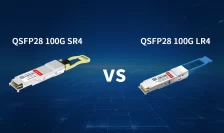
Compare QSFP28 100G SR4 vs LR4 to choose the right 100G transceiver for your network based on distance, fiber type, connectors, and budget.
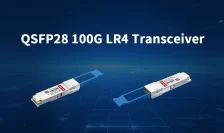
A 100G LR4 transceiver enables 100Gbps data transfer up to 10km using single-mode fiber, ideal for high-speed, long-distance network connections.
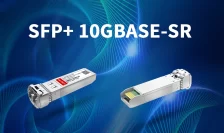
Explore the LINK-PP LS-MM8510-S3C SFP+ 850nm 10GBASE-SR optical transceiver. Up to 300m reach on MMF with low power consumption and full compatibility.
Choose the right 10G SFP+ transceiver by comparing compatibility, speed, media type, distance, and cost for reliable network upgrades.
Explore the hot-pluggable optical modules. how hot-swap works, its engineering value, standards involved, and considerations for deployment.
Discover the LINK-PP LQ-M85100-SR4C QSFP28 100G SR4 transceiver—ideal for short-reach 100G Ethernet over MMF. Compatible with Cisco, Arista, FS, Dell, and more.
Optical modulation changes light properties to encode data, enabling high-speed, reliable transmission in fiber optic communication systems.
Discover what data bandwidth means, how it affects devices, and why it matters in digital communication. Learn how LINK-PP supports high-speed data transfer.
The LPJG0926HENL RJ45 connector with integrated magnetics offers PoE+ support, space efficiency, and compliance for high-performance Ethernet applications.

Add Your Heading Text Here