Welcome to the LINK-PP Community

More Posts

Solve common network problems in data center networks, including outages, slow speeds, and configuration errors, with practical troubleshooting tips.

Network visualization uses graphs and diagrams to reveal connections, patterns, and relationships in complex data sets.
Interoperability in networking means devices and systems from different vendors can connect, share data, and work together seamlessly using common standards.
The Receiver Optical Sub-Assembly (ROSA) is a critical optoelectronic component in Optical Tranceivers, responsible for converting incoming optical signals into
Discover what RAM (Random Access Memory) is, how it works, and why it matters for system performance. Learn its functions, types, and role in modern computing.
Explore the world of resistors with our in-depth guide. Learn about different types, their applications, and specifications to make informed decisions for your electronic projects.
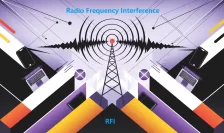
RFI Radio Frequency Interference is unwanted radio signals that disrupt electronic devices, causing performance issues and communication problems.
Discover Fiber Channel Transceiver use cases, SAN deployment tips, FC SFP compatibility, speeds, troubleshooting, and enterprise storage applications.
Explain the key differences between FC SFP and Ethernet SFP modules, including compatibility, SAN vs LAN use cases, speeds, and deployment tips.
Learn what FCoE Fibre Channel over Ethernet is, how it works, and how it relates to optical modules, DCB, and high-performance data center networking.
The TCP/IP model organizes network communication into four layers, enabling secure data exchange between devices across the internet.
Discover SONET and SDH, the backbone technologies for high-speed fiber-optic communications. Learn about their standards, applications, and differences to enhance your network infrastructure knowledge.
Learn what an SFP link is, why it fails, and how to fix compatibility, cabling, and link-flap issues with practical checks and clear steps.
What are SFP ports on a switch? Learn how SFP ports support fiber and Ethernet connections, how they compare with RJ45 and SFP+, and which module you need.
MSA standardize optical transceiver designs, ensuring compatibility, reducing costs, and driving innovation across networking equipment.
Medical-grade RJ45 connector ensures safe, reliable, and compliant network connections in medical devices, meeting IEC 60601-1 and sterilization standards.
Optical transceivers in UAVs enable high-speed, secure, and low-latency drone communication for real-time video, telemetry, and mission-critical data.
Explore the technology behind 400 G QSFP‑DD transceivers, including form factor, modulation, optical lanes, and thermal design.
Understand hot‑pluggable optical modules insertion cycle limits, and learn care tips—including ESD-safe handling, dust prevention, and heat management.
SFP-10G-ZR is a 10Gbps transceiver for single-mode fiber, supporting up to 80 km reach at 1550nm, ideal for long-distance 10G Ethernet connections.
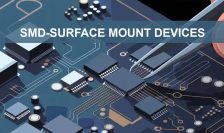
A Surface-Mount Device (SMD) is a compact electronic component mounted directly on a PCB, enabling smaller, faster, and more efficient modern electronics.
What is SWDM? SWDM is a fiber technology using four short wavelengths to boost data rates and efficiency in multimode fiber networks.
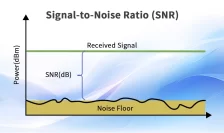
SNR, or signal-to-noise ratio, measures signal strength versus noise. High SNR means clearer audio, images, and data for better overall signal quality.
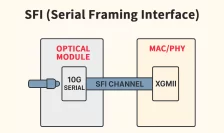
Learn how the Serial Framing Interface (SFI) enables high-speed data transmission in 10G SFP+ and 40G QSFP+ optical modules. Explore SFI channels, XGMII conversion, and module interoperability for reliable networking.
A Storage Area Network connects servers to shared storage, offering fast, reliable, and centralized data access for businesses with large data needs.
Space Division Multiplexing increases fiber network capacity by sending multiple data streams through separate paths in a single cable.
Discover what an SSD (Solid-State Drive) is, how it works, its advantages over HDDs, and its role in modern computing and enterprise storage.
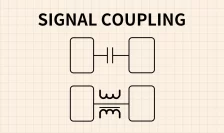
Discover what signal coupling is, how capacitive and transformer coupling work, and why they are vital in electronics, networking, and PCB design.
What Frame Check Sequence (FCS) means, how CRC-32 detects corrupted Ethernet frames, and why FCS errors are commonly associated with cable faults, fiber issues, or optical transceiver problems.
Understand what CRC is, how cyclic redundancy check errors happen, how to fix them, and why CRC matters in networking, storage, and SFP modules.
Optical transceiver modules convert electrical signals to light, enabling high-speed data transmission in fiber optic networks for modern communication.
Review of the LINK-PP LS-SM3101-40C SFP 155Mbps 40km SMF Optical Transceiver Module, covering features, compatibility, diagnostics, and value for networks.
Explore the LINK-PP LS-SM3110-10C 10G 10km SFP+ module. Discover specs, applications & why it's a top choice for reliable, long-distance fiber connectivity.
The LPJG0926HENL RJ45 connector with integrated magnetics offers PoE+ support, space efficiency, and compliance for high-performance Ethernet applications.
Master transceiver installation with 5 simple steps. Learn how to prepare, place, connect, test, and maintain for reliable network performance.
Choose the right 10G SFP+ transceiver by comparing compatibility, speed, media type, distance, and cost for reliable network upgrades.
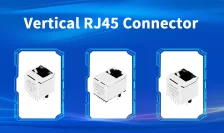
Discover LINK-PP’s vertical RJ45 connectors. Save board space with top-entry designs offer integrated magnetics, shielding, and reliable Ethernet performance.
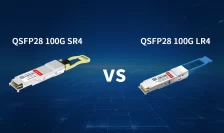
Compare QSFP28 100G SR4 vs LR4 to choose the right 100G transceiver for your network based on distance, fiber type, connectors, and budget.
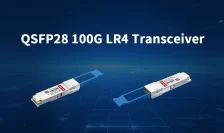
A 100G LR4 transceiver enables 100Gbps data transfer up to 10km using single-mode fiber, ideal for high-speed, long-distance network connections.
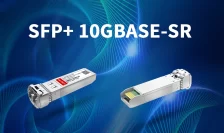
Explore the LINK-PP LS-MM8510-S3C SFP+ 850nm 10GBASE-SR optical transceiver. Up to 300m reach on MMF with low power consumption and full compatibility.