SMT, or Surface Mount Technology, is a method for mounting electronic components directly onto PCB surfaces, enabling compact designs and efficient manufacturing.
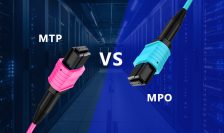
Compare MTP and MPO connectors to find the best fit for your network. Learn how MTP connectors offer superior performance, scalability, and reliability.
CAT5e vs CAT6 vs CAT7: Compare Ethernet cables to find the best fit for your network. Learn about speed, shielding, and cost to make an informed choice.
Fiber patch cords are essential for connecting devices in networks, ensuring fast, reliable data transfer in telecom, data centers, and industrial applications.
Understand 100G optical transceiver form factors like QSFP28, CFP, CFP2, CFP4 and CXP. Learn how they optimize network performance and ensure compatibility.
Dual rate transceivers operate at two distinct data rates, offering flexibility, cost-effectiveness, and seamless compatibility for modern network upgrades.
LINK-PP 100G transceivers deliver high-speed connectivity, energy efficiency, and seamless integration, making them ideal for modern networks and data centers.
Learn how to choose the best LINK-PP 10G optical transceivers for your network by evaluating compatibility, performance, cost, and scalability effectively.
What are SFP ports on a switch? Learn how SFP ports support fiber and Ethernet connections, how they compare with RJ45 and SFP+, and which module you need.
An SGMII SFP transceiver enables fast Ethernet connections over copper or fiber, supporting flexible speeds and device compatibility in modern networks.
Polarization mode dispersion in fiber optics causes signal distortion and limits data speed. Understand PMD's impact and how to manage it in modern networks.
QAM modulation boosts data transmission by varying amplitude and phase, enabling faster, more efficient communication in Wi-Fi, cable TV, and broadband.
Discover what a PCB (Printed Circuit Board) is, its structure, types, and applications in electronics. Explore LINK-PP’s PCB-based RJ45 and MagJack solutions.
A Virtual Private Network (VPN) secures online communication by encrypting data and masking IP addresses. Learn how VPNs work, their benefits, and why businesses rely on them for safe remote access and private browsing.
Learn what PPP (Point-to-Point Protocol) is, how it works, and why it is important in networking. Discover its functions, frame structure, and applications in WANs, PPPoE, and VPNs.
Explore Packet over SONET/SDH (POS), the technology enabling high-speed IP transport over optical networks, with insights into PPP encapsulation and SONET/SDH performance.
Explore the WAN Interface Sublayer (WIS) in 10 Gigabit Ethernet. Learn its role in SONET/SDH integration, data encapsulation, and how LINK-PP 10G optical modules support WAN PHY applications.
Complete guide to GLC-SX-MMD 1000BASE-SX SFP module: specs, MMF vs SMF, DOM features, compatibility, and best alternatives for cost-effective deployment.
Learn how compatible transceivers work and how to ensure switch compatibility. Avoid SFP errors, vendor locks, and choose the right module confidently.
Learn how a 1000BASE-T SFP transceiver module works with Category 5 copper wire, including compatibility limits, heat issues, and real-world deployment tips.
Learn the SFP28 standard, including its 25G capabilities, SFP28 vs. SFP+ differences, fiber and copper options, and how to choose the right 25G solution.
Subscribe to LINK-PP
newsletter
Don’t miss anything. Get all the latest posts delivered straight to your inbox.