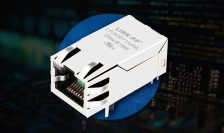
Discover the key electrical, mechanical, and environmental specs of integrated RJ45 connectors to select the right solution for your Ethernet applications.
Understand the role of 1x9 transceivers in fiber optic networks, their cost-effectiveness, compatibility with legacy systems, and reliable data transmission.
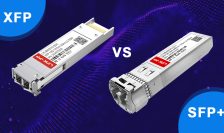
Compare XFP and SFP+ transceivers: XFP offers long-distance, high-speed performance, while SFP+ is compact, energy-efficient, and ideal for short-range tasks.
Power Over Ethernet (PoE) combines power and data delivery via a single cable, simplifying installations for devices like IP cameras, VoIP phones, and IoT systems.
Quality certifications like ISO 9001:2015, RoHS, and FCC ensure optical transceivers meet strict standards for reliability, compliance, and performance.
An RJ45 with magnetics integrates transformers and chokes to enhance signal quality, suppress EMI, and simplify designs. Ideal for Magnetic RJ45 Jack use.
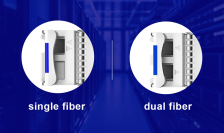
Single fiber transceivers, like the Bidi Transceiver, use one fiber for bidirectional data, while dual fiber transceivers require two fibers for separate TX and RX.
COB, BOX, and TO-CAN packaging impact optical devices by balancing size, cost, and reliability. Learn how COB excels in compact, high-speed applications.
What are SFP ports on a switch? Learn how SFP ports support fiber and Ethernet connections, how they compare with RJ45 and SFP+, and which module you need.
An SGMII SFP transceiver enables fast Ethernet connections over copper or fiber, supporting flexible speeds and device compatibility in modern networks.
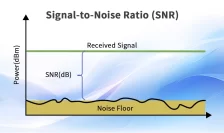
SNR, or signal-to-noise ratio, measures signal strength versus noise. High SNR means clearer audio, images, and data for better overall signal quality.
Learn what an Ethernet PHY is, how it connects MAC to network medium, core functions, signal types, and how it pairs with LINK‑PP Magnetics for Ethernet design.
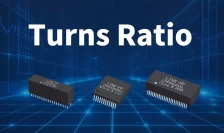
Turns ratio in LAN transformers defines the winding relationship, typically 1:1, ensuring signal integrity, voltage stability, and Ethernet compliance.
Non-Return-to-Zero (NRZ) is a digital encoding method using two voltage levels for binary data, offering simplicity and efficiency in digital communication.
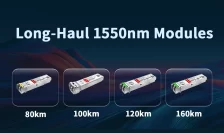
Learn the main applications of 1550nm optical modules in backbone, metro, and enterprise networks. Discover LINK-PP transceivers designed for long-distance fiber links.
LS-MM8532-S1C SFP28 Transceivers offer 25G/32G speeds, broad compatibility, low power use, and cost savings—ideal for future-proofing your data center.
10GBASE-LRM Industrial Transceiver Supports 10.3Gbps, 220m MMF reach, industrial temperature (-40~85°C), and full compatibility with Cisco, Arista, Dell, H3C.
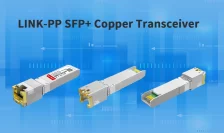
Discover the LINK-PP 10GBase-T Copper SFP+ Transceiver. Supporting 10Gbps over Cat6a/7 cables up to 80m. Compatible with Cisco, Dell, H3C, Juniper, and Arista.
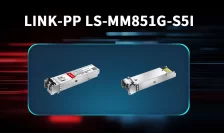
Discover how the LINK-PP LS-MM851G-S5I 1000BASE-SX transceiver offers a 100% compatible, high-performance, and cost-effective solution to replace GLC-SX-MMD.
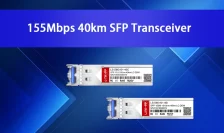
Review of the LINK-PP LS-SM3101-40C SFP 155Mbps 40km SMF Optical Transceiver Module, covering features, compatibility, diagnostics, and value for networks.