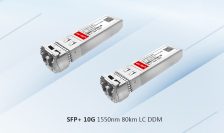
What are SFP ports on a switch? Learn how SFP ports support fiber and Ethernet connections, how they compare with RJ45 and SFP+, and which module you need.
What Frame Check Sequence (FCS) means, how CRC-32 detects corrupted Ethernet frames, and why FCS errors are commonly associated with cable faults, fiber issues, or optical transceiver problems.
Discover the LQ‑SW40‑SR4C 40GBASE‑SR module: high-speed, low-power, QSFP+ optics for multimode fibre networks. Perfect for data centres and network upgrades.
Discover how optical cross‑connect (OXC) enables all‑optical switching in DWDM/OTN networks, with LINK‑PP SFP modules ensuring seamless integration and superior performance.
Discover how LINK-PP RJ45 Magjack improves QoS stability by enhancing signal integrity, reducing EMI, and ensuring reliable transmission for modern networks.
Interoperability in networking means devices and systems from different vendors can connect, share data, and work together seamlessly using common standards.
Explore the roles of LSRs and LERs in MPLS networks. Learn their functions, differences, and how LINK-PP products support high-speed, reliable label-switched paths.
Discover the differences between P2P, P2MP, MP2P, and MP2MP network architectures. Learn how LINK-PP optical transceivers enable efficient, high-speed connectivity.
Discover the differences between silicon photonic modulators and traditional optical modulators, their working principles, advantages, and role in next-generation optical transceivers.
Explore how RJ45 connectors evolve to meet 6G’s ultra-low latency and ultra-high-speed communication challenges. Discover LINK-PP’s advanced high-frequency Ethernet solutions.
Insertion loss in RJ45 connectors weakens signal strength, impacting network reliability. Learn how to minimize insertion loss for optimal performance.
A Surface-Mount Device (SMD) is a compact electronic component mounted directly on a PCB, enabling smaller, faster, and more efficient modern electronics.
CPRI (Common Public Radio Interface) connects baseband units to remote radio units, enabling high-speed, low-latency communication in wireless networks.
EMC Electromagnetic Compatibility ensures devices work safely and reliably in shared environments by minimizing interference and meeting compliance standards.
SMT, or Surface Mount Technology, is a method for mounting electronic components directly onto PCB surfaces, enabling compact designs and efficient manufacturing.
Optical modules serve as the "translators" of fiber-optic networks, enabling seamless electrical-to-optical (E/O) and optical-to-electrical (O/E) conversion.
Optical transceiver modules convert electrical signals to light, enabling high-speed data transmission in fiber optic networks for modern communication.
LINK-PP is expanding with new production lines, strategic partnerships, and innovative RJ45 connectors, driving advancements in global connectivity solutions.